How to Extend a Thailand Visa at Immigration: Step-by-Step
Extending a Thailand visa or visa-exemption stamp means one trip to an immigration office, a completed TM.7 form, a passport-style photo, and 1,900 baht in cash — there is no online option for most travelers yet, and most people are in and out the same day with 30 extra days stamped in their passport.
What extending your visa actually gets you
If you entered on a visa exemption stamp or a single/multiple-entry tourist visa (TR), a standard extension adds 30 days onto your current expiry date — once, per stay. It does not reset the clock to a fresh 30 or 60 days; it pushes your existing deadline back a month. We covered the exemption day-count changes themselves in more detail in our 60-day vs. 30-day visa exemption guide, since that is a separate question from the mechanics of the extension itself.
Non-immigrant categories use the same TM.7 form but different supporting documents and renewal periods — the O-A retirement visa and DTV, for example, extend for months or up to a year at a time. If that is your situation, see our dedicated guides on the O-A retirement visa and Education visa instead — this guide is written for the more common case: someone on a tourist visa or visa exemption stamp who wants 30 more days.
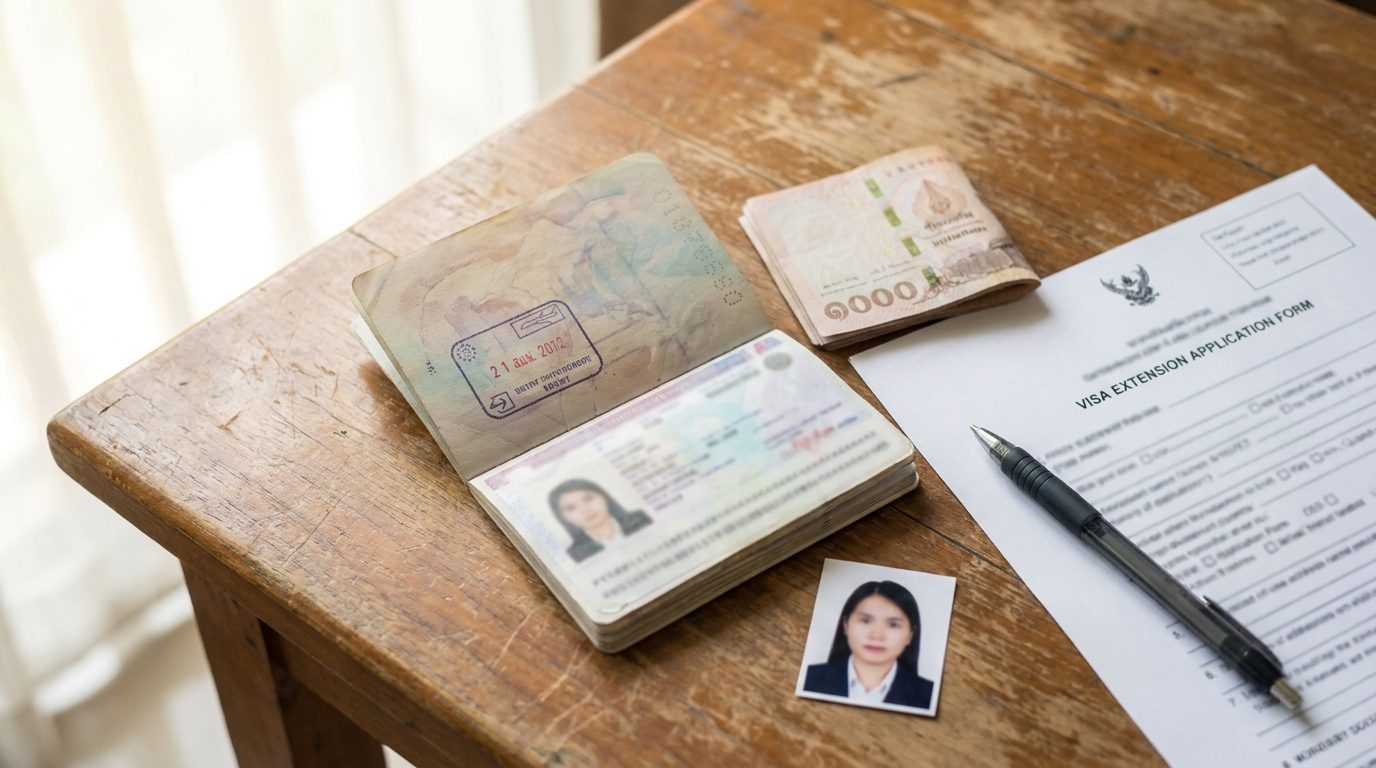
What to bring
- Valid passport, with a few months of validity remaining
- Photocopies of your passport bio page, current visa/entry stamp, and (if you still get one) your TM.6 departure card
- A completed TM.7 application form
- One passport-style photo, 4x6cm, white background, taken within the last 6 months
- Proof of accommodation — a hotel booking confirmation or lease agreement in your name, ideally an official-looking letter rather than just a booking-site email
- 1,900 THB in cash — most offices do not take cards
A TM.30 receipt (proof your accommodation reported your address, which hotels normally handle automatically) is not always asked for, but bring it if you have it. Officers at busier offices have been known to ask.
Step-by-step at the immigration office
- Arrive as early as you can — at busy offices, extension queue numbers can run out well before the office actually closes for the day.
- Take a queue number for visa extension specifically. Immigration offices run separate queues for extensions, 90-day reporting, re-entry permits, and TM.30 filings — grabbing the wrong ticket means starting over.
- Hand over your completed TM.7, passport, photo, copies, and proof of accommodation when called.
- An officer reviews your documents and may ask a few basic questions — purpose of stay, how much longer you are in Thailand, sometimes proof of funds.
- Pay the 1,900 THB fee in cash at the cashier window.
- Wait for your passport to be returned with the new stamp. On a quiet day this can take under an hour from when you're called; on a busy day at a major office, plan for a return trip the next morning if they cannot finish same-day.
Which office to go to
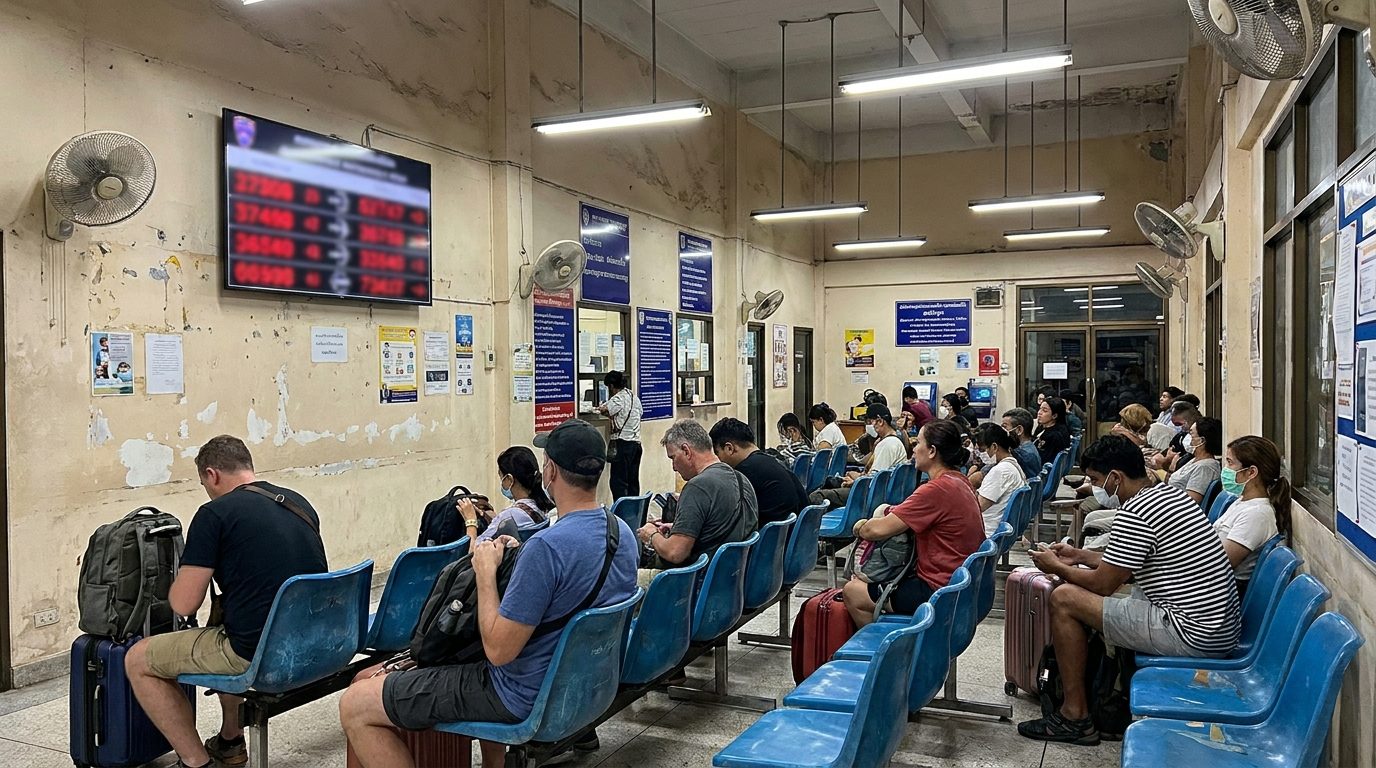
In Bangkok, the Chaeng Watthana Government Complex (Immigration Division 1) handles the large majority of tourist-visa extensions and is open weekdays, roughly 8:30am to 4:30pm, closed on Thai public holidays. It is also the busiest immigration office in the country — queue numbers for extensions can run out before 10am on a bad day, and a visit can eat anywhere from one hour to most of a morning depending on when you arrive.
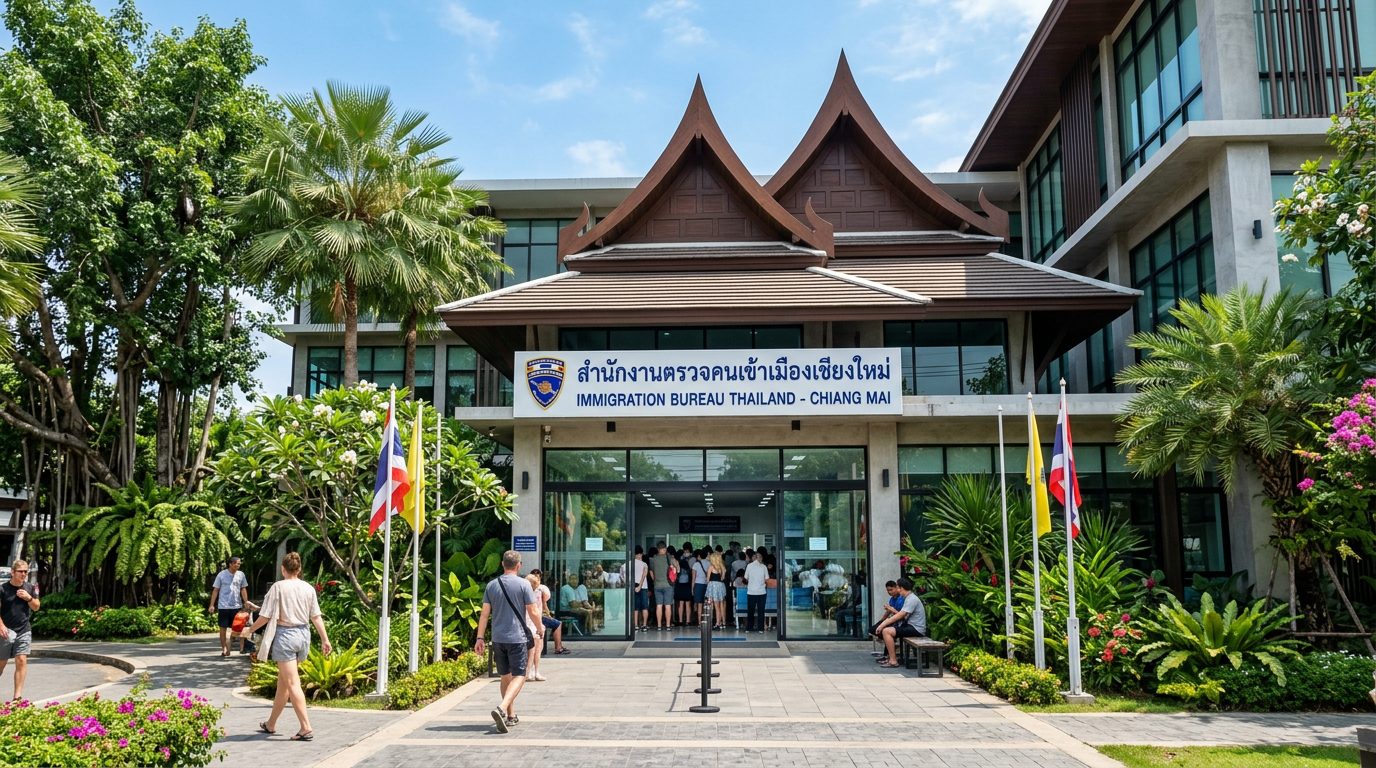
Outside Bangkok, use the office for the province you are actually staying in rather than the nearest big city — Chiang Mai, Phuket, Koh Samui, and Pattaya (Jomtien) each have their own immigration office, and Jomtien in particular serves one of the largest expat populations in the country, so it runs busy too. A quick search for "[your province] immigration office" plus the current year will get you the address and hours; these do shift occasionally, so don't rely on an old bookmark.
Timing it right
Tuesday through Thursday, and early in the morning, are consistently reported as the calmest windows. Mondays are rough almost everywhere (weekend backlog), as are the days right before a public holiday and the final week of the month, when longer-stay renewals bunch up. Don't cut it to the last day of your permitted stay — if the office can't finish your extension same-day, or your documents have an issue, you want a buffer before your existing stamp expires, not a same-day scramble.
Can you do this online?
Mostly not yet, for a standard tourist-visa or visa-exemption extension. Thai immigration has piloted an "e-Extension" online service in some divisions and announced a broader digital platform (branded THIM) aimed at eventually covering extensions, appointment booking, and address reporting without an office visit — but as of this writing that broader rollout is targeted for later in 2026 and coverage varies by office. Some larger provincial offices offer online appointment booking to reserve a queue slot, which saves you standing in line for a number but does not replace the in-person visit itself. Don't assume an online option is live for your specific office without checking directly — this is one of the areas moving fastest in 2026, so treat anything you read (including this paragraph) as worth double-checking close to your appointment.
Common mistakes that get people turned away or sent back
- Showing up without a passport photo, or with one that's the wrong size or too old
- Bringing only a hotel booking confirmation email instead of something that reads as an official accommodation letter
- Not enough cash on hand, or trying to pay by card
- Grabbing the wrong queue ticket for your service
- Going to the wrong provincial office for where you're actually staying
- Leaving it until the day your current stamp expires, with no buffer if anything goes wrong
If you're cutting it close
If your current stamp is about to expire and you're unsure you'll make it to an office in time, don't guess — the penalties for overstaying, even briefly, are real and we've broken them down fully in our Thailand visa overstay guide. And if an extension isn't available to you for your situation, a visa run is a separate option with its own rules, covered in our border run guide — it's not automatically the easier choice, and immigration has been paying closer attention to repeated short-hop patterns, so read that one before assuming it's a simple fallback.
▶Watch on VacaHack
Quick answers
How much does it cost to extend a Thailand visa?
1,900 THB, paid in cash at the immigration office. Most offices do not accept cards, so bring cash.
What form do I need to extend a Thai visa?
The TM.7 application form. You can download and print it ahead of time, pick one up at the immigration office, or get one from a photocopy shop near most immigration offices for a few baht.
How many extra days does a Thailand visa extension give you?
For a visa exemption stamp or a single/multiple-entry tourist visa, a standard extension adds 30 days to your current expiry date, once per stay. Non-immigrant categories like the O-A retirement visa, ED visa, and DTV extend on a different schedule, sometimes up to a year, under a different process.
Can I extend a Thailand visa online?
Not for most travelers yet. Immigration has piloted an e-Extension online service and is building a broader digital system (THIM) targeted for later rollout in 2026, but the standard path for a tourist visa or visa-exemption extension is still an in-person office visit. Confirm with your specific office before assuming an online option applies to you.
Which immigration office should I go to in Bangkok?
The Chaeng Watthana Government Complex (Immigration Division 1) handles the large majority of tourist-visa extensions in Bangkok. Outside Bangkok, use the office for the province where you are actually staying.
What happens if I forget my passport photo?
Most immigration offices have a photo booth or a print shop within walking distance, but it costs you time in the queue. Bring one 4x6cm photo with a white background, taken within the last 6 months, so you are not scrambling on the day.