Thailand Education Visa (ED Visa) in 2026: How It Actually Works
Thailand's Non-Immigrant "ED" visa lets you stay long-term to study — Thai language, Muay Thai, a university degree, cooking, even Buddhist studies — but 2026 has made it a more complicated visa than it used to be. A crackdown on fake "paper students" is still working its way through Immigration, and for casual training like Muay Thai, the newer DTV visa has quietly become the more common route. Here's what the ED visa actually covers, what it costs, and where it's still the right (or only) choice.

What the ED visa actually covers
The Non-Immigrant "ED" visa is issued to foreigners enrolled in an approved Thai educational program. That's a broad umbrella: Thai language schools, non-Thai language study (Mandarin and other languages are explicitly allowed, not just Thai), university and vocational programs, Muay Thai and other structured training courses, cooking schools, and Buddhist studies programs.
The visa itself is issued single-entry, and your initial stay is 90 days from the date you enter Thailand — not from the date the visa was issued, which is a subtle but important distinction (more on that below). From there, you extend it in person at an Immigration office rather than re-applying from abroad each time.
ED visa vs. "ED Plus" — don't confuse the two
If you search around, you'll also see references to a "Non-Immigrant ED Plus" visa. It sounds like a newer or better version of the regular ED visa, but it's actually a separate, narrower category that's existed since 2024: it's for students enrolled in a bachelor's degree program or higher at an accredited Thai university only. It's not available for language schools, Muay Thai training, or other non-degree programs.
ED Plus does have real advantages over the regular ED visa for degree-seeking students — no re-entry permit required each time you leave and return, and the option to extend for up to a year after graduation to look for work. But if you're coming to Thailand for a language course or Muay Thai camp, ED Plus isn't the visa you're looking for; you'll be on the standard ED visa.
Extensions, costs, and how the renewal cycle works
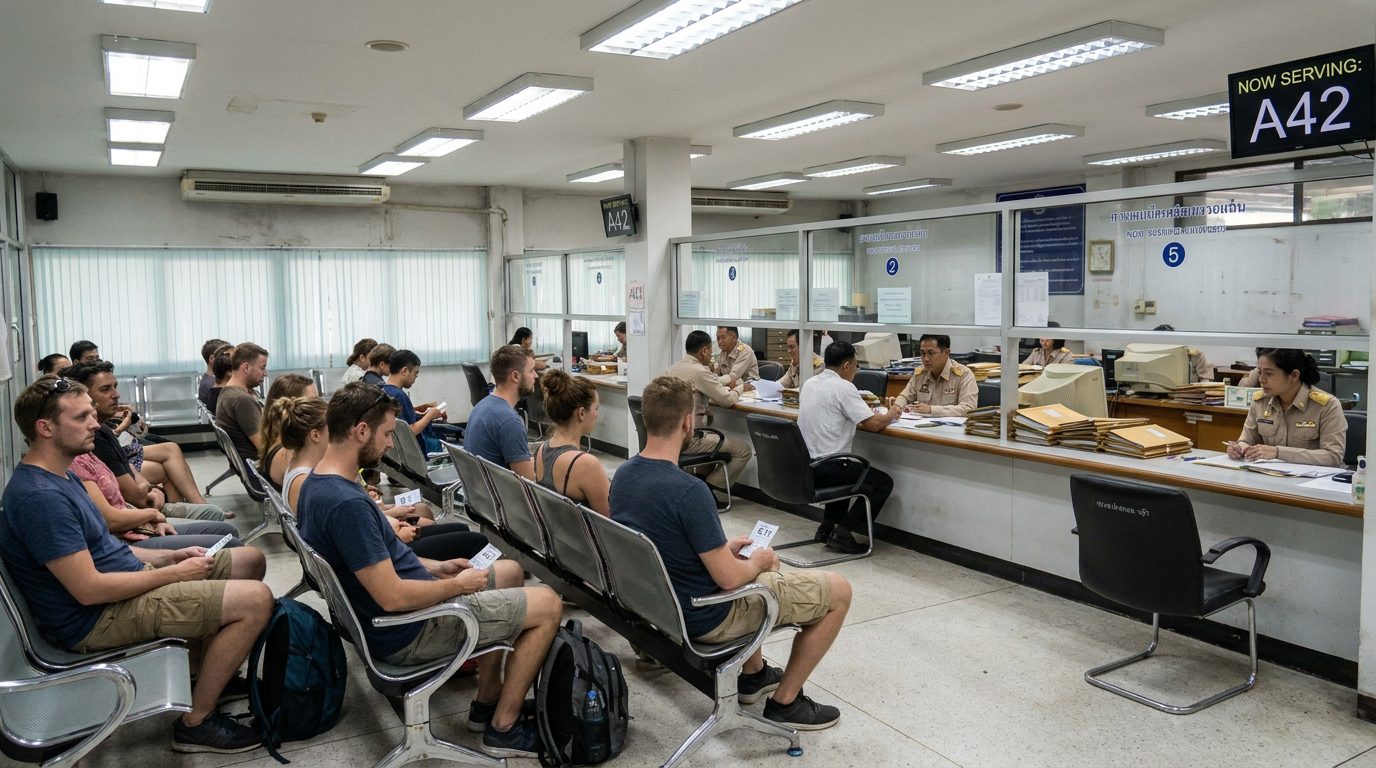
Once you're in Thailand on your ED visa, extensions are handled at an Immigration office using a TM.7 form, along with a letter from your school confirming your enrollment and attendance. Extension fees run around 1,900 THB per cycle at the immigration-office stage. How long you can keep extending depends heavily on your program:
- University/degree programs: can continue for the duration of the course, sometimes multiple years, as long as attendance and academic progress are documented each cycle.
- Language schools and Muay Thai gyms: many programs cap out around 12 months total, structured as an initial 3-month period plus a set number of further 3-month extensions — not indefinite, and it varies by school and by how Immigration is currently treating that program.
For Muay Thai specifically, gyms that still offer a genuine ED-visa route typically price it by class count rather than by month. As of 2026, a "fun and fitness" tier (roughly 2 classes a week) runs somewhere in the range of 30,000–65,000 THB depending on whether you book 6 or 12 months, with a "professional" unlimited-training tier running higher — and that's before separate living costs, which most people should budget 15,000–25,000 THB/month for. Get exact current numbers from the specific gym or agent you're applying through, since these change and vary by location.

ED visa vs. DTV for Muay Thai and hobby training
This is genuinely the most contested question in this space right now, and the honest answer is: it depends on your age and your bank balance more than your training goals.
For most hobbyist trainees, the Destination Thailand Visa (DTV) has become the practical default over the ED visa. It's cheaper (roughly 30,000 THB for five years of validity, versus tens of thousands of THB per 6–12 months on the ED route), doesn't come with a strict attendance mandate, and gets you a re-entry stamp valid for up to 6 months at a time instead of needing a separate re-entry permit and school permission every time you want to leave the country.
But the ED visa isn't obsolete — it's still the only compliant option for two specific groups DTV structurally excludes:
- 18–19 year olds. The DTV has a minimum age requirement of 20, so younger gap-year students training or studying in Thailand still need the ED route.
- Anyone who can't show the DTV's required savings. DTV applicants need to demonstrate roughly 500,000 THB (about $15,000) in liquid funds. The ED visa's requirements are based on your enrollment and course, not your bank balance, so it's the more accessible route if you don't have that much sitting in an account.
Outside of those two cases, most people training Muay Thai or studying casually in Thailand today are choosing DTV over ED — but confirm with your specific gym or school which visa they actually sponsor, since not every program supports both.
The 2025–2026 crackdown — and why it's still relevant
In 2025, Thai Immigration revoked close to 10,000 Non-Immigrant ED and student visas in a crackdown on "paper students" — people using an ED visa's long-stay privileges without actually attending classes. This wasn't a one-time sweep: reporting into 2026 confirms Immigration and the Ministry of Higher Education are continuing to cross-reference monthly school attendance reports through a shared database, and enforcement is ongoing rather than resolved.
What this means practically: schools with a track record of loose attendance requirements are under real scrutiny, and Immigration officers are reportedly more willing to question extension applications that look like they're not backed by genuine study. If you're choosing a language school or training program specifically to sponsor a visa, a program with real, trackable attendance is a safer bet than one that markets itself as a rubber stamp — both for getting extensions approved and for avoiding getting caught in a wider revocation sweep that isn't really about you.
Do you need travel insurance for an ED visa?
No — unlike the O-A retirement visa or the DTV, the ED visa does not carry a mandatory health insurance requirement. International students on an ED visa are explicitly exempted from Thailand's mandatory-insurance list.
That said, "not required" isn't the same as "not a good idea," especially if your program involves a contact sport. A Muay Thai injury, a motorbike trip on a day off, or a hospital visit as a foreigner without local coverage can get expensive fast, and it's a genuinely different risk profile than, say, a two-week beach holiday.
If you're heading over on an ED visa for language study or Muay Thai training, it's worth pricing out flexible long-stay coverage before you go — it's not required, but it's cheap insurance against an expensive week.
Compare SafetyWing's Nomad Insurance plans →Real confusion people run into — and how to handle it
A few things come up repeatedly in traveler forums and are worth flagging honestly rather than glossing over:
- When does the 90-day clock actually start? Some schools and applicants report getting different answers on whether the visa's validity period starts at issuance or at the date you're stamped in on arrival. This is exactly the kind of detail that's worth confirming directly with your specific school and the Immigration office you'll be extending at, rather than assuming it works the way a forum post from a different year describes.
- Does the ED visa only cover Thai language study? No — it covers non-Thai-language programs too (Mandarin courses and others), university and vocational study, and structured training like Muay Thai, not just Thai lessons.
Immigration rules and enforcement patterns in Thailand have been genuinely volatile through 2026 — a broader visa overhaul was Cabinet-approved earlier this year and is still being adjusted country by country, and some visa categories have changed more than once within the same year. Whatever you read here or anywhere else, confirm current requirements with your school, an immigration lawyer, or the nearest Thai embassy before you commit to a program or book flights around it.
▶Watch on VacaHack
Quick answers
Does the Thailand ED visa require health insurance?
No. International students on an ED visa are exempt from Thailand's mandatory health insurance list, unlike the DTV or O-A retirement visa. It's still worth carrying coverage given long-stay and contact-sport risk, but it is not a legal requirement for the visa itself.
Can I get an ED visa for Muay Thai training?
Yes, through a gym that offers a genuine structured lesson-count program, but the DTV has become the more common route for most hobbyist trainees in 2026 because it's cheaper and has no attendance mandate. The ED visa remains the main option for 18-19 year olds (below DTV's minimum age of 20) and for anyone who can't show DTV's roughly 500,000 THB savings requirement.
What is the difference between the ED visa and the ED Plus visa?
ED Plus is a separate, narrower category that has existed since 2024 for students in bachelor's degree programs or higher at accredited Thai universities. It offers perks like no re-entry permit requirement and a post-graduation extension, but it does not apply to language schools, Muay Thai training, or other non-degree programs, which stay on the standard ED visa.
How much does a Thailand education visa cost?
It depends heavily on the program. Muay Thai gyms in 2026 commonly price a 'fun and fitness' tier around 30,000-65,000 THB for 6-12 months, with unlimited-training tiers running higher, plus roughly 1,900 THB per extension cycle at Immigration. Language schools and universities have their own separate fee structures. Budget living costs separately, typically 15,000-25,000 THB a month.
Can I study a language other than Thai on an ED visa?
Yes. The ED visa covers non-Thai-language study (Mandarin and others), university and vocational programs, structured training like Muay Thai, cooking courses, and Buddhist studies, not just Thai lessons.
Does the ED visa 90-day period start when the visa is issued or when I arrive in Thailand?
It starts from your arrival/entry stamp, not the issuance date on the visa itself. That said, real applicants have reported schools giving conflicting guidance on this, so confirm the specific date with your school and the Immigration office before your extension is due.