Overstaying Your Thailand Visa: Real Fines, Bans, and How to Fix It
Overstaying a Thailand visa costs 500 baht for every day you're over, capped at 20,000 baht once you hit around 40 days — but the fine is the small part. The real consequence is a re-entry ban, and how long you're locked out of the country depends heavily on how long you overstayed and whether you sorted it out yourself or got caught first.
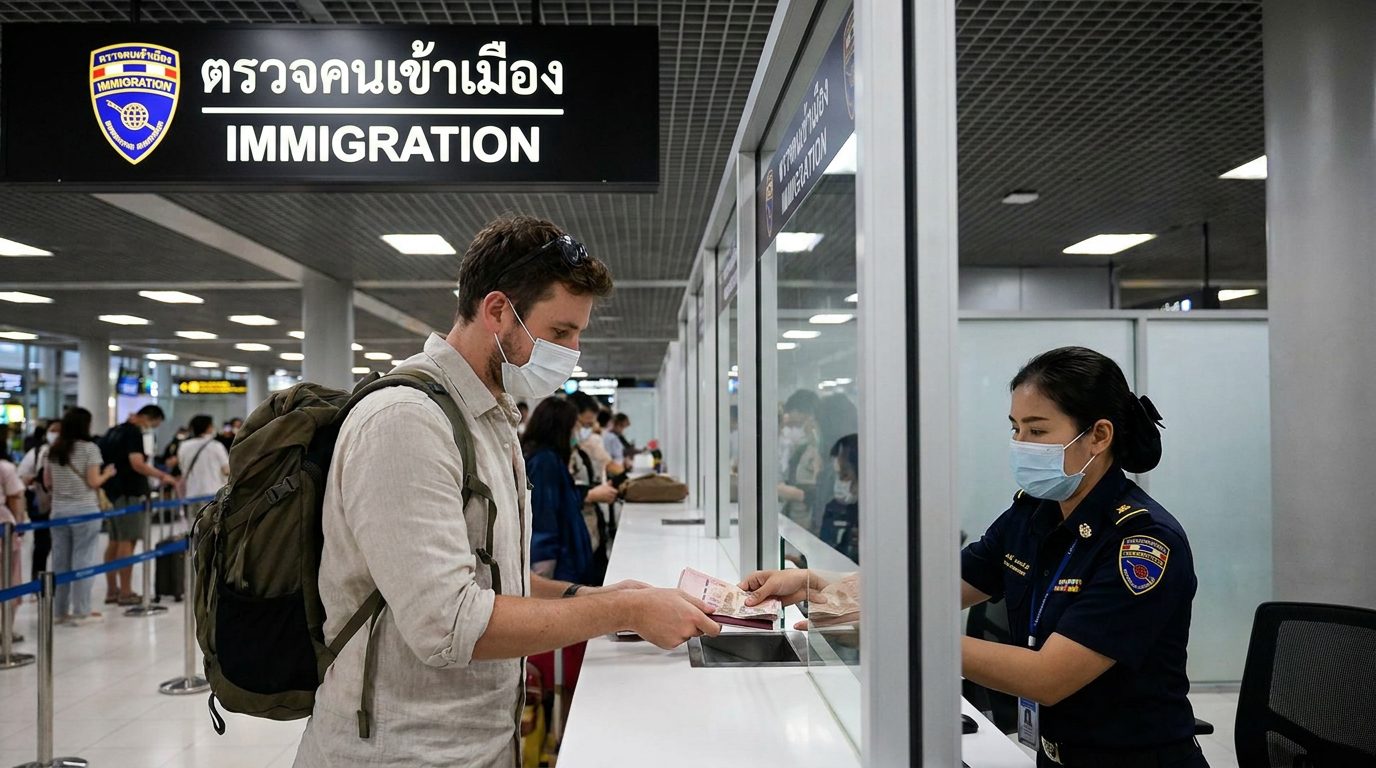
How much is the Thailand overstay fine, exactly?
The fine is straightforward and hasn't changed in years: 500 THB per day of overstay, with a hard cap of 20,000 THB. You hit that cap around day 40, so a 45-day overstay costs the same as a 200-day one — the fine stops growing, even though the other consequences below keep getting worse.
This is worth saying plainly because it's one of the most common points of confusion on Thai immigration forums: people occasionally claim the fine runs into tens of thousands of baht or has "minimums" well above 20,000 THB. It doesn't. If someone tells you the fine itself is more than 20,000 baht for a standard tourist overstay, that's wrong.
- Overstay 1–39 days: 500 THB per day (e.g. 5 days = 2,500 THB)
- Overstay 40+ days: flat 20,000 THB, no matter how much longer it goes
- Children under 14 are generally not fined or blacklisted, but still need to have their status resolved
What actually happens when you leave the country overstayed
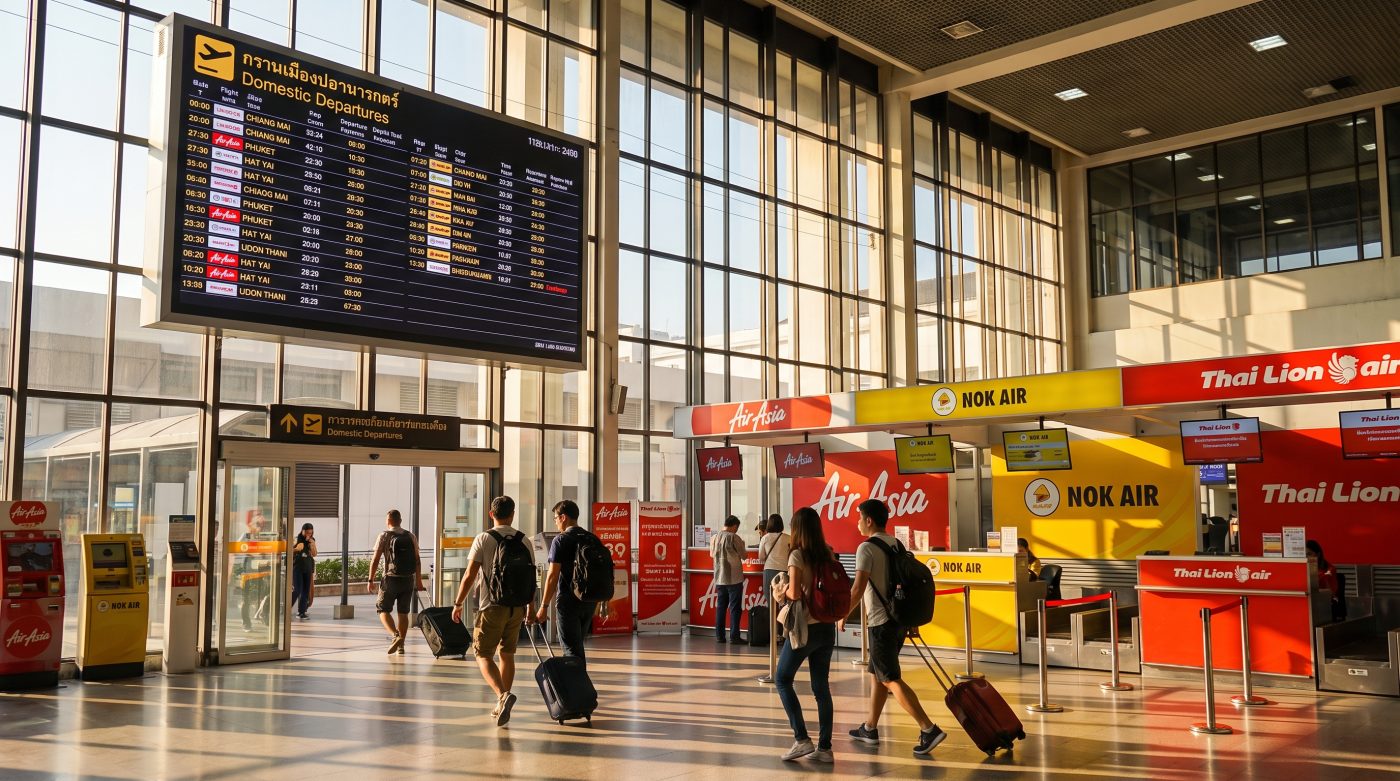
For the huge majority of tourists, an overstay gets resolved the ordinary way: you go to check in for your flight, and immigration staff — who deal with this constantly — walk you through paying the fine before you go through departure immigration. Real traveler reports on Thai visa forums describe it consistently: an officer meets you at the check-in desk, confirms you have cash to cover the fine, and directs you to pay before processing your exit stamp. It's described as "reasonably quick and painless," aside from having to hand over the money.
A few practical notes people get wrong:
- Cash matters. Bring baht in cash. Some offices/counters may not be set up for card payment of the fine on the spot.
- You don't need a lawyer for a routine short overstay. This comes up constantly on forums — for a straightforward overstay of a few days to a few weeks that you're resolving by leaving the country, a lawyer isn't necessary. Save that for a longer overstay or a case involving arrest.
- Even one day counts. A single day of overstay can mean being held at the counter until the fine is arranged and processed — it's a real step in the process, not something waved through.
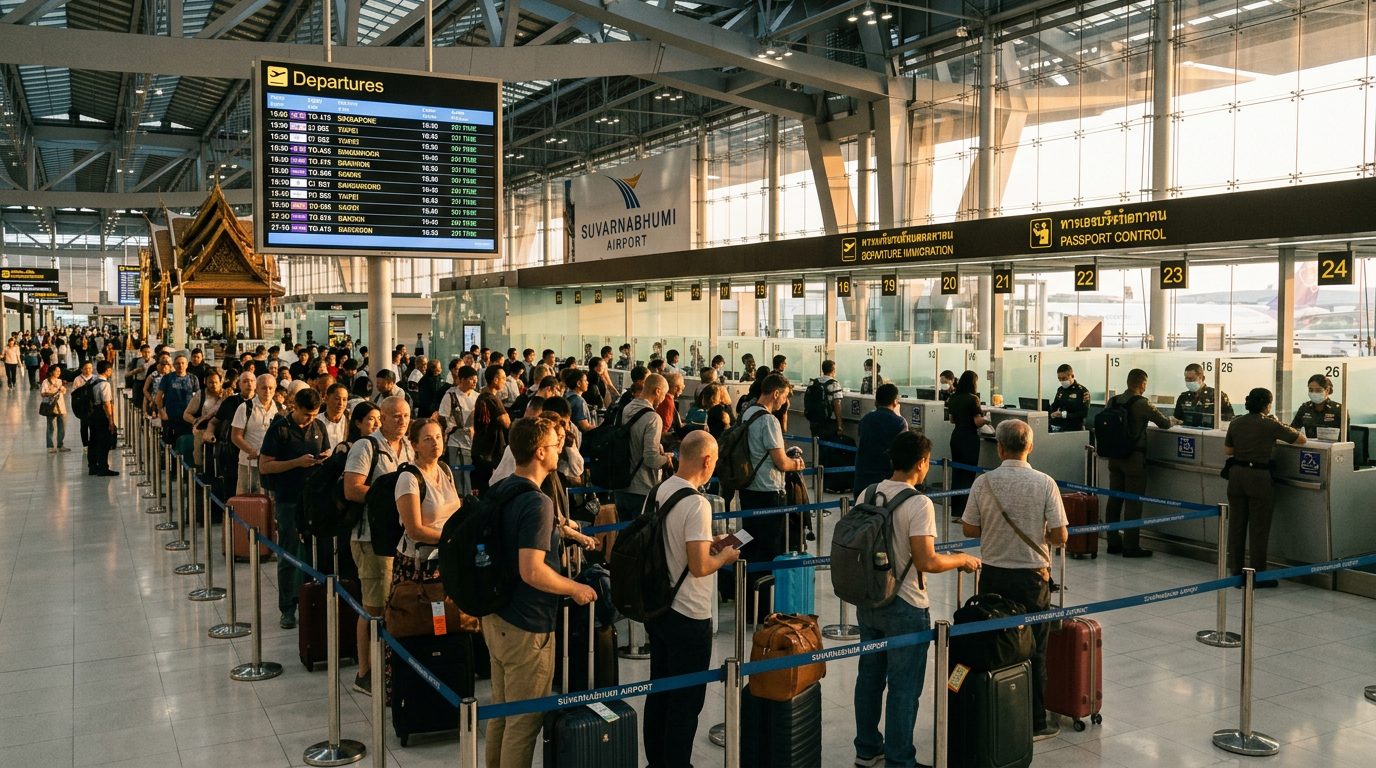
The re-entry ban: this is the part that actually hurts
The fine is flat past 40 days, but the re-entry ban is not — it scales sharply with how long you overstayed. Multiple current sources on this are consistent on the following tiers for someone who resolves their overstay themselves (pays the fine and departs normally):
- Under 90 days: no ban — you pay the fine and you're free to come back whenever you like
- 90 days to under 1 year: 1-year ban on re-entry
- 1 year to under 3 years: 3-year ban
- 3 years to under 5 years: 5-year ban
- 5 years or more: 10-year ban
Worth flagging honestly: sources don't fully agree on the exact treatment of the longest overstays, and Thai immigration officers have real discretion case by case. If you're looking at anything beyond a short, accidental overstay of a few weeks, treat the numbers above as a general guide and confirm your specific situation with a Thai immigration lawyer or your embassy rather than assuming any single figure applies to you.
The ban is tracked against your identity — name, date of birth, nationality, and biometric data — not just your passport number, so getting a new passport does not reset the clock or erase the record. Once a ban period ends it's lifted automatically, but the overstay itself stays in the immigration database permanently and any future visa officer can see it.
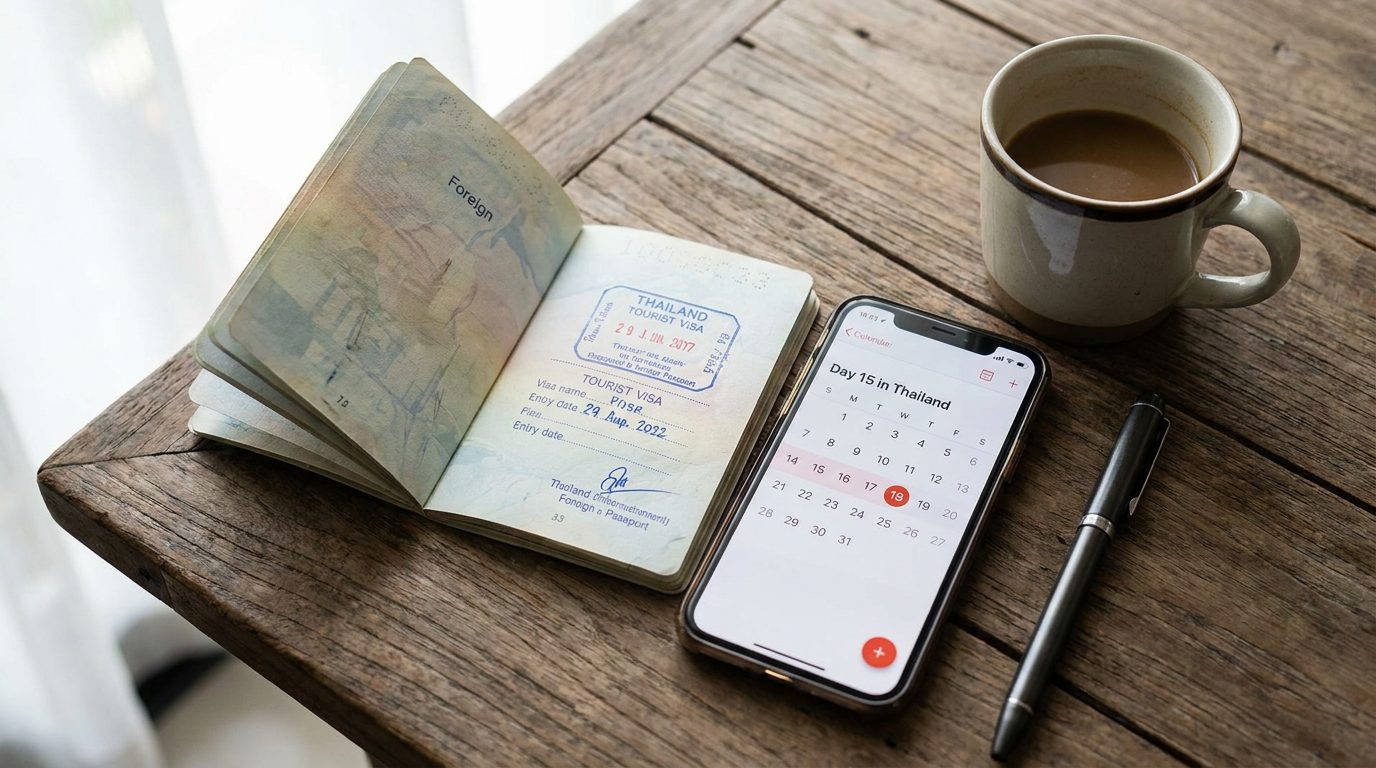
Getting caught before you leave is a different, harsher situation
Everything above describes the standard case: you realize you've overstayed, you go to the airport, and immigration processes you on your way out. It is meaningfully worse if you're stopped first — at a police checkpoint, during a raid, or any other situation where you're arrested for overstaying rather than voluntarily departing.
Under that scenario, the same length of overstay can trigger a longer ban than the self-departure tiers above — some sources describe bans as high as 5 years for an overstay under a year, and up to 10 years for anything over a year, when the person is arrested rather than caught leaving normally. Overstays beyond 90 days can also be treated as a criminal matter if you're arrested, rather than handled as a straightforward administrative fine, and can involve time at an immigration detention facility while your case and travel documents are sorted out. This is the scenario worth actually worrying about — not a routine few-day overstay you resolve at the airport.
The practical takeaway from real forum discussions on this: if you know you've overstayed, the safest move is almost always to go straight to the airport (or your local immigration office if you plan to stay and sort it out) rather than continuing to move around the country hoping not to be noticed.
How to actually fix an overstay
- Figure out your exact overstay length from your actual entry stamp date, not the date you think your visa "should" expire — this is the single most common source of accidental overstays.
- If you're leaving Thailand anyway, go to the airport as normal, have cash ready for the fine, and let immigration staff walk you through it at check-in and departure immigration.
- If you want to stay in Thailand, go to your local immigration office (not the airport) before your overstay grows any longer — extensions and corrections are handled there, and showing up voluntarily is treated far better than being found later.
- If your overstay is already long (multiple months or more) or you've already had contact with police about it, this is the point to involve a Thai immigration lawyer rather than trying to handle it solo.
If you still need to book your way out while you sort this out, VacaHack's flight search tool can help you find the next available option out of Thailand.
▶Watch on VacaHack
Quick answers
How much is the fine for overstaying a visa in Thailand?
The fine is 500 THB per day of overstay, capped at 20,000 THB once you reach around 40 days. It does not keep growing past that cap, no matter how much longer the overstay continues.
Will I be banned from Thailand if I overstay my visa?
Only if the overstay is 90 days or longer. Under 90 days, a standard self-resolved overstay usually means just paying the fine with no re-entry ban. Past 90 days, ban tiers scale from 1 year up to 10 years depending on the length of the overstay.
What happens if you overstay your visa in Thailand for one day?
You will still owe the 500 THB fine and may be held briefly at the immigration counter while it is processed, but a short overstay like this under 90 days typically results in no re-entry ban.
Can you go to jail for overstaying in Thailand?
Routine overstays resolved by leaving through the airport are handled as an administrative fine, not jail. However, if you are arrested for overstaying (a police checkpoint, a raid, or similar) rather than departing voluntarily, especially past 90 days, it can be treated as a criminal matter and involve time at an immigration detention facility.
Do I need a lawyer to pay an overstay fine in Thailand?
For a routine short overstay you are resolving by leaving the country, no. Immigration staff handle this constantly. A Thai immigration lawyer is worth involving for a long overstay (multiple months or more) or any case involving arrest.
What is the maximum overstay fine in Thailand?
20,000 THB. The 500-THB-per-day fine reaches this cap at around 40 days of overstay and does not increase further.