Bargaining in Thailand: How Much Should You Actually Offer?
Start about 30 to 50 percent below the first price you hear at a market stall, expect to land somewhere around 20 to 25 percent off that opening number, and save the haggling entirely for markets, stalls, and tuk-tuks — malls, 7-Eleven, department stores, and metered taxis don't bargain, and asking there just gets you a polite no.
Where You Can Actually Bargain in Thailand
The rule of thumb that comes up again and again in traveler forums is simpler than most guides make it sound: if the price is written on a tag or a sign, don't bargain. If it isn't, you probably can.
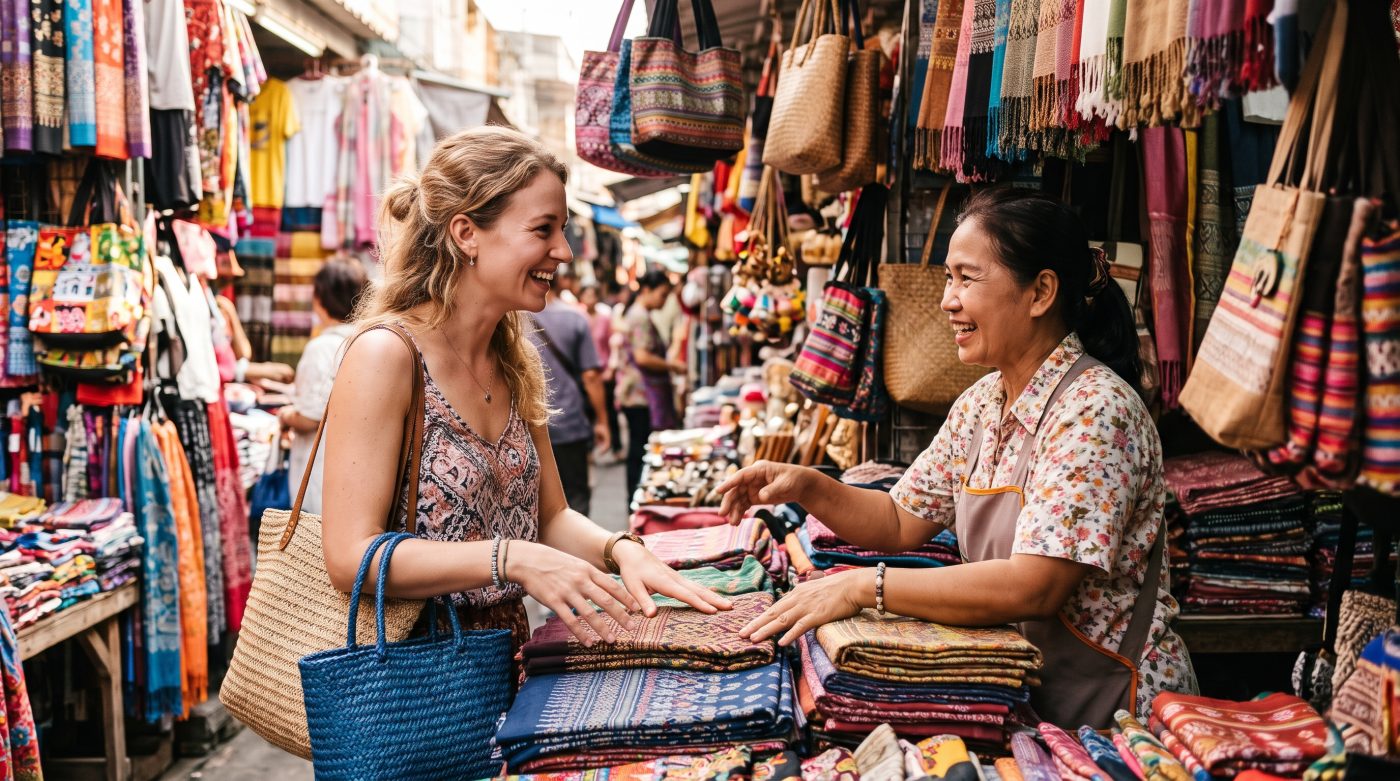
- Bargain freely: open-air markets (Chatuchak, night bazaars, floating markets), souvenir stalls, roadside vendors, tuk-tuks, unmetered taxis outside the airport or malls, and longtail boat rides.
- Don't bother: department stores, shopping malls, supermarkets, 7-Eleven and other convenience stores, and anywhere with a visible price tag or a cash register ringing up a receipt.
- Don't touch the meter: a metered taxi in Bangkok should run the meter, not a negotiated flat fare — negotiating one is usually a sign you're about to overpay, not a bargain. Our Grab vs. taxi vs. tuk-tuk guide covers how to tell a fair fare from a scripted one.
A few places blur the line — some stall-style indoor markets, like Platinum Fashion Mall in Bangkok, still expect a bit of back-and-forth even though they're technically indoors. Watch what the vendors around you are doing before you commit either way, and when it's a scheduled bus, ferry, or anything with a printed ticket price, that's fixed too.
How Much Should You Actually Offer?
There's no single magic percentage — guides and longtime expats land in slightly different places depending on the item and the market — but the figures that keep showing up cluster around the same range:
- Opening offer: somewhere between half and three-quarters of the asking price for everyday souvenirs, clothing, and trinkets. Going in too low (a quarter of the asking price or less) can come across as insulting rather than savvy, especially if you do it with a straight face instead of a smile.
- Realistic landing spot: around 20 to 25 percent off the first number is a solid, normal outcome. Some travelers report getting as much as 50 percent off, but that's the exception, not the rule — many vendors in tourist-heavy spots already price in some room to negotiate, so the "discount" is partly just getting back to a fairer starting point.
- Fixed-markup items: department store discounts, when they happen at all, tend to be a flat 10 percent rather than anything you talk your way into.
- Gold and jewelry: the metal itself is priced to the day's gold rate and isn't negotiable — what you can negotiate is the workmanship or setting fee, which is a separate line item. Ask for the two prices separately before you start bargaining on either.
The Etiquette That Matters More Than the Discount
Every source on this — forum threads, longtime expats, Thai etiquette guides — agrees on one thing before anything else: how you bargain matters more than how much you save.
- Smile, always. Thai social interaction runs on not making anyone lose face, and an aggressive or confrontational tone over a price will shut a vendor down faster than any number will open them up. Treat it like a light, friendly game, not a negotiation you're trying to win.
- Never raise your voice. Visible frustration, even mild annoyance, reads as genuinely rude here in a way it might not elsewhere. If a vendor won't move on price, say thank you and walk — calmly.
- Don't re-open a deal once you've shaken on it. Agreeing to a price and then trying to chip it down further afterward is considered bad form, not clever.
- Hesitation does the work for you. You often don't even need to counter-offer out loud — pausing, looking unconvinced, or glancing at the item again is frequently enough to get the vendor to lower the number first.
Techniques That Actually Work
- Scope the going rate first. Walk past two or three stalls selling the same thing before you commit to buying at the first one — it tells you what the real range is.
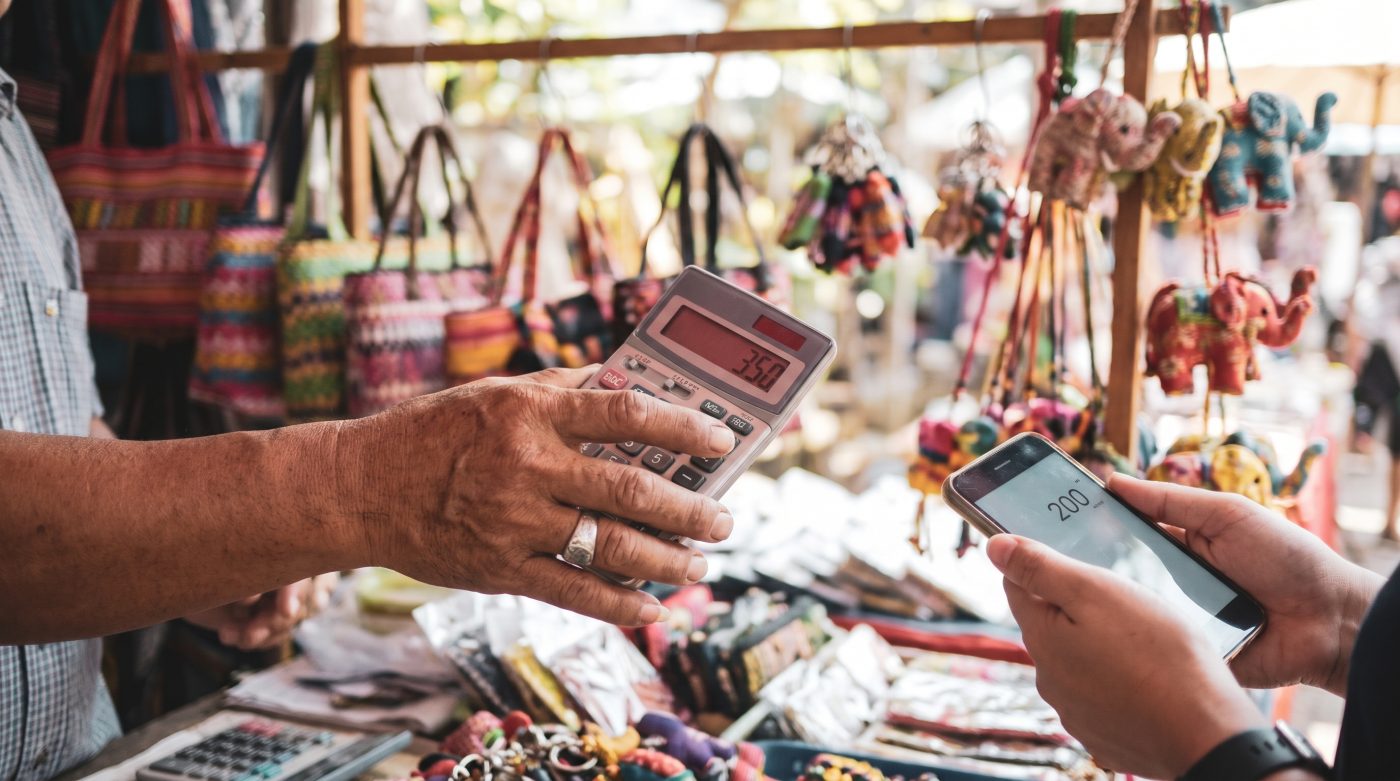
- Use the calculator. Pointing at a phone or calculator screen and passing it back and forth is the standard method, and it works even with zero shared language.
- Buy more than one thing. Bundling two or three items with one vendor almost always gets you a better per-item price than negotiating each separately.
- Carry small notes. Pulling out a 1,000-baht note right after talking someone down to 200 baht undercuts the whole interaction — it's a visible reminder of exactly how large the gap in means actually is. Our cash vs. card guide and ATM fees guide both cover getting hold of smaller bills before you need them.
- Negotiate before you order, not after. For a big food order or a group booking at a stall, settle the price before everyone eats or before the service happens — asking for a discount afterward reads as cheap rather than thrifty.
When It's Not Worth Haggling Over
This is the piece of advice that shows up most consistently from people who've actually spent time in Thailand, not just passed through: think about the amount in context before you fight for it. Squeezing a vendor for an extra 20 or 50 baht — often well under two US dollars — can feel like a small win to a tourist and land very differently for someone selling souvenirs for a living. Several longtime visitors are blunt about this: if the number you're arguing over wouldn't buy you a bottle of water back home, it's probably not worth the ten minutes of back-and-forth, let alone the ill will.
That doesn't mean never negotiate small purchases — a light, two-minute haggle over a 100-baht t-shirt is completely normal and part of the fun. The line is between a friendly counter-offer and grinding someone down over genuinely small money. Folding that context into your overall trip budget ahead of time makes it a lot easier to let the small stuff go.
A Few Phrases That Help
- "Lot dai mai?" (ลดได้ไหม) — "Can you lower it?" The single most useful phrase, polite and understood everywhere.
- "Paeng pai" (แพงไป) — "Too expensive," said with a smile rather than a complaint.
- A greeting first — "Sawasdee krap" (men) or "Sawasdee ka" (women) — before getting into price talk goes a long way, even if the rest of the conversation happens on a calculator.
None of this needs to be fluent. Vendors in tourist markets are used to pointing, calculators, and a few mangled words of Thai said with a smile — the smile is doing most of the actual work. If you want the fuller etiquette picture beyond just prices, our guide on tipping in Thailand covers the other money-and-manners questions that tend to come up around the same trip.
▶Watch on VacaHack
Quick answers
How much should you offer when bargaining in Thailand?
Start around half to three-quarters of the first price quoted for souvenirs, clothing, and trinkets at a market stall, then expect to land somewhere around 20 to 25 percent off that opening number. Getting 50 percent off happens but is the exception, not the realistic target.
Is it rude to bargain in Thailand?
No, bargaining is expected and even enjoyed in markets and with street vendors. It becomes rude in the wrong setting, though, such as haggling in a fixed-price shop, over a metered taxi fare, or hard over an amount of money that is genuinely small to you but matters to the vendor.
Can you bargain at 7-Eleven or in Thai shopping malls?
No. Convenience stores, supermarkets, department stores, and most mall shops charge the same price for everyone, and asking for a discount there just gets a polite no. Save it for markets, stalls, and vendors without a visible price tag.
Do you negotiate taxi and tuk-tuk fares in Thailand?
A metered taxi in Bangkok should run the meter, not a negotiated flat fare. Tuk-tuks, unmetered taxis outside the airport or malls, and longtail boats are agreed on price upfront, so that is a genuine negotiation.
What is a realistic discount to expect at a Thailand market?
Around 20 to 25 percent off the first price quoted is a solid, normal outcome for everyday souvenirs at places like Chatuchak or a night market. Bigger discounts happen occasionally, especially on higher-priced items or bulk purchases, but are not the typical result.
Is it bad to haggle hard over a small amount of money?
Most longtime visitors say yes. Squeezing a vendor over an amount that is trivial to a tourist but meaningful to someone selling souvenirs for a living tends to feel petty rather than savvy, and it is one of the most repeated pieces of etiquette advice from people who actually live there.