Tipping in Thailand: What's Actually Expected and What You Can Skip
You don't need to tip in Thailand the way you would in the US, and nobody will chase you down for skipping it — but on an actual trip, you'll hit several specific moments where a small tip is genuinely expected, several where it's a nice gesture but optional, and at least one where the "tip" on your bill isn't a tip at all. Here's what actually happens in each situation.
The short version
Tipping grew up around Thailand's tourist economy, not its own food culture — a Thai family eating at a local noodle shop isn't leaving a tip, and nobody at that shop is expecting one. Where it does matter is anywhere tourists spend money regularly: restaurants aimed at foreigners, massage shops, hotels, and tours. In those settings, a modest tip (20–100 baht depending on the situation) is normal and genuinely appreciated, since it often adds up to more than a worker's hourly wage. Street food, 7-Eleven, and anywhere with a till and no table service: don't bother.
Restaurants: check for a service charge first
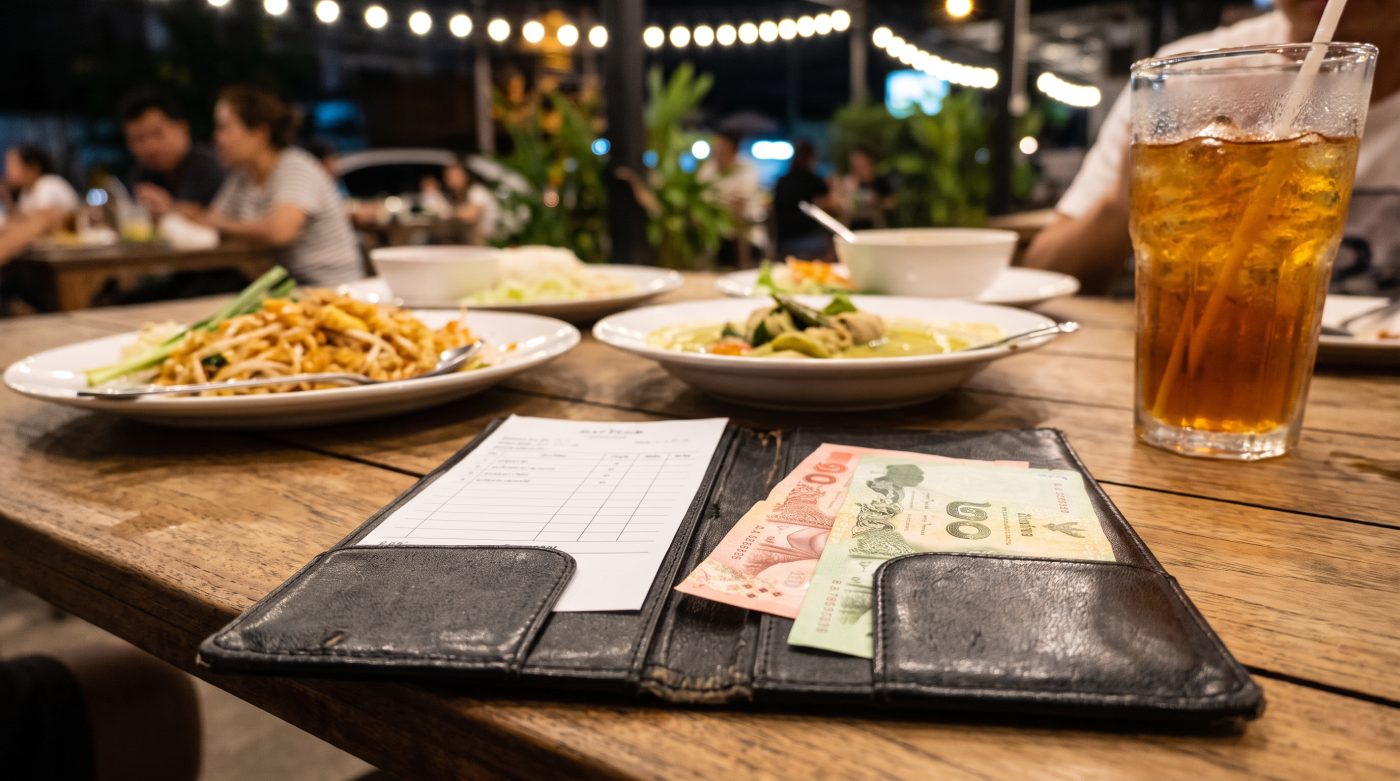
Before you tip anything, look at the bottom of the bill. Many restaurants that cater to tourists — and most hotel restaurants — already add a service charge, usually 10%, on top of 7% VAT. If that line is there, you've effectively already tipped, and nothing more is expected (though nobody will stop you from rounding up anyway).
If there's no service charge:
- Street food stalls and food courts: no tip. Thais don't tip here and neither should you.
- Casual sit-down restaurants: leaving the coins/small change from your bill, or rounding up to the next 50 or 100 baht, is the norm and is genuinely appreciated rather than expected.
- Nicer restaurants with real table service: 10% is a reasonable, generous tip if the service charge wasn't already added. Most travelers who tip here leave less — closer to 5% or just a flat 100–200 baht on a bigger bill — and that's fine too.
Wait — is the "service charge" even a real tip?
This is worth knowing before your first bill arrives, because it's a live consumer-rights issue in Thailand right now, not just trivia. Thailand's Office of the Consumer Protection Board has stated publicly that a restaurant's service charge is optional, not a mandatory fee — it's only legitimate if the restaurant clearly discloses it (on the menu or a visible notice) before you order, and it's capped, in practice, around 10%. A former senator who researched the question with several lawyers went as far as saying customers can legally refuse to pay a service charge the restaurant didn't disclose upfront, and flagged that some Bangkok restaurants have been charging 15–20% without clear notice.
In practice, almost nobody actually disputes a service charge at the table — it's a hassle for a few hundred baht. But if you ever get a bill with an undisclosed service charge well above 10%, you do have a real, cited basis to question it, and Thailand's Department of Internal Trade takes complaints through its 1166 hotline. Either way: a disclosed, reasonable service charge is not the same thing as a tip, and it doesn't go directly to your server the way a cash tip does — it's usually pooled and distributed by the restaurant, sometimes split with kitchen staff too.
Taxis, Grab, Bolt, and tuk-tuks
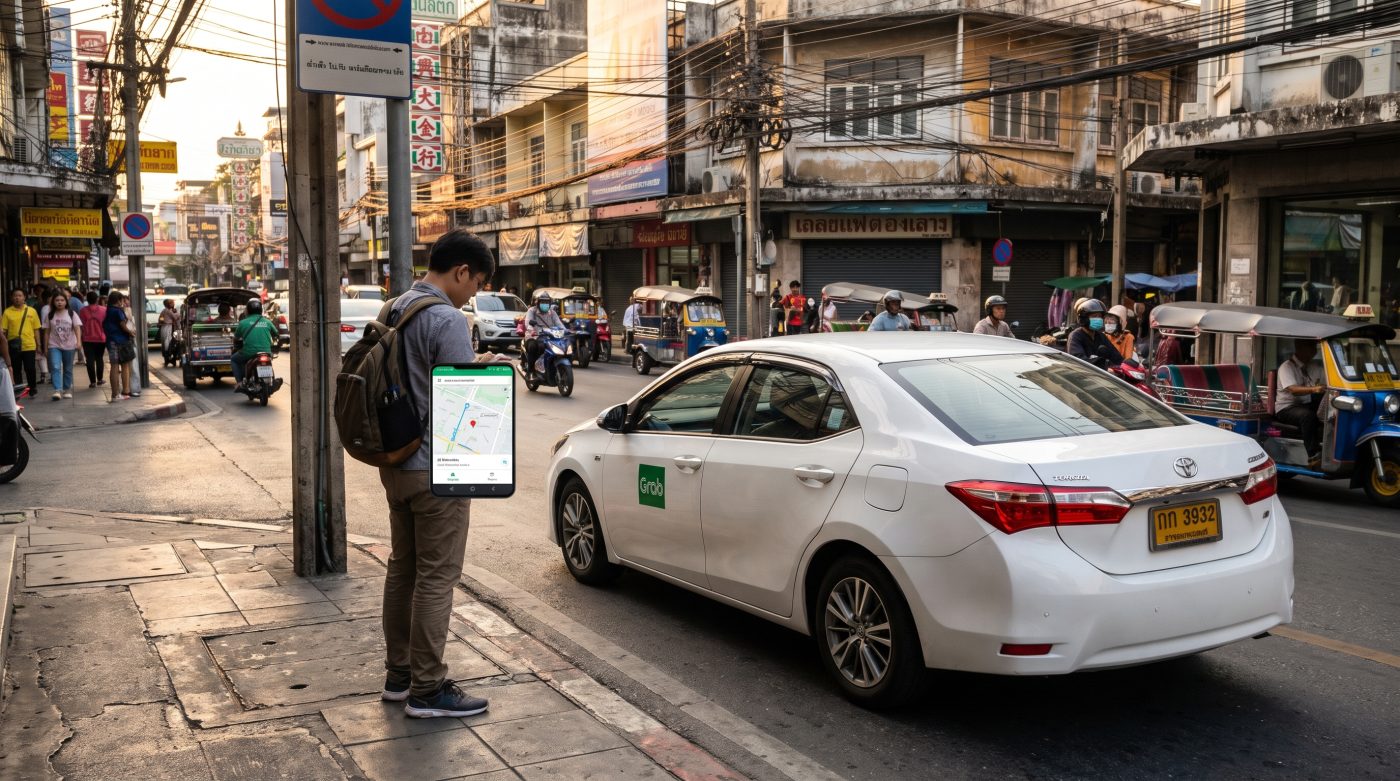
No tip is expected for an ordinary ride, and most Thai passengers don't leave one. The common habit among travelers is rounding up to the nearest 10 or 20 baht rather than waiting for small coins back — convenient for you, a small bonus for the driver, nobody keeping score either way. For a Grab or Bolt ride the fare is already fixed in the app, so there's nothing to round up unless you hand over cash; tipping isn't built into either app's flow. If a driver helped with heavy bags or went out of their way, 20–40 baht on top is a reasonable thank-you, not an obligation. For the full breakdown of what a ride should actually cost and the most common overcharge scams, the Grab vs. taxi vs. tuk-tuk guide covers that in more detail than this post needs to.
Massage and spa: the category with the least agreement
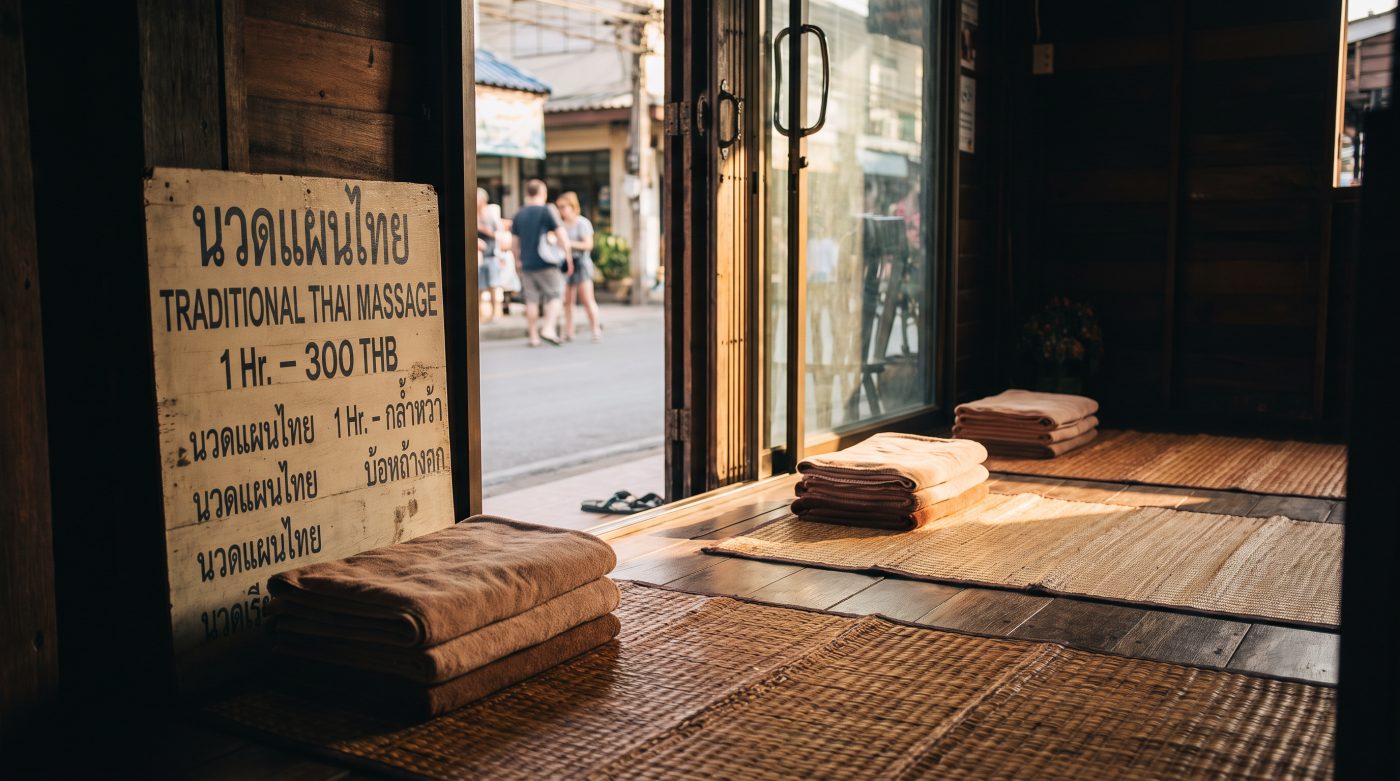
This is genuinely the most inconsistent category — ask five experienced Thailand travelers what they tip for a massage and you'll get five different answers, from "a round-up on the coins" to "10% of the bill" to one traveler's report of tipping 1,000 baht on a 3,000-baht spa treatment. A therapist working a budget street-side massage shop charging 300–400 baht an hour is earning a small fraction of that per session, so even a modest tip genuinely matters to them.
A reasonable, commonly cited range: 50–100 baht for a budget street-side massage (300–500 baht range), scaling up toward 10% of the bill at a proper spa with air conditioning, robes, and a menu of treatments. Tip in cash, directly to the therapist if you can, rather than adding it to a card payment at the front desk — some shops don't reliably pass card tips through to staff.
Hotels: small, situational, mostly optional
Hotel tipping in Thailand follows roughly the same shape as everywhere else, scaled down:
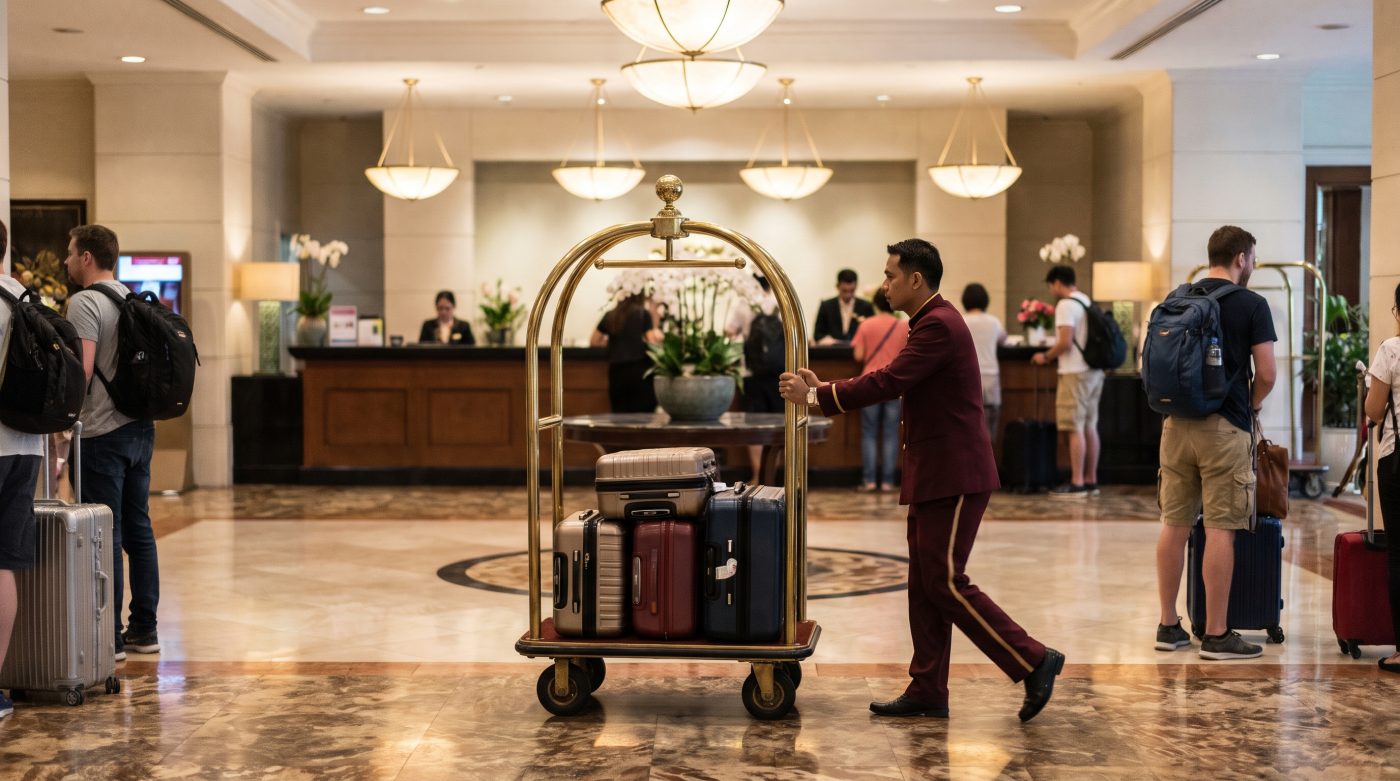
- Bellhop/porter: 20–40 baht per bag is plenty at a mid-range hotel; skip it at a budget guesthouse where nobody's carrying your bags anyway.
- Housekeeping: not expected daily, but leaving 20–50 baht a day (or a lump sum of a few hundred baht at checkout) for a multi-night stay is a genuine, appreciated gesture — housekeeping pay in Thai hotels is low even by local standards.
- High-end resorts: many already bake a service charge into your room rate, same logic as the restaurant section above — check your folio before tipping on top of it.
Tour guides and private drivers
This is the category where tipping is closest to actually expected, especially for a private or small-group day tour rather than a big bus tour. For a full-day private guide or driver, 100–200 baht per day from each traveler is a normal range; double that for a guide who went well beyond the standard script, arranged something special, or handled a genuinely difficult day well. On a large group tour where you never had a one-on-one relationship with the guide, tipping is appreciated but much less of an expectation — many travelers just leave nothing, and that's socially fine.
Bars
For a quick drink or two, nobody tips. If you settle in at the same bar for a few hours and get to know the bartender, rounding up your tab or leaving 20–50 baht is a normal, low-key gesture — not an expectation, just the kind of thing that gets you remembered next time you're back.
Why a small tip actually matters here
It's worth understanding the wage context, because it's the honest reason a tip that feels small to you can mean more than it would at home. Bangkok's minimum wage rose to 400 baht a day (about $12) in July 2025, covering roughly 700,000 workers across all Bangkok businesses plus hotels and entertainment venues nationwide — other provinces vary and are generally a bit lower. A 50-baht tip on a massage, or a 100-baht tip to a tour guide, is a meaningful fraction of a day's base pay, even though it's barely noticeable against a typical trip budget. For context on what a trip here costs overall, including a rough daily allowance that makes room for these small tips without overthinking them, see the Thailand trip cost breakdown.
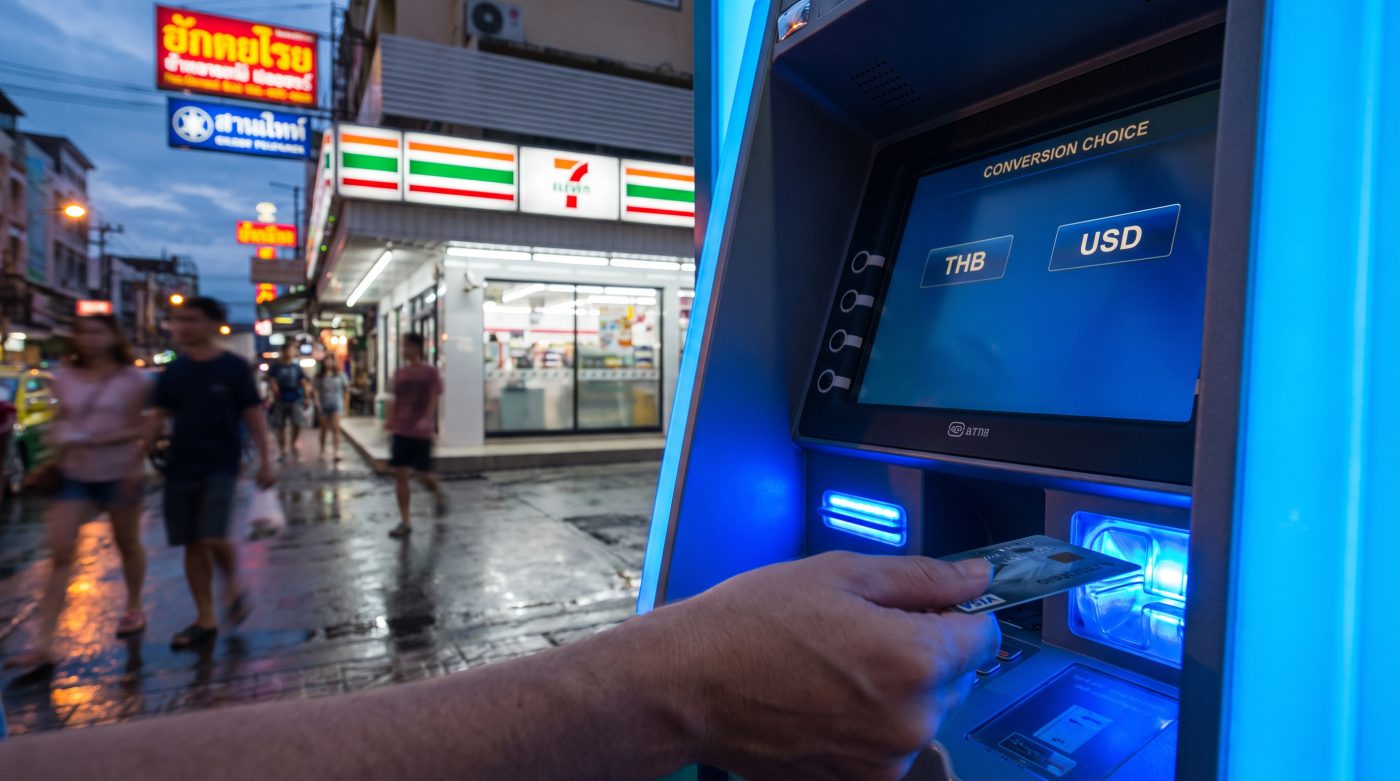
One practical note: tips land best in cash, and in small notes — 20s and 100s, not a 1,000-baht bill you're hoping gets broken. If you're relying on ATMs for cash and want to avoid overpaying in fees while you're at it, the Thailand ATM fees guide covers how to minimize what you lose just getting baht out of a machine.
The one-paragraph version to actually remember
Check the bill for a service charge before tipping anything at a restaurant. Round up for taxis and casual meals if you want to, skip it at street stalls and 7-Eleven, tip 50–100 baht for a massage, tip a private guide or driver 100–200 baht a day, and keep a stash of small baht notes on hand so you're never tipping with the only bill in your wallet. None of this is enforced, none of it is rude to skip entirely, and all of it is appreciated when you do it.
▶Watch on VacaHack
Quick answers
Do you tip in Thailand?
Not the way you would in the US, and nothing is enforced x2d but small tips are genuinely expected or appreciated in a few specific situations: restaurants without a service charge, massage shops, tour guides and private drivers, and hotel staff handling your bags or room. Street food, convenience stores, and anywhere with no table service don't get a tip.
How much should I tip at a restaurant in Thailand?
First check the bill for a service charge (usually 10%) x2d if it's there, you've effectively already tipped. If not, rounding up or leaving the small change is the norm at casual places, and 5x2d10% is a generous tip at a nicer restaurant with real table service.
Is a service charge in Thailand the same as a tip?
No. Thailand's Office of the Consumer Protection Board has stated that a restaurant service charge is an optional fee, not a mandatory tip, and it's only legitimate if clearly disclosed before you order. It's typically pooled by the restaurant rather than going straight to your server, unlike a cash tip.
Do you tip Grab, Bolt, or taxi drivers in Thailand?
No tip is expected for an ordinary ride. Many travelers round up to the nearest 10x2d20 baht rather than take small change back, and 20x2d40 baht extra is a reasonable thank-you if a driver helps with heavy bags, but it's not an obligation either way.
How much do you tip for a massage in Thailand?
There's no single agreed answer, but 50x2d100 baht is a commonly cited range for a budget street-side massage (300x2d500 baht range), scaling toward around 10% of the bill at a proper spa. Tipping the therapist directly in cash is more reliable than adding a tip to a card payment at the front desk.
Do you tip tour guides and drivers in Thailand?
This is the category closest to a real expectation, especially for private or small-group tours. 100x2d200 baht per traveler per day is a normal range for a guide or driver, more for exceptional service. On a large group bus tour, tipping is appreciated but not really expected.