Long-Distance Buses in Thailand: Terminals, VIP Classes, and How to Book Them
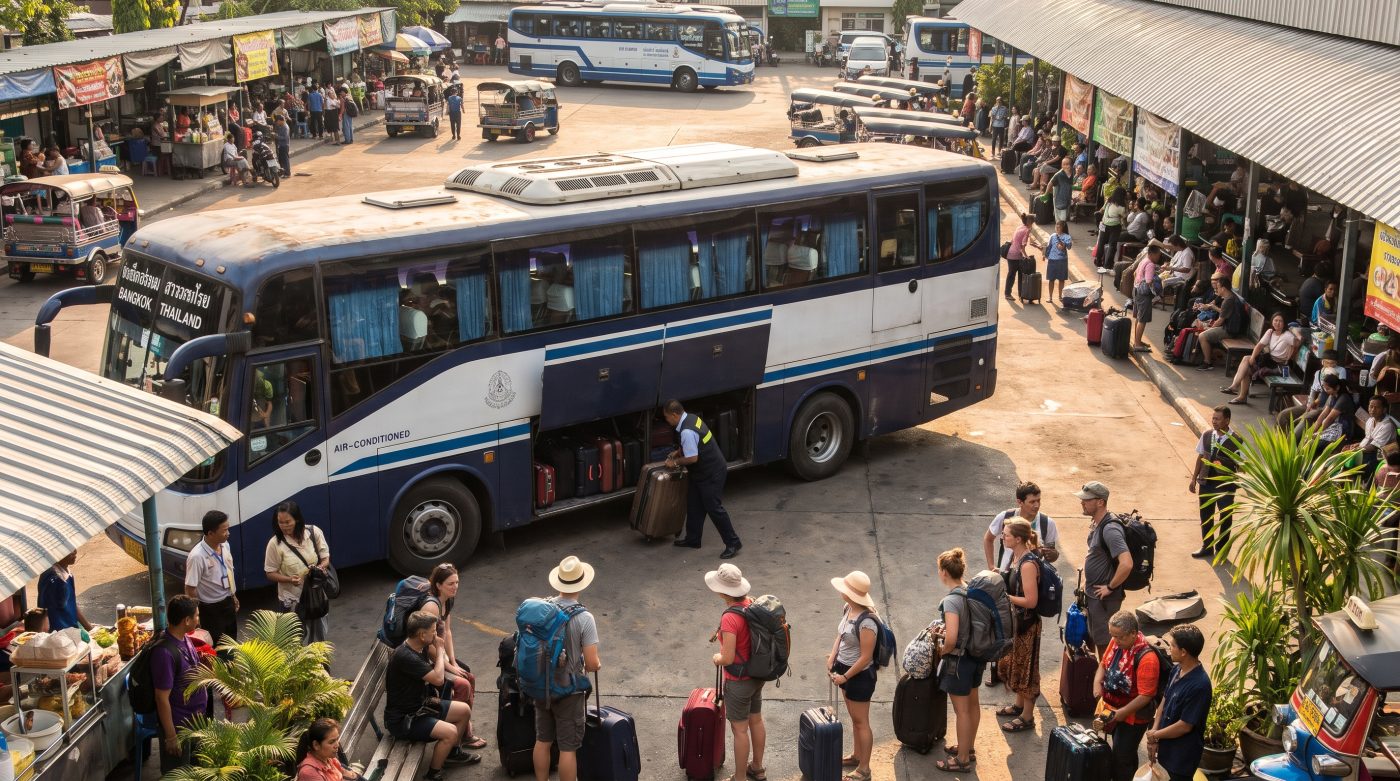
Thailand has an extensive, cheap, and mostly reliable long-distance bus network that connects almost every province to Bangkok and to each other — you don't need a car or a flight to get from the capital to Chiang Mai, Krabi, or a small town in Isaan, and a government-regulated "VIP" bus is a genuinely comfortable way to cover a long overnight distance for a fraction of a flight's cost.
Bangkok's three bus terminals — and which one you actually need
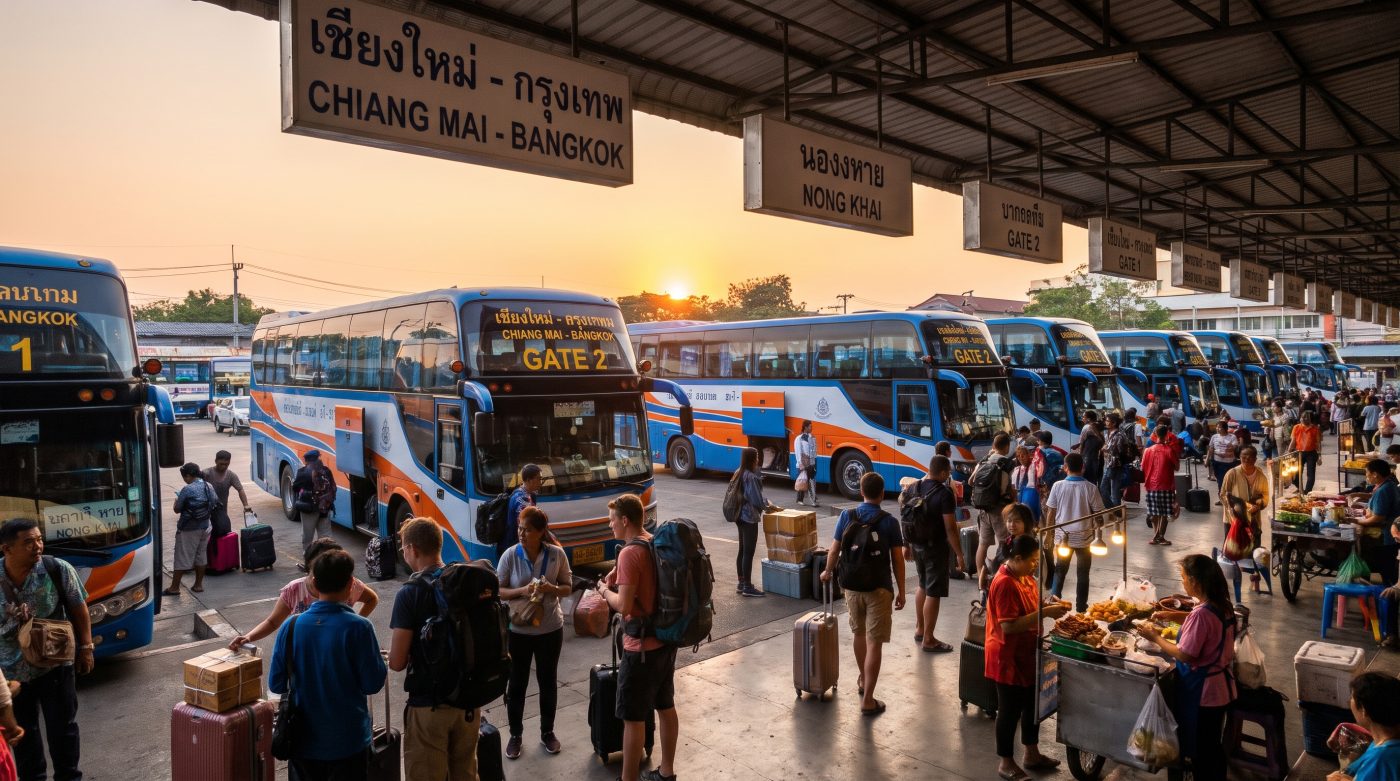
Long-distance buses out of Bangkok don't all leave from one place. Which terminal you need depends entirely on where you're headed:
- Mo Chit (Northern & Northeastern Bus Terminal) — the biggest of the three, and the one most travelers end up at. It serves Chiang Mai, Chiang Rai, Sukhothai, and the whole of Isaan (Nong Khai, Udon Thani, Nakhon Ratchasima, Khon Kaen and beyond). It's connected to the BTS Skytrain's Mo Chit station and the MRT's Chatuchak Park station, so you can reach it on the rail network rather than fighting Bangkok traffic in a taxi.
- Ekkamai (Eastern Bus Terminal) — right next to the Ekkamai BTS stop, and the one to use for Pattaya, Rayong, and the eastern seaboard. (See our Bangkok to Pattaya transport guide if that's your route — bus from here is one of the options compared there.)
- Sai Tai Mai (Southern Bus Terminal, on the Thonburi side) — for Krabi, Phuket, Surat Thani (the jumping-off point for the Gulf islands), and Kanchanaburi. It's across the river from the other two and generally takes longer to reach from most tourist areas, so budget extra time getting there.
A common mistake is assuming all long-distance buses leave from one "main" station the way some countries centralize things — in Bangkok they genuinely don't, so double-check which terminal your route uses before you plan your trip there.
What "VIP" actually means on a Thai bus
Thai long-distance buses are sold in a few real tiers, and the names aren't just marketing fluff — they correspond to actual seat configurations:
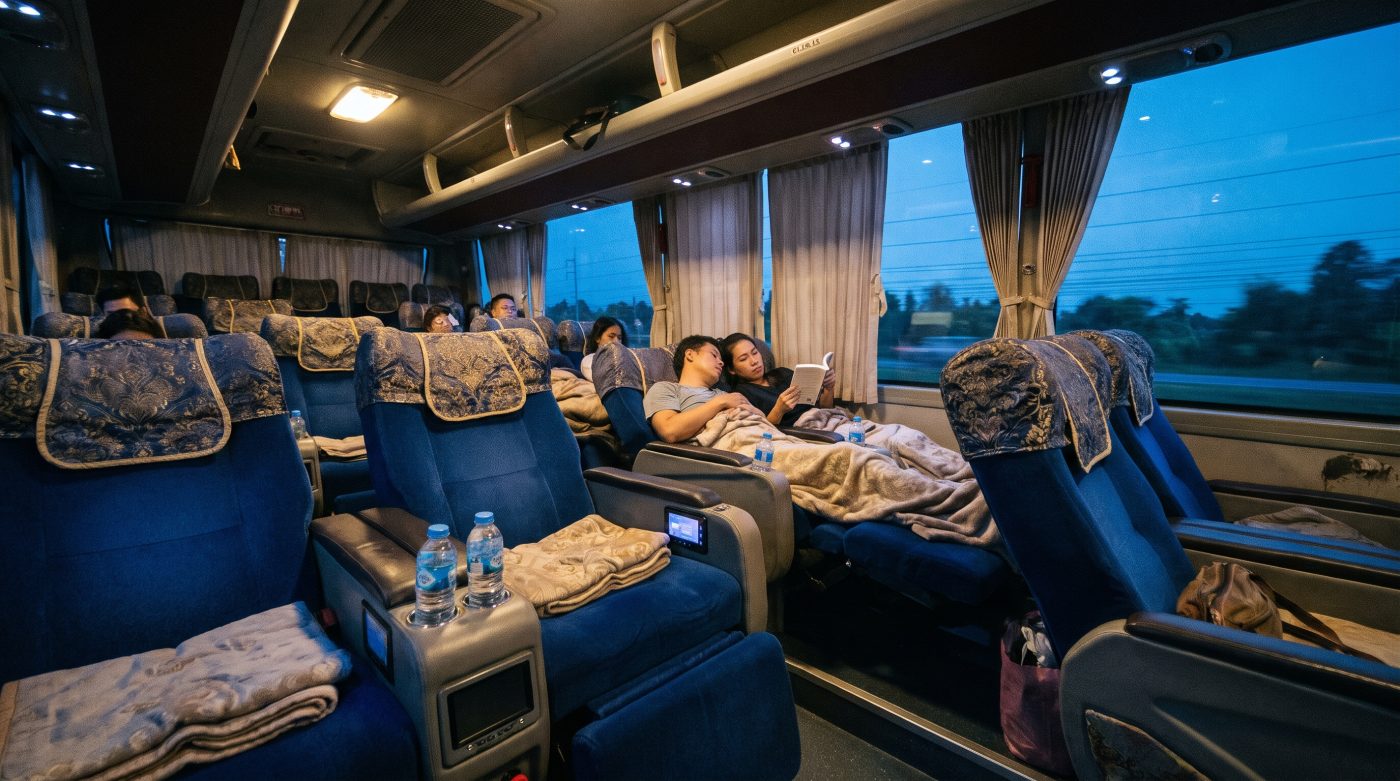
- 24-seat (sometimes called "first class" or "super VIP") — the most spacious option, usually 3 seats across in a 2-1 layout with wide, deeply reclining seats and leg rests. This is the one worth paying extra for on an overnight route.
- 32-seat VIP — still air-conditioned and reasonably comfortable, 4 across, with less recline and legroom than the 24-seat option but noticeably better than the baseline.
- Standard/local buses — cheaper, more stops, less consistent air-con, and generally not what you want for a long overnight haul.
One detail worth knowing before you board: the air-conditioning on Thai VIP buses runs genuinely cold — travelers consistently describe it as near meat-locker temperatures. Bring a layer or a light blanket even in the middle of the hot season; don't assume you'll be comfortable in just a t-shirt for a 9-hour overnight run.
How to actually book a ticket
You've got three realistic options, each with a real tradeoff:
- Book online through 12Go.asia — by far the most common way foreigners book Thai buses, and it covers most major operators and routes in English with a card payment. It adds a booking fee on top of the base fare and isn't fully refundable close to departure, but it's reliable, well-reviewed, and the simplest option if you don't read Thai.
- Book directly with the operator (a company's own website or app, like GreenBusThailand.com or the Greenbus app, or Nakhon Chai Air's own site) — usually the cheapest option since there's no middleman fee, but not every operator has an English-friendly site, and some require payment at a 7-Eleven within a short window after reserving.
- Buy in person at the terminal counter — works fine for popular routes with frequent departures (Bangkok–Chiang Mai, for instance, runs multiple times a day), but risky if you're on a schedule for a less-frequent route, since the next bus might be hours away or sold out.
The Khao San Road agent trap
If you're staying near Khao San Road or another backpacker hub, you'll see countless small travel agencies advertising bus tickets at a counter on the street. These aren't always a scam exactly, but travelers consistently report a specific pattern worth knowing about: you book a "VIP bus," and what actually shows up is an older minivan or a lower-tier bus than advertised, sometimes with an unplanned transfer partway through. This happens because many of these agents resell seats through subcontracted operators rather than booking you directly onto a named company's bus.
The safer bet, especially for a long overnight route, is to book directly through 12Go.asia (which shows you the actual operator and bus class before you pay) or at the terminal counter for a named, regulated company — Nakhon Chai Air, Green Bus, and Sombat Tour are among the larger, more consistently reviewed operators on Thailand's major routes. That doesn't guarantee a flawless trip (readers of independent reviews still report the occasional dirty onboard bathroom or missing Wi-Fi even on a reputable operator's VIP class), but it removes the biggest variable: not knowing what you actually booked until you're standing in front of it.
Is it actually safe?
This is worth answering honestly rather than glossing over. Thai road safety statistics are not great by developed-world standards generally, and long-distance coach crashes do make the news from time to time — as recently as March 2026, a double-decker tour bus carrying 53 passengers skidded on a rain-slicked bypass road near Nakhon Ratchasima; thankfully no serious injuries were reported, and the cause was still under review at the time of reporting. Incidents like this aren't common on any single trip, but they're a real enough pattern that it's worth taking a few sensible precautions rather than assuming a bus is risk-free by default:
- Where there's a real choice, an overnight bus driven through the small hours carries more risk than a daytime departure — fatigue and reduced visibility are real factors, though we couldn't find a solid, sourced statistic on exactly how much riskier night driving is, so treat any specific percentage you see quoted online with skepticism.
- Stick with named, regulated operators rather than unmarked subcontracted vehicles (see the Khao San section above).
- Use a seatbelt if one is fitted to your seat — not every Thai coach has them, but some do, especially newer VIP-class vehicles.
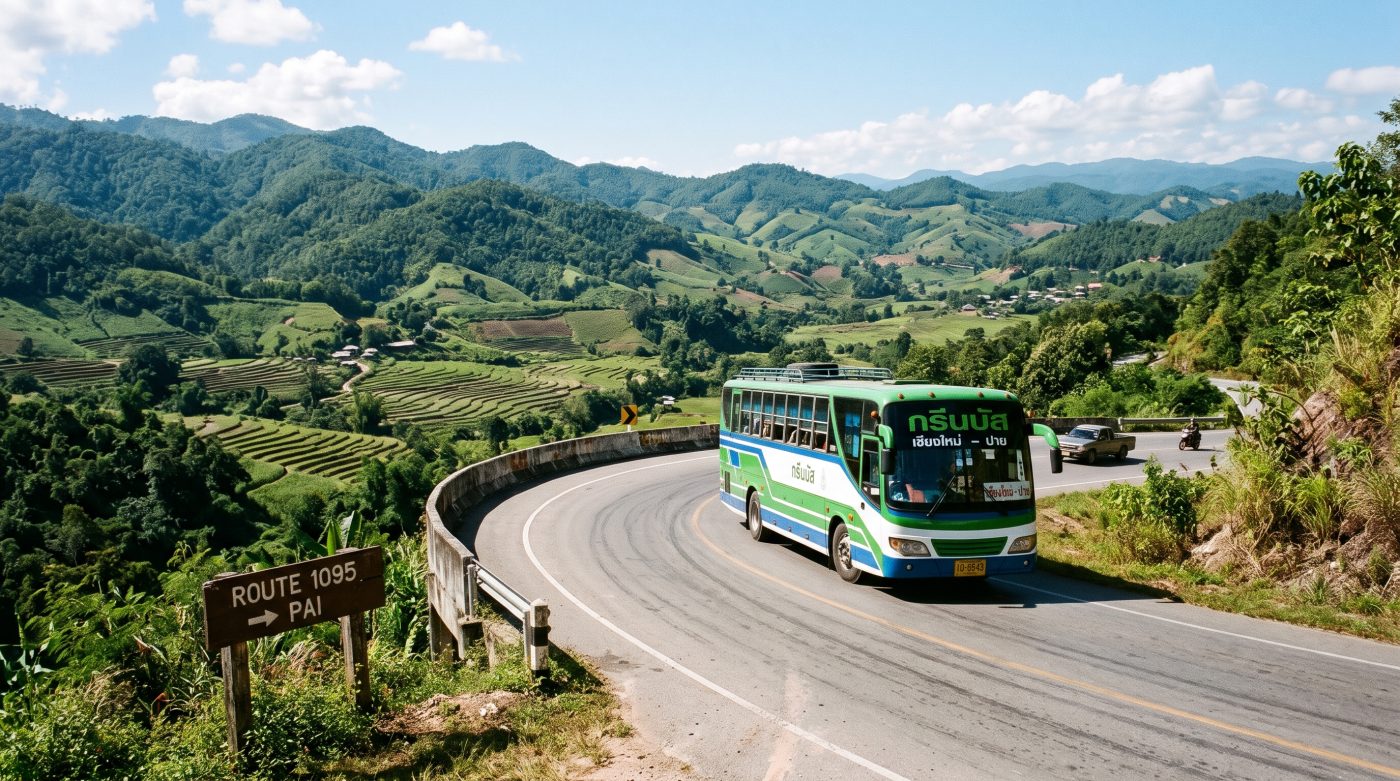
- On a genuinely mountainous route (northern Thailand's hill routes, for instance), a slower, more experienced operator is worth more than a marginally faster one.
Bus vs. train vs. flight vs. minivan
Buses aren't always the right call. A rough way to think about it:
- Bus is usually the cheapest option and covers routes that trains and flights don't, especially within a region (Chiang Mai to Chiang Rai, for example, has no rail link at all).
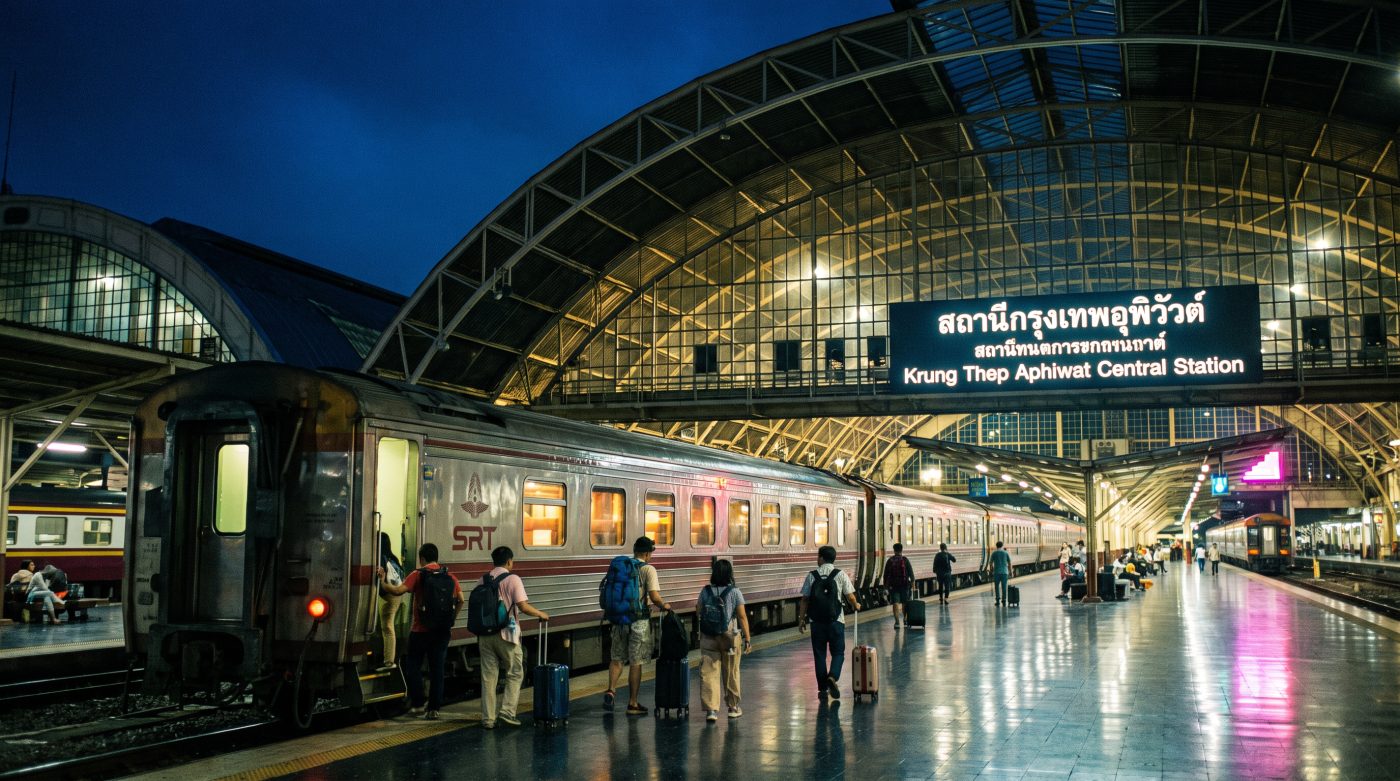
- Overnight train (Bangkok to Chiang Mai is the classic route) is more comfortable for sleeping than almost any bus, at a similar or slightly higher price — see our overnight train guide for the full comparison.
- Domestic flight wins decisively on time for longer hauls (Bangkok to Phuket or Chiang Mai, for instance) once you factor in how many hours a bus actually takes — our domestic flights guide breaks down pricing by airline.
- Shared minivan is faster door-to-door for shorter regional hops (within a few hours) but trades comfort and, by most traveler accounts, a measure of safety margin for that speed — it's a different product from a full-size coach, not just a smaller version of one.
Realistic travel times on popular routes
Bus company timetables tend to round optimistically, so budget a bit more than the posted time, especially if your route passes through Bangkok traffic at either end:
- Bangkok ↔ Chiang Mai: roughly 9–11 hours
- Bangkok ↔ Krabi: roughly 11–13 hours
- Bangkok ↔ Nong Khai (for the Laos border): roughly 10–11 hours
- Chiang Mai ↔ Chiang Rai: roughly 3–4 hours
- Bangkok ↔ Surat Thani (for Koh Samui/Koh Phangan ferries): roughly 9–11 hours
For anything over about 8 hours, an overnight VIP departure (leaving evening, arriving early morning) is usually the better use of your time than burning a full daylight travel day — you lose a night's hotel cost but gain a full day at your destination.
Prices and exact schedules shift, so always check current fares and departure times on 12Go.asia or the operator's own site before you lock in a date — don't plan around any specific baht figure you read here or anywhere else as fixed.
▶Watch on VacaHack
Quick answers
Is it safe to take an overnight bus in Thailand?
Long-distance coaches in Thailand are generally reliable, but crashes do happen occasionally, including on overnight routes. Stick with named, regulated operators (Nakhon Chai Air, Green Bus, Sombat Tour), use a seatbelt if your seat has one, and favor a daytime departure over an overnight one on genuinely mountainous routes if timing allows.
How do I book a bus ticket in Thailand?
The easiest way for most travelers is 12Go.asia, which shows the actual operator and bus class in English and takes card payment. Booking directly with the operator (their own site or app) is usually cheaper but not always in English. You can also buy in person at the terminal counter for popular routes with frequent departures.
What is a VIP bus in Thailand?
VIP describes a specific, wider seat configuration rather than just a marketing label. A 24-seat (sometimes called first class) bus has the most legroom and recline, typically 3 seats across; a 32-seat VIP bus is still comfortable but has less room per seat, typically 4 across.
Which bus company is best in Thailand?
Nakhon Chai Air, Green Bus, and Sombat Tour are among the larger, more consistently reviewed operators on Thailand's major routes. None is flawless (occasional complaints about onboard bathrooms or missing Wi-Fi show up even for reputable operators), but booking a named company directly removes the biggest risk: not knowing what bus actually shows up.
Should I book through a Khao San Road travel agent?
Be cautious. Travelers consistently report booking a 'VIP bus' through a Khao San-area agent and getting an older minivan or a lower bus class than advertised, since many of these agents resell seats through subcontracted operators. Booking directly through 12Go.asia or at the terminal counter for a named company is the safer bet.
How long does the bus from Bangkok to Chiang Mai take?
Realistically 9 to 11 hours depending on the operator and traffic leaving Bangkok, even though some timetables post a slightly shorter figure. Most travelers take an overnight VIP departure to use the travel time for sleep rather than losing a full daylight day.