Renting a Scooter in Thailand: Deposits, Scams, and Realistic Prices
Expect to pay somewhere between 150 and 400 baht a day for a basic automatic scooter, hand over a cash deposit or a passport (more on which one to actually agree to below), and spend two minutes filming the bike before you ride off — that two-minute video is the single thing that protects you more than anything else in this guide.
Thailand's scooter-rental market runs almost entirely on trust and paperwork, not regulation. There's no national rental-company standard the way there might be for cars back home. Some shops are excellent and some will try to pin a 2,000-baht "repair" on a scratch that was already there. The good news: once you know what a normal deposit looks like, what to film before you leave the lot, and which red flags actually matter, renting is straightforward almost everywhere in the country.
Where people actually rent from
You've got three real options, and which one makes sense depends on where you are and how risk-averse you want to be.
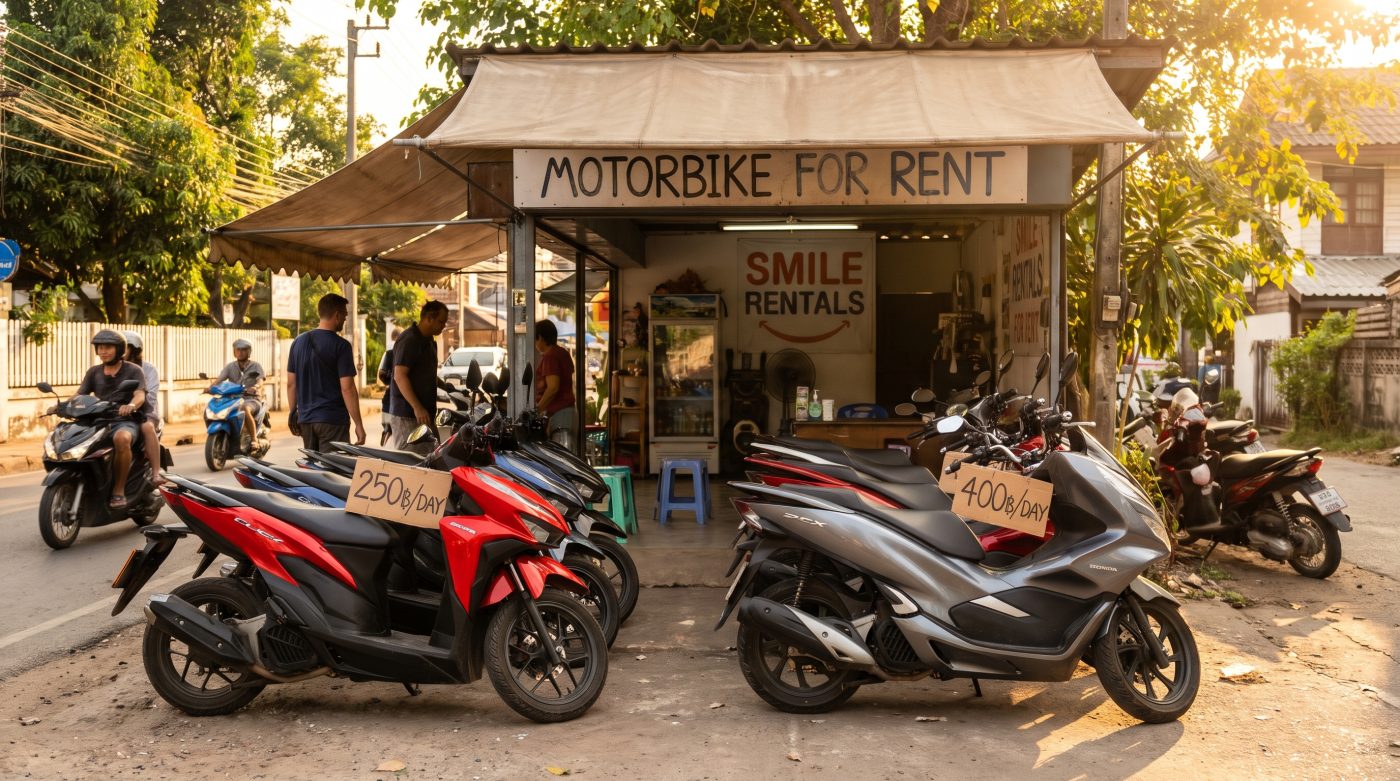
- Your hotel or guesthouse. Almost every guesthouse in a tourist area either rents bikes directly or partners with a shop down the street. It's the path of least resistance — the staff have a reason to keep you happy — but the per-day rate is sometimes a little higher than walking to an independent shop yourself.
- An independent walk-up shop. This is most of the market. Quality varies block to block in the same town. A quick look at a shop's Google or Facebook reviews before you commit takes thirty seconds and filters out the worst offenders — repeated complaints about "surprise" damage fees are the pattern to watch for.
- A rental app. Phuket has a deposit-free rental app called Skoot that lists bikes from more than a hundred local shops and, per the company, holds the security deposit itself rather than the shop holding your passport. Real user reviews are mixed — some travelers like skipping the passport conversation entirely, others have reported confusion between the advertised daily rate and what the app actually charged for a longer rental. If you use it, screenshot the quoted price and length of rental before you confirm. As of this writing it only covers Phuket, not the rest of the country.
The deposit conversation — what's normal, what's a red flag
For a basic 110–125cc automatic (Honda Click, Scoopy, and similar), a cash deposit in the neighborhood of 500 to 2,000 baht is typical. Bigger automatics in the 150–160cc class (PCX160, NMAX, Aerox 155) tend to run 2,000 to 5,000 baht, and larger bikes more still.
The passport question is the one people actually search for, and the honest answer is that it's genuinely contested. Several Thailand-focused forums have threads with dozens of replies and no one citing an actual law that settles it either way — opinions range from "it happens all the time and is fine" to "only a government official should ever hold your passport." What's consistent across experienced travelers' advice is this: offer a photocopy of your passport's ID page plus a cash deposit instead of the original document. Most legitimate shops will take that trade. If a shop refuses a copy and insists on the original passport and nothing else, a lot of experienced riders treat that as a reason to walk down the street and try the next shop instead of arguing about it.
For the deeper legal picture — international driving permits, what your own insurance actually covers, and the licensing requirements Thai authorities enforce — see our full motorbike accident, insurance, and license guide, since that's genuinely its own topic and worth reading in full rather than a quick recap here.
The 90-second walkaround that actually protects you
Before you start the engine:
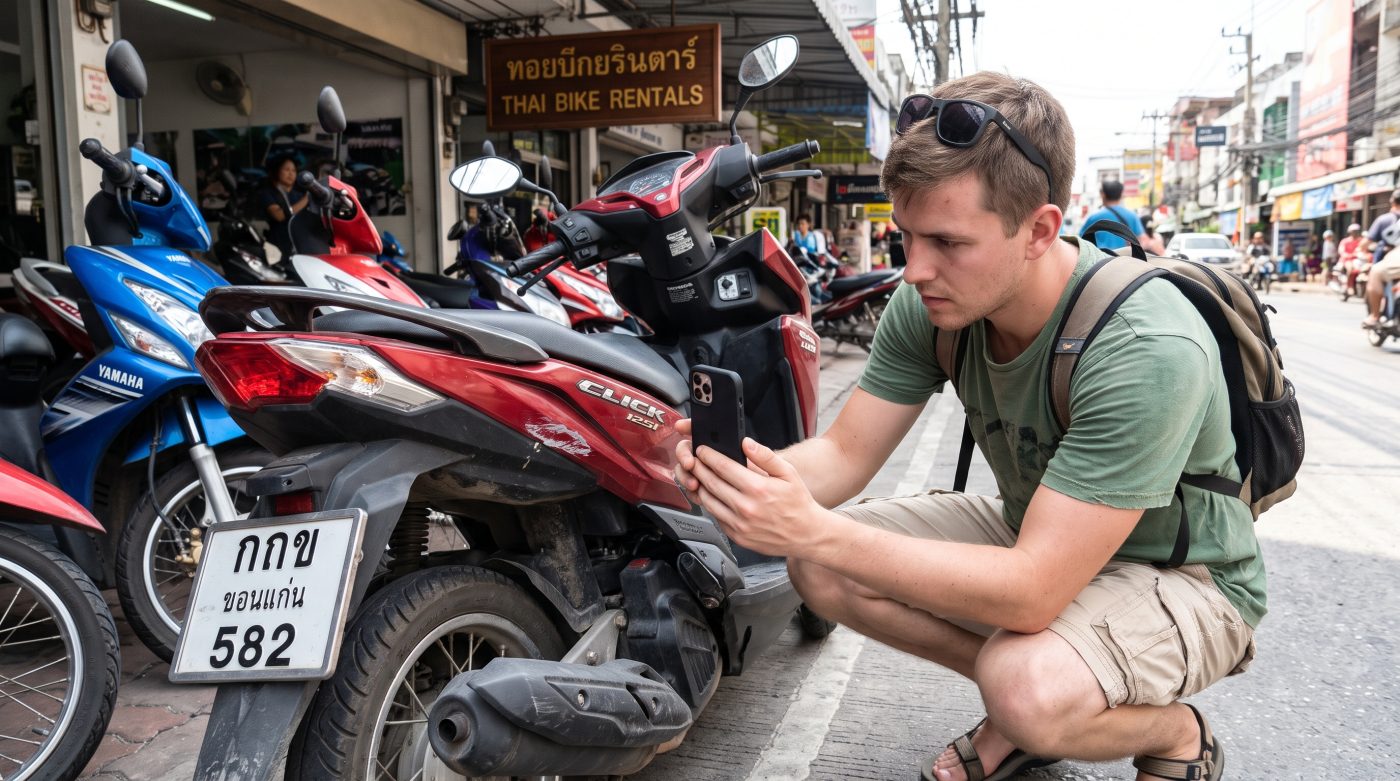
- Film a continuous 60–90 second video starting at the license plate, then slowly circling the whole bike, narrating out loud any existing scratches, dents, or cracked plastic as you go. Do it somewhere staff can see you doing it.
- Check tires, both brakes, the horn, and the headlight/taillight actually work before you leave the lot.
- Get the daily rate and deposit amount written on a rental slip or agreement — even a handwritten one. A verbal-only price is the easiest thing for a shop to "misremember" later.
- Email or cloud-upload the video to yourself immediately, in case anything happens to your phone.
None of this is about assuming bad faith. Most shops are completely fine. It's just that the ones that aren't tend to count on tourists not having proof of the bike's condition beforehand — and thirty seconds of narrated video removes that leverage entirely.
What a stolen or "damaged" bike actually costs you
A 2025 report covered by Pattaya Mail, citing local police, put it bluntly for tourists: most rental agreements place full liability on the renter for loss, damage, or theft — regardless of fault — and ordinary travel insurance often doesn't cover scooter theft unless you can show evidence of forced entry, which rarely exists in an opportunistic grab-and-go theft. Replacing a stolen rental bike can run into the tens of thousands of baht. Treat that as a real, current risk pattern rather than a one-off scare story — it's consistent with what rental shops themselves tell renters.
The practical response isn't to panic, it's to do the cheap things that actually reduce the odds: carry a second physical lock in addition to the bike's built-in one, park in well-lit or camera-monitored spots whenever one's available, and avoid leaving the bike unattended outside a convenience store late at night — the single most common setting these thefts get reported from. For what your insurance should and shouldn't be expected to cover if something does go wrong, again, the motorbike insurance and accident guide covers that ground properly.
Realistic prices by bike and region (current ballpark)
These move with season, shop, and the bike's condition, so treat them as a starting point for negotiating, not a quote:
- Basic automatic (Honda Click, Scoopy, 110–125cc): roughly 150–350 baht/day. Cheapest in smaller towns like Pai and Hua Hin, pricier in Bangkok, Pattaya, and the more touristy islands. Weekly runs about 900–1,800 baht; monthly, roughly 2,000–5,000 baht.
- Bigger automatic (PCX160, NMAX, Aerox 155, 150–160cc): around 250–450 baht/day.
- Manual or semi-automatic bigger bikes (200–400cc): roughly 500–1,200 baht/day.
- Big bikes (500cc+): typically 1,500–2,800 baht/day.
- Fuel: a small scooter sips gas — filling a 125cc tank usually costs somewhere around 100–150 baht, and you'll burn well under 1 baht per kilometer.
A few honest red flags to walk away from
- A shop that won't accept a passport photocopy under any circumstances and offers no alternative.
- No written record at all of the agreed daily rate or deposit — verbal-only deals are where "misunderstandings" happen.
- Any pushback on you filming the bike's condition before you leave.
- A price quoted online or over chat that doesn't match what you're actually charged at pickup — confirm the final daily rate and total before handing over cash or a card.
Watch on VacaHack
Quick answers
How much does it cost to rent a scooter in Thailand?
A basic automatic scooter (Honda Click, Scoopy) runs roughly 150-350 baht a day depending on the region, cheaper in smaller towns and pricier in Bangkok, Pattaya, and the busier islands. Bigger automatics like a PCX160 or NMAX run about 250-450 baht a day, and anything 500cc or above is typically 1,500-2,800 baht a day. Weekly and monthly rentals bring the per-day cost down noticeably.
Is it legal for a rental shop in Thailand to hold my passport as a deposit?
It's genuinely contested, and we couldn't find a clear, authoritative law settling it either way. The practice is common and widely debated on travel forums. The safer, widely-recommended alternative is offering a photocopy of your passport's ID page plus a cash deposit instead of the original document - most legitimate shops accept this.
What happens if my rented scooter is stolen in Thailand?
Most rental agreements place full financial liability on the renter for a stolen bike, regardless of fault, and ordinary travel insurance often doesn't cover theft without evidence of forced entry. Carry a second physical lock, park in well-lit or monitored areas, and avoid leaving the bike unattended outside convenience stores late at night, since that's a common setting for reported thefts.
Do I need an international driving permit to rent a scooter in Thailand?
Most rental shops will hand over the keys without checking, but that is a separate question from what Thai law and your insurance actually require. See our full motorbike insurance and license guide for the complete legal picture rather than relying on what a shop is willing to overlook.
Is renting through an app like Skoot safer than renting from a shop directly?
Skoot (currently Phuket-only) advertises a deposit-free model where it holds the security deposit itself instead of a shop holding your passport, which some travelers prefer. Real reviews are mixed, with a few reports of confusion between the quoted daily rate and the actual charge on longer rentals, so confirm the total price and rental length before you confirm a booking.
What should I check before riding off on a rental scooter in Thailand?
Film a 60-90 second walkaround video narrating any existing scratches or damage, test both brakes, the horn, and the lights, and get the daily rate and deposit amount written down, even informally. That combination is what actually protects you if a shop later disputes the bike's condition.