Motorbike Accidents in Thailand: Insurance, Licenses, and What Tourists Get Wrong
If you get into a motorbike accident in Thailand, your travel insurance will very likely cover it — most policies that mention motorbikes at all do, and some, like SafetyWing, include it standard rather than as a pricey add-on. Where riders actually get burned isn't a lack of coverage. It's assuming a rental shop's "yes we have insurance," a car license, or a policy that technically lists motorbike coverage is automatically enough. Almost none of those things alone are, and the gap only shows up after the accident, when it's too late to fix.
Why this matters more in Thailand than almost anywhere else
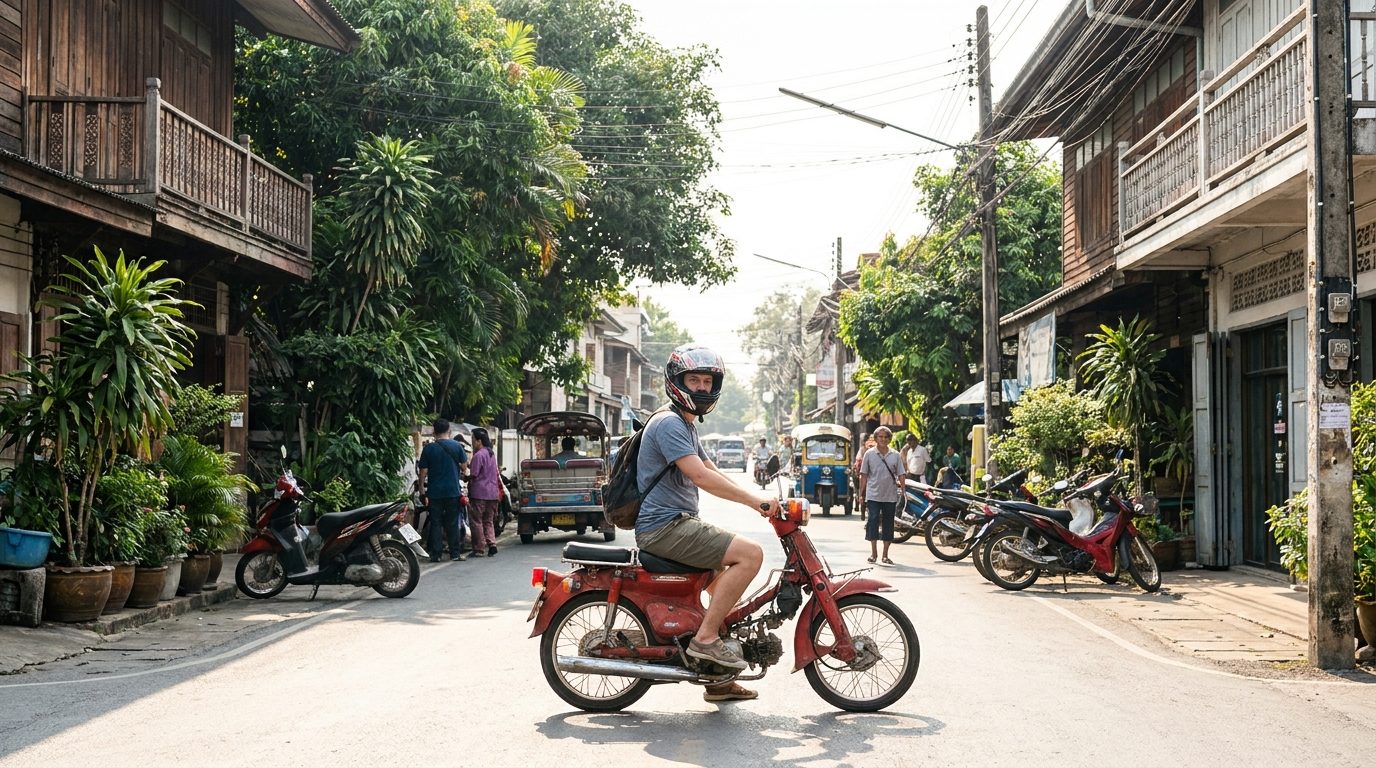
Motorbikes make up the large majority of vehicles involved in Thailand's road accidents — commonly cited around 80% of traffic deaths, and over 80% of vehicles in New Year-period crash data specifically. Renting a scooter is also just how a lot of people get around: it's cheap, parking is easy, and every guesthouse and 7-Eleven strip has a rental shop nearby. That combination — heavy motorbike use plus a constant stream of tourists riding for the first time on unfamiliar roads — is exactly why the insurance and licensing details below matter more here than on a typical trip.
The license requirement almost nobody actually meets
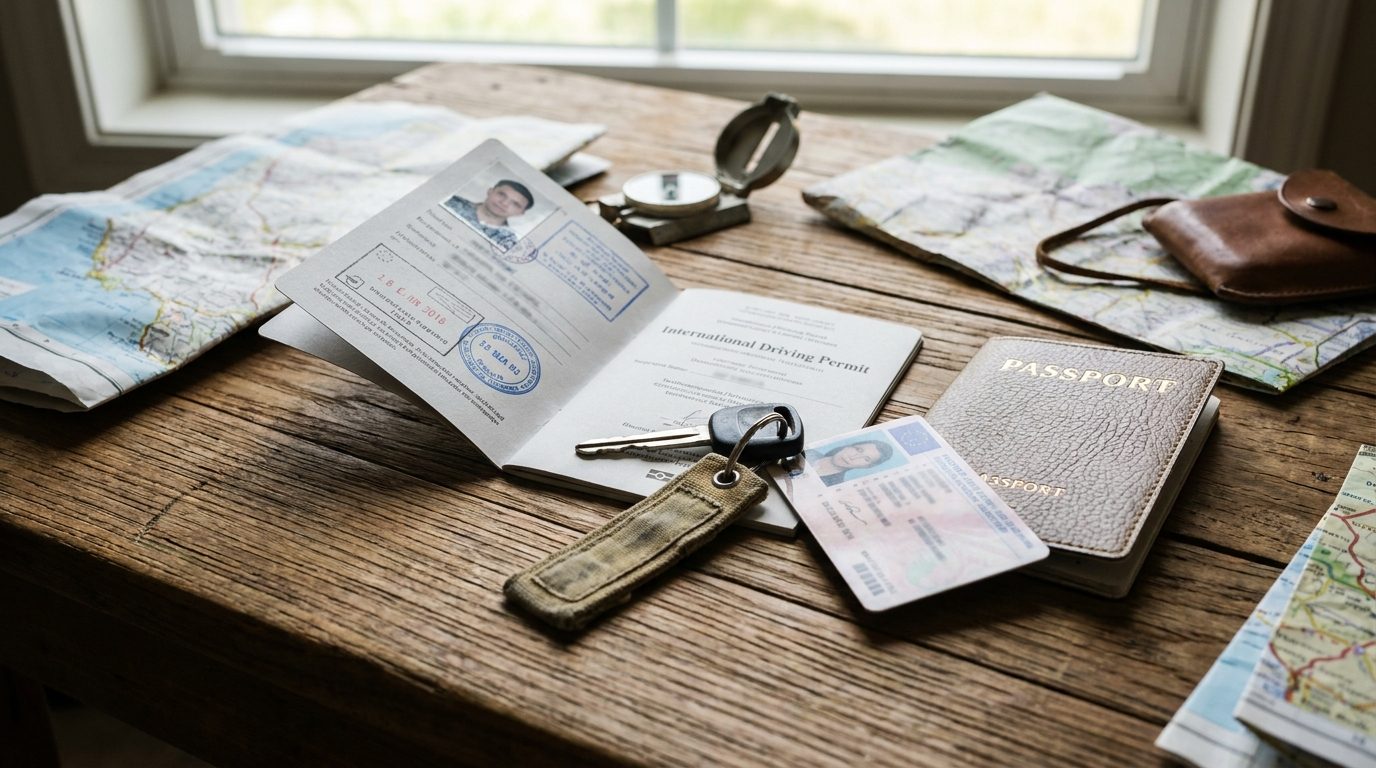
Thai law requires a valid motorcycle license or an International Driving Permit (IDP) with a Category A (motorcycle) endorsement, carried together with your original home-country license, to legally ride any scooter or motorbike in Thailand — regardless of engine size. A car-only license, and a car-only IDP, do not cover this. That trips people up constantly: UK and EU driving licenses in particular often default to car-only categories, and travelers request an IDP without realizing they need to specifically apply for the motorcycle category to have it actually apply.
In practice, almost no rental shop checks any of this. A commonly cited figure from Thailand-based rental discussions is that the vast majority of bikes get handed over on nothing more than a passport photocopy or a cash deposit. But a rental shop isn't a legal authority, and its lack of enforcement has zero bearing on whether you were actually licensed to ride — which is the first thing that gets checked after an accident, not before one. On a Thailand expat forum thread about this exact question, one poster summed up the real risk plainly: getting insurance is easy, but getting an insurer to actually pay out is the part that depends entirely on whether your paperwork was in order at the time of the crash.
What "having insurance" actually requires
Across most travel and motorbike insurance policies that do cover accidents, coverage is conditional, not automatic. The conditions that show up again and again:
- Proper licensing for the specific class of vehicle you're riding, as described above.
- Helmet use — riding without one is one of the most common reasons a claim gets denied outright, on top of it being the single biggest factor in whether a crash is survivable.
- Sobriety — accidents involving alcohol or drugs are excluded across essentially every policy, no exceptions.
- Engine size limits — some policies cap standard coverage at a specific cc threshold and require an add-on above it (more on this below).
- No racing or stunt riding, and often no off-road use outside what the bike is rated for.
Meeting all of these isn't unusual or hard — it's just specific, and specific is exactly the kind of thing that's easy to overlook when you're renting a bike on your first afternoon in Thailand.
Does SafetyWing actually cover motorbike accidents in Thailand?
Genuinely, yes — and this is worth calling out because most travel insurers either exclude motorbike accidents entirely or bury them behind an expensive add-on. SafetyWing's Nomad Insurance includes motorbike/scooter accident coverage as standard, without an upgrade, for bikes up to 50cc. The catch worth knowing before you rent: most rental scooters in Thailand — the Honda Click, Yamaha Fino, and similar models you'll actually be offered — run 110cc to 125cc, well above that 50cc line. Riding one of those requires SafetyWing's Adventure Sports add-on to be covered; without it, a bike over 50cc falls outside the standard policy the same way it would with most other insurers. Either way, the licensing and helmet conditions above still apply on top of whatever tier you're on. Worth checking the current add-on terms directly before you book a rental, since coverage details do get updated.
If you don't already have travel insurance sorted for the trip, SafetyWing's Nomad Insurance is the option that actually includes motorbike accident coverage as standard rather than as a costly bolt-on — worth a look before you rent anything with two wheels.
Check SafetyWing's Nomad Insurance →What a motorbike accident in Thailand actually costs
Numbers here vary a lot by injury severity and hospital, but rough ranges from Thailand healthcare-cost research give a sense of scale: a straightforward motorbike accident injury (think road rash plus a simple fracture) tends to run somewhere in the $2,000–$15,000 range, while a serious multi-injury crash can reach $10,000–$50,000 or more. A fracture requiring surgical plates and screws alone is commonly quoted around $2,200–$8,400 (roughly 80,000–300,000 THB), and an ICU night can run $700–$2,200. One documented case involved an uninsured tourist paying around $12,400 out of pocket for a broken collarbone and fractured wrist requiring surgery — injuries that aren't unusual for a low-speed scooter spill, let alone a serious one. These figures move with the hospital and the year, so treat them as a scale check rather than a quote, but the scale itself is the point: this isn't a bill most people can casually absorb without insurance.
Before you rent — the questions worth asking
- Do I have an IDP with the motorcycle (Category A) category, alongside my home license? If not, this needs sorting before you land — IDPs can't be issued inside Thailand.
- Does my travel insurance cover this specific bike's engine size? Check the cc threshold, not just whether "motorbike accidents" appears in the policy summary.
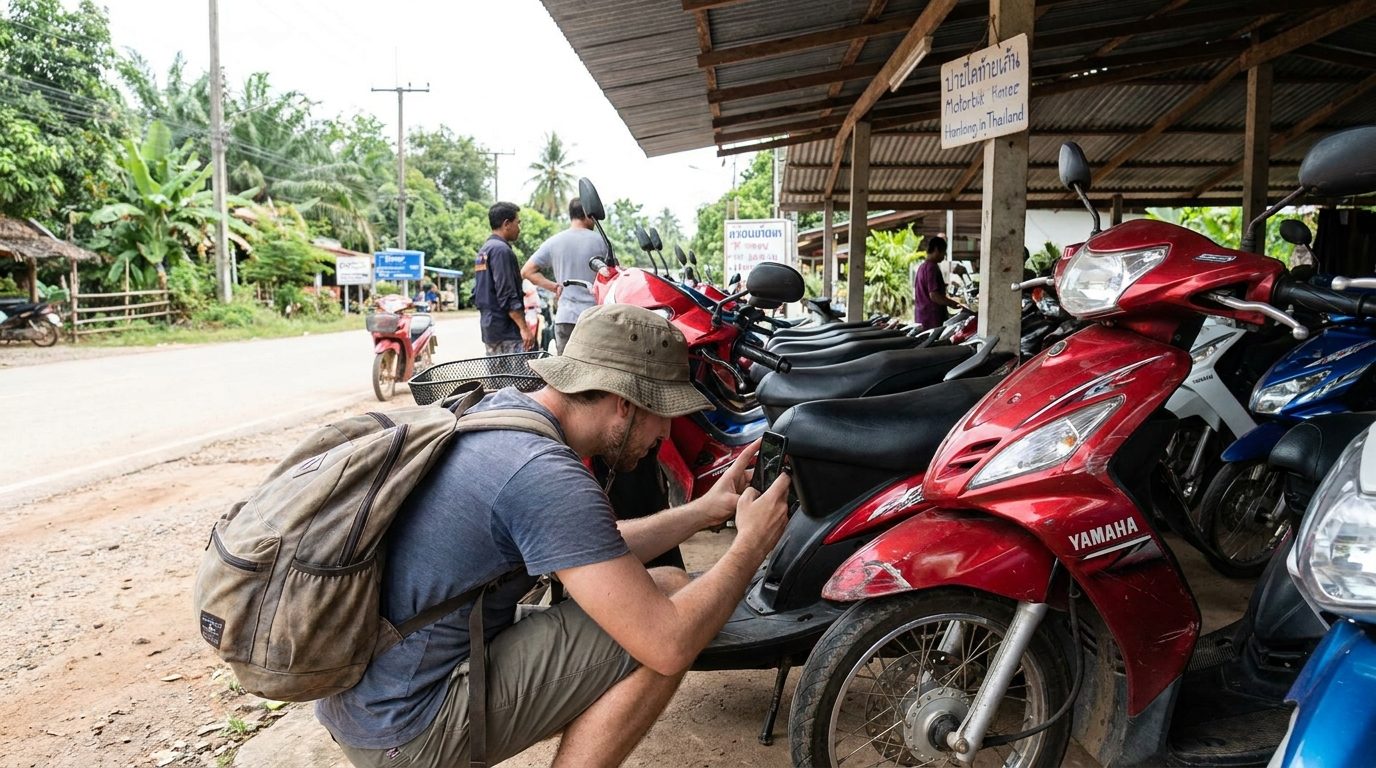
- Am I photographing every existing scratch, dent, and mirror crack before I ride off? This is separate from the accident-coverage question but avoids a whole different kind of dispute at drop-off.
- Is a helmet actually included, and does it fit? Rental shops sometimes hand over a helmet as an afterthought; bring your own if you're unsure of the fit.
If you are riding rather than renting for an afternoon, the Chiang Mai to Golden Triangle loop is where most travellers in Thailand do serious distance on two wheels, and the licence and insurance rules in this guide matter far more there than on a beach road. Worth pricing the whole trip properly too — the Thailand cost breakdown includes what rentals and fuel actually run.
If you're in an accident — what to actually do
- Get to a hospital or call for help first — documentation matters, but not more than treatment.
- Keep your IDP, home license, and passport on you or easily reachable; a hospital or insurer will likely ask for them early in the process.
- Photograph the scene, the bike, and any other vehicle involved if you're safely able to.
- Contact your insurer's emergency line as soon as you reasonably can — don't wait until you're back home to start the claim.
- If you're not sure what a Thai hospital will expect from you cost-wise in the moment, it's worth reading up on what actually happens if you get sick or injured in Thailand before you ever need it.
For the broader picture of how travel insurance and Thailand's visa-related insurance requirements fit together, the Thailand health insurance and SafetyWing guide covers that separately from the motorbike-specific rules above.
▶Watch on VacaHack
Quick answers
Do I need a license to rent a scooter in Thailand?
Yes. Thai law requires a valid motorcycle license or an International Driving Permit with a Category A (motorcycle) endorsement, plus your original home country license — a car-only license or IDP does not count. Rental shops almost never check this, but police and insurers do.
Will travel insurance cover a motorbike accident in Thailand?
Often, yes, but conditionally. Most policies that cover motorbike accidents require you to be properly licensed for the bike you're riding, wearing a helmet, and sober at the time of the accident. Miss any of those and even a policy that normally covers motorbike accidents can deny the claim.
Does SafetyWing cover motorbike accidents in Thailand?
Yes, as standard, for bikes up to 50cc — smaller than almost every rental scooter in Thailand, which typically run 110–125cc. Riding anything larger requires SafetyWing's Adventure Sports add-on, and licensing and helmet requirements apply either way. Check current plan details directly before you rent.
Does a car driving license cover riding a scooter in Thailand?
No. A car-only license or a car-category IDP does not legally authorize riding a motorbike or scooter, regardless of engine size — you need the motorcycle-specific endorsement.
What happens if I get in a motorbike accident in Thailand without a license?
You can still be treated at a hospital, but you may be asked to pay upfront, and both Thai compulsory motor insurance and most travel insurance can legally deny the claim, leaving you personally responsible for the bill.
Do rental shops in Thailand check your license before renting a scooter?
Rarely. Most hand over a bike with just a passport or cash deposit and no license check — but that has no bearing on the law or on whether your insurance will pay out after an accident.