Thailand ATM Fees: What They Really Cost and How to Pay Less
Thailand's ATMs charge foreign cards a flat 220 baht fee per withdrawal as of late 2026, no matter how much you take out — and that fee comes from the bank that owns the machine, not your own bank, so it stacks on top of whatever your card issuer charges separately.
How much do Thailand's ATMs actually charge right now?
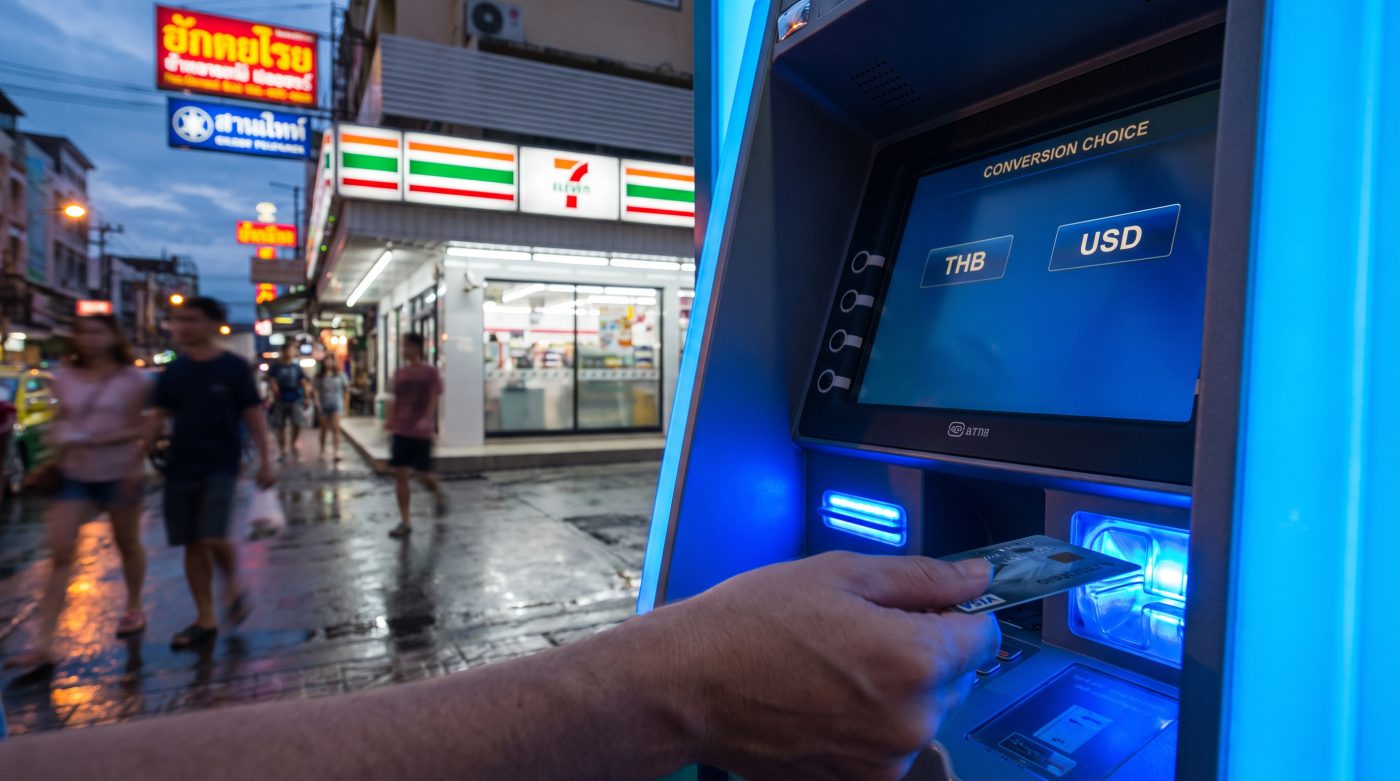
The number to know is 220 baht (roughly $6) per withdrawal at most Thai banks' ATMs — Bangkok Bank, Kasikorn, SCB, and Krungsri all charge it on foreign-issued cards, and it's a flat fee, not a percentage, so it's the same whether you pull out 2,000 baht or 25,000 baht. That figure has crept up over the years: travelers reported 150–180 baht roughly a decade ago, then 200 baht became the figure most commonly quoted for much of the 2020s, and current sources now put the standard fee at 220 baht. The exact number is always shown on the screen right before you confirm the withdrawal, so treat whatever's posted there as the real answer on the day you're standing at the machine, not any figure in an article — including this one.
This fee is separate from, and in addition to, anything your own bank or card issuer charges for a foreign ATM withdrawal or currency conversion. Check your bank's foreign transaction fee before you land, since it can add another 1–3% on top.
The one network that charges less — with a catch
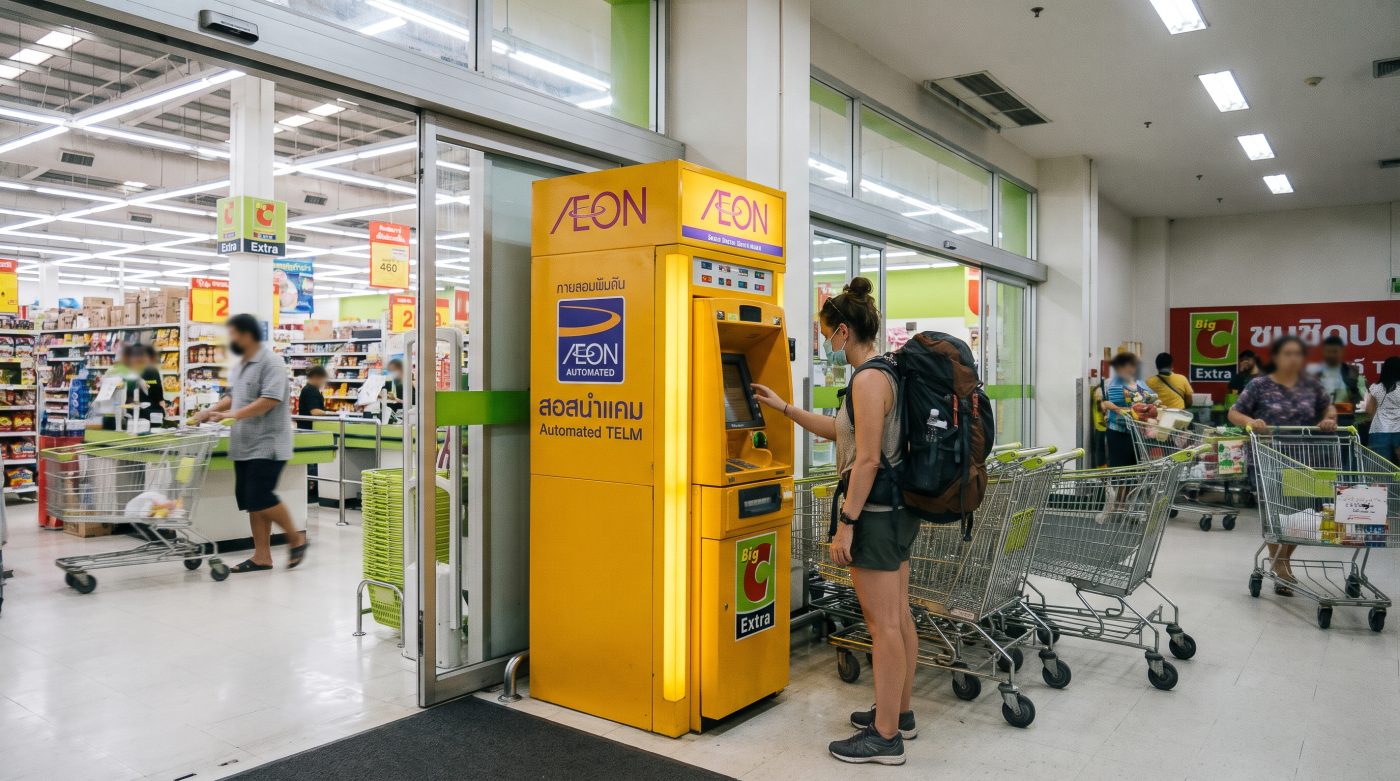
AEON's ATMs, found mostly inside Big C, Lotus's, Makro, and MaxValu stores, charge 150 baht instead of 220 — a real, if modest, saving. The catch: AEON machines cap foreign-card withdrawals at a lower amount per transaction than most bank ATMs, and they dispense only 1,000-baht notes, which some smaller vendors won't want to break. If you're withdrawing a large amount, the fee difference usually isn't enough to justify going out of your way to find one.
Always decline the currency conversion screen
After your PIN, almost every Thai ATM asks whether you want to be charged in your home currency or in Thai baht — this is Dynamic Currency Conversion (DCC), and it's the single most expensive mistake foreign travelers make at these machines. Choosing your home currency hands the exchange-rate decision to the ATM's network, which applies its own markup on top of the regular fee — travelers who've compared receipts side by side report the DCC rate running several percent worse than the rate you get by choosing baht. Choosing Thai baht (sometimes labeled “continue without conversion”) lets your own card network set the rate, which tracks much closer to the real interbank rate. Decline DCC every single time, even when the machine makes the home-currency option look like the default or the “recommended” choice.
Withdraw the maximum, not the minimum
Because the 220 baht fee is flat per transaction, not a percentage, five separate 5,000-baht withdrawals cost five times the fee that one larger withdrawal would. Most Thai ATMs let foreign cards pull out somewhere between 20,000 and 30,000 baht per transaction, depending on the bank and machine (see the limits below). Unless you're genuinely uneasy about carrying that much cash, withdrawing closer to the maximum each time and making fewer trips to the machine is the simplest way to cut what you pay in fees over a whole trip.
Does a Wise, Revolut, or Charles Schwab card get you out of this fee?
Partly, and it's worth being precise about which fee you're actually avoiding. Wise and Revolut waive their own card fees on a limited number of withdrawals each month and don't mark up the exchange rate the way a traditional bank card might — but the 220 baht charge itself comes from the Thai ATM, not from Wise or Revolut, so it still shows up on your statement no matter which card you use. Travelers who've tested this report the fee hitting a Wise card exactly the same way it hits an ordinary debit card.
The one genuine workaround some travelers use is a US-based account like Charles Schwab's checking account, which reimburses ATM fees charged anywhere in the world at the end of each statement cycle — so the 220 baht still gets charged at the machine, but it comes back to you afterward. That only helps if you already bank with one of the small number of institutions that do this, and it's worth confirming your own bank's current policy before counting on it, since reimbursement terms do change.
How much can you withdraw per transaction?
- Most Thai bank ATMs: around 20,000 baht per transaction for foreign-issued cards
- Bangkok Bank: around 25,000 baht
- Krungsri: around 30,000 baht
- AEON: 20,000 baht, dispensed in 1,000-baht notes only
These limits are set by the Thai bank that owns the machine, not by your home bank, so they apply no matter which card you're using — and they can vary by individual machine, not just by bank brand. Your own bank may also impose a separate daily withdrawal limit on its end, so it's worth checking both before you plan around pulling out a specific amount.
Is it actually cheaper to exchange cash instead?
It depends, and this is one of the more genuinely contested questions in the long-running traveler discussions on this topic. For most people, a no-DCC ATM withdrawal on a fee-light card still beats an airport currency exchange counter, which typically bakes a worse rate into the transaction instead of charging a visible fee. Independent exchange chains like SuperRich, found in Bangkok and a few other major cities, sometimes beat the ATM's effective rate once the 220 baht fee is factored in — travelers who've compared both side by side have found SuperRich's margin can run under half a percent, versus roughly 1.5–2% all-in for an ATM withdrawal with the standard fee. The honest answer is to compare the two next time you're somewhere with a reputable exchange counter, rather than assuming one option always wins everywhere in the country.
A simple way to keep this cheap
- Always choose Thai baht, never your home currency, at the conversion prompt
- Withdraw close to the per-transaction maximum instead of making several smaller withdrawals
- Check your own bank's foreign transaction fee before you leave — it stacks on top of the 220 baht Thai-side fee
- If you're near a Big C, Lotus's, or Makro, an AEON machine will save you 70 baht per withdrawal
- Don't assume a fee-free card eliminates the Thai ATM fee — it usually only removes your own bank's cut, not the machine's
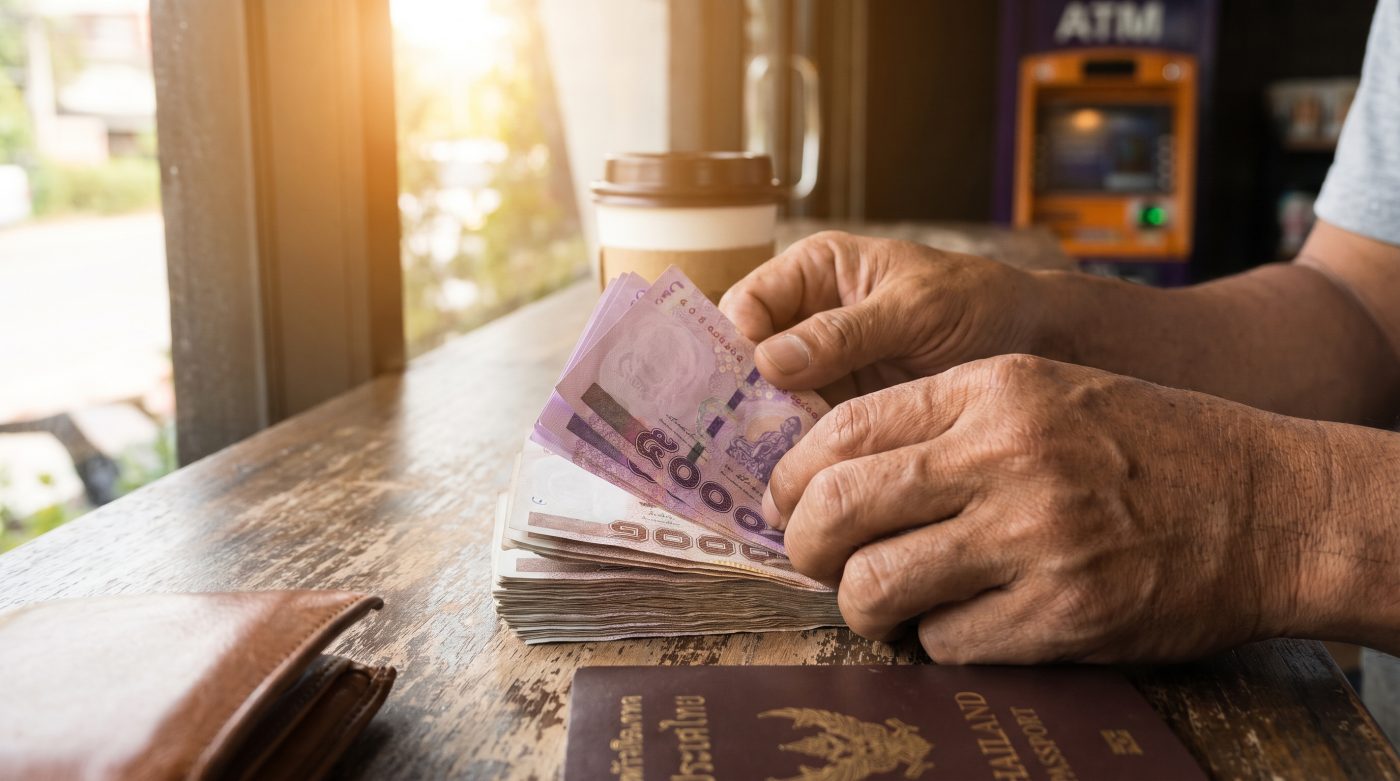
None of this amounts to a huge sum of money over a trip — someone making five or six ATM withdrawals total might pay somewhere around 1,000–1,300 baht in Thai-side fees across an entire trip, a little over $30. It's a small, easily avoidable leak rather than a dealbreaker, and it fits into the kind of day-to-day cost most people already build into a full Thailand trip budget. But since every one of these habits costs nothing to use and the fee itself doesn't vary by how careful you are otherwise, there's no real reason to leave money on the table at the ATM screen.
▶Watch on VacaHack
Quick answers
How much is the ATM fee in Thailand for foreign cards?
Most Thai bank ATMs charge a flat 220 baht fee per withdrawal on foreign-issued cards, the same whether you take out 2,000 baht or the maximum allowed in one transaction. That's on top of whatever fee your own bank or card issuer adds separately.
Which Thai ATM has the lowest fee?
AEON's ATMs, usually found inside Big C, Lotus's, Makro, and MaxValu stores, charge 150 baht instead of 220 — but they cap withdrawals lower and dispense only 1,000-baht notes.
Should I decline the currency conversion option at a Thai ATM?
Yes. Choosing to be charged in your home currency (Dynamic Currency Conversion) hands the exchange rate to the ATM network, which marks it up well beyond the regular fee. Always choose Thai baht, or 'continue without conversion.'
Does a Wise or Revolut card avoid the Thailand ATM fee?
No. The 220 baht fee is charged by the Thai bank that owns the machine, not by your card issuer, so it applies no matter which card you use. Wise and Revolut can waive their own fees, but not the Thai ATM's.
How much can I withdraw per transaction in Thailand?
Most ATMs cap foreign cards at around 20,000 baht per transaction, with some banks like Krungsri allowing up to 30,000 baht. The limit is set by the bank that owns the machine, not your home bank.
Is exchanging cash cheaper than using an ATM in Thailand?
Usually an ATM withdrawal with the conversion prompt declined still beats an airport exchange counter, but independent exchange chains like SuperRich can sometimes edge it out once the ATM fee is factored in — worth comparing where one is available.