Cash or Card in Thailand? Where You Will Actually Need Baht in 2026
You need both. Thailand runs on cards in malls, hotels, supermarkets, and chain restaurants, but street food stalls, local markets, songthaews, tuk-tuks, and small guesthouses are still largely cash-only — so the honest answer is to carry a moderate amount of baht for daily spending (roughly 1,000–3,000 baht is usually enough for most days) and keep a card for bigger, official purchases and online bookings.
Where cards actually work
In the places most visitors spend the bulk of their trip, cards work fine and increasingly without any friction:
- Hotels and resorts — almost universally accept Visa and Mastercard; Amex is patchier outside upscale properties.
- Malls, department stores, and supermarkets (Central, Big C, Tops, Villa Market) — standard card terminals, no surcharge in most cases.
- Chain restaurants and cafes — Starbucks, After You, most mall-based restaurants.
- 7-Eleven and other convenience-store chains — card and contactless payment work in most city branches, though some smaller branches still prefer cash or a QR scan.
- Ride-hailing apps like Grab — the fare is charged to the card on file in the app, so you never need cash for the ride itself.
- Online bookings — domestic flights, trains, and most tours are paid by card when you book ahead.
Where you will still need cash
Outside that zone, cash is often the only option — not because Thailand hasn't modernized, but because the margins on small daily transactions do not support card-processing fees:
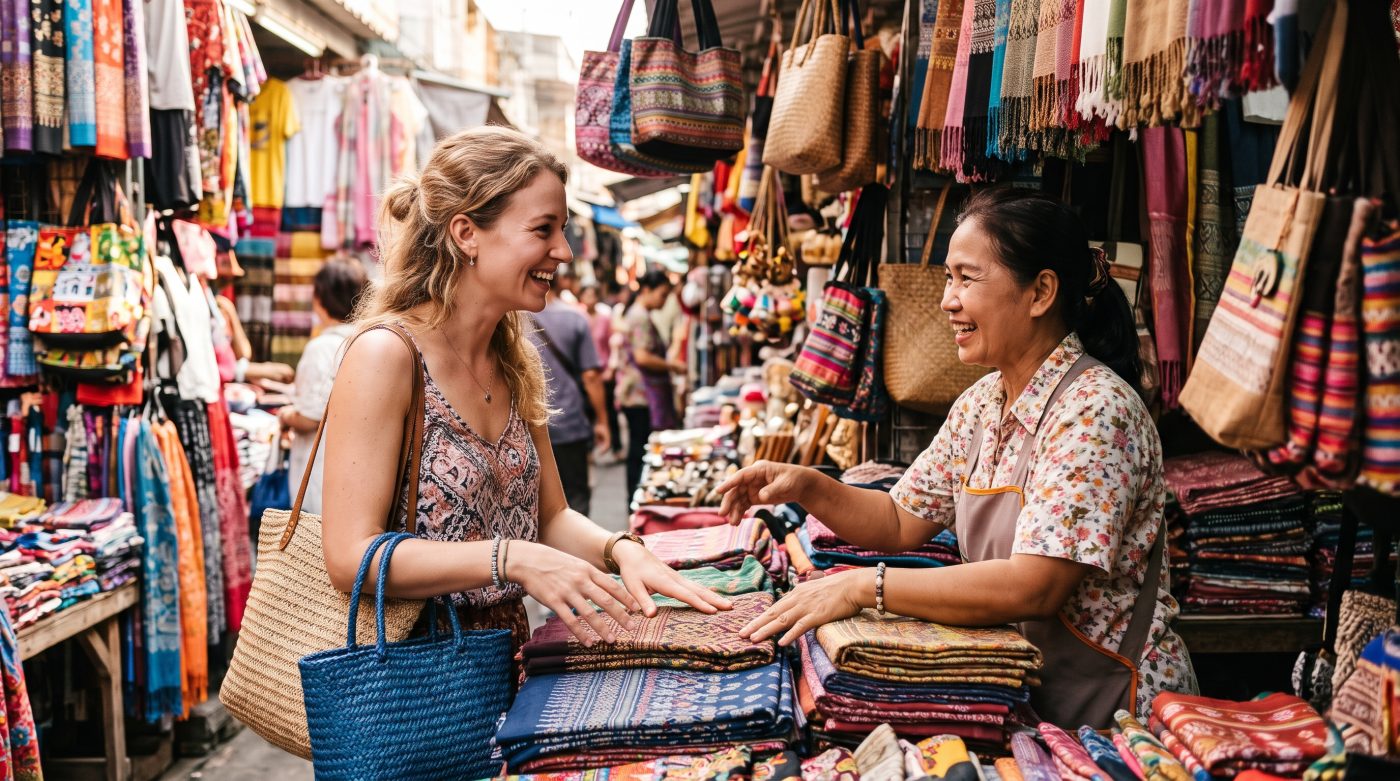
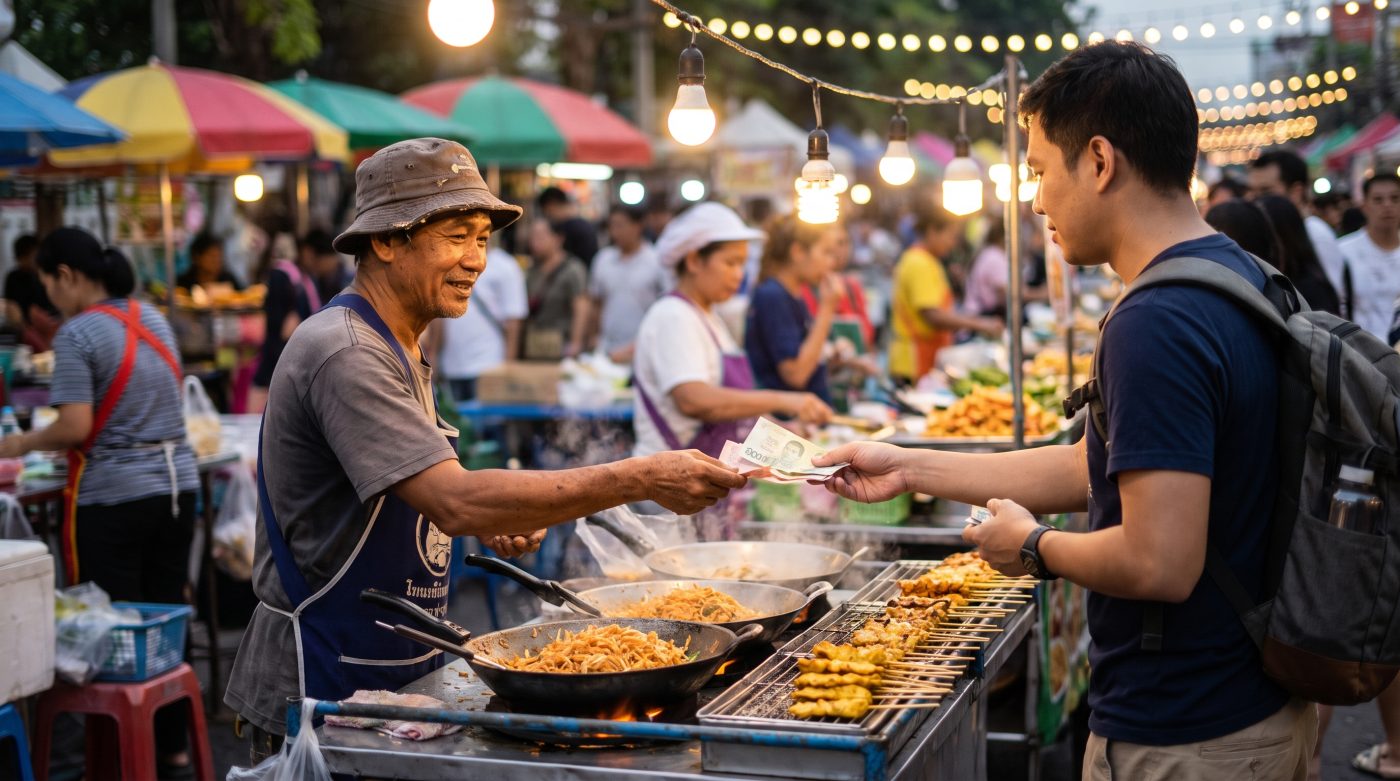
- Street food stalls and night markets — still almost entirely cash or PromptPay QR, rarely a card terminal in sight.
- Local wet markets and small family-run restaurants — same story, especially outside Bangkok.
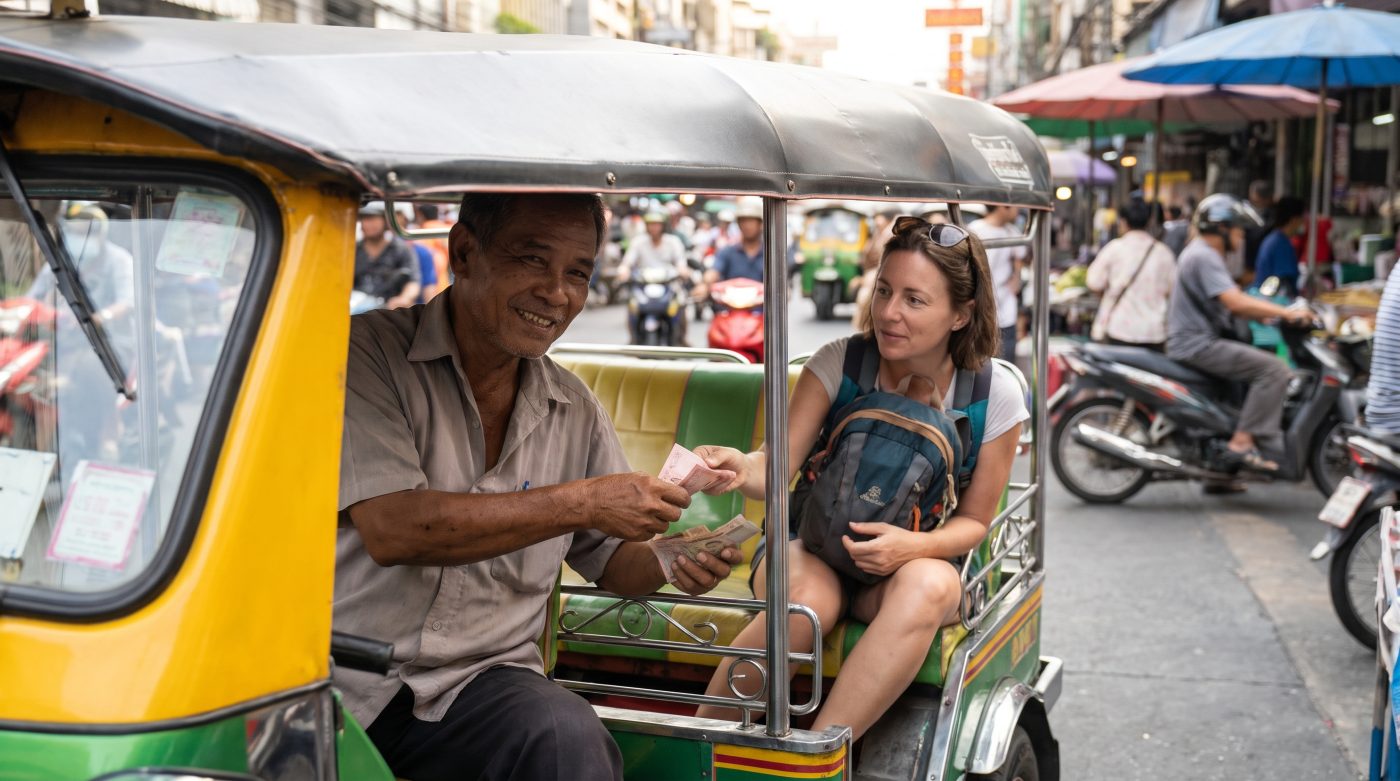
- Songthaews, tuk-tuks, and motorbike taxis — cash only, and small notes matter since drivers often can't break a 1,000-baht bill.
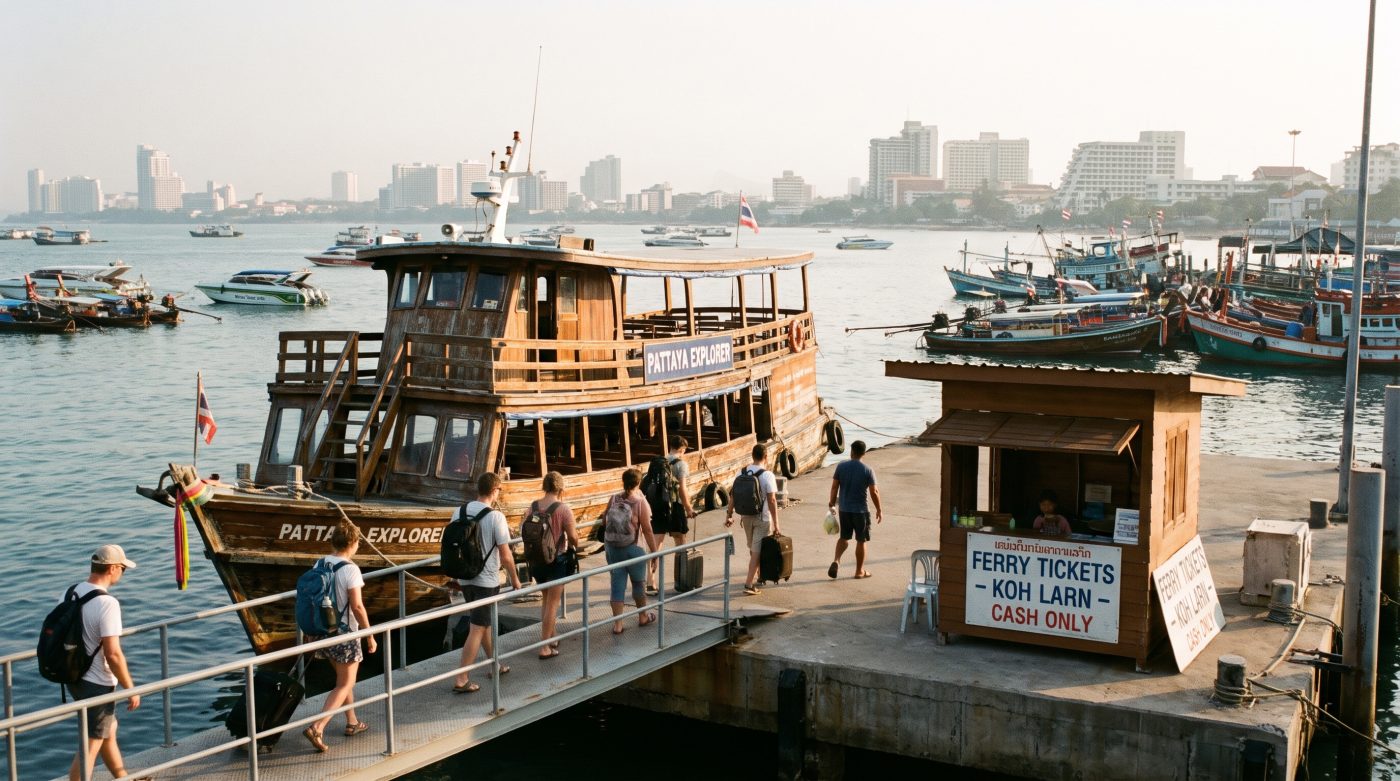
- Small guesthouses and homestays, especially on islands or in rural areas — many still ask for cash on arrival.
- Temple donation boxes, small shrines, and informal entrance fees at some sites.
- Rural shops and smaller islands generally, where card infrastructure and reliable internet are less consistent.
A real, recurring complaint in traveler forums is running out of small notes — a 1,000-baht bill is useless to a songthaew driver or a noodle stall. Break larger notes at a 7-Eleven or convenience store purchase rather than trying to pay small vendors directly with them.
PromptPay: the QR system you'll see everywhere, and whether you can actually use it
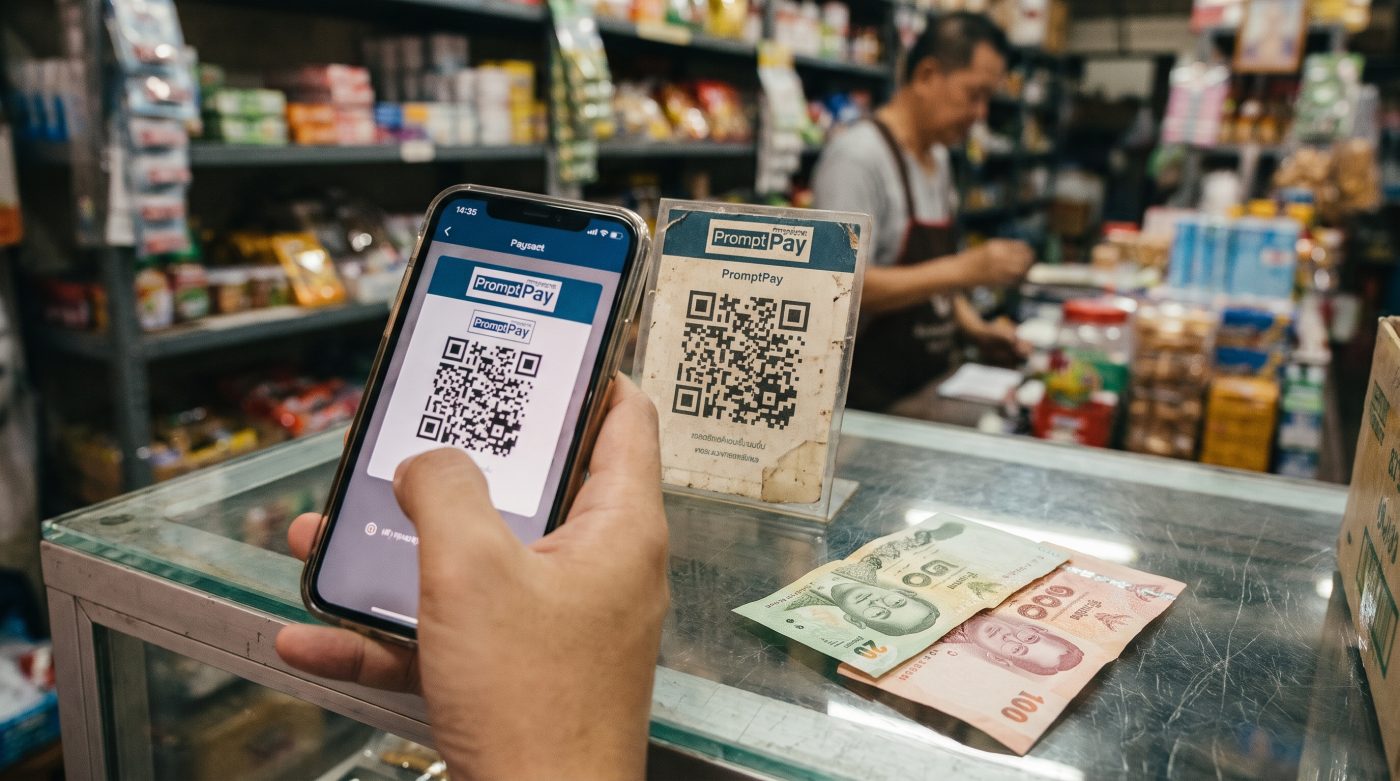
Walk into almost any shop, market stall, or taxi in Thailand and you'll see a small PromptPay QR code sticker — it's the real cashless alternative Thais themselves use daily, not cards. Full access to PromptPay (scanning any code and paying instantly from a linked account) requires a Thai bank account, which most tourists won't have.
There are a few workarounds, with mixed reliability as of this writing:
- TAGTHAi — a tourist-focused e-wallet that lets you top up at currency-exchange booths and scan PromptPay QR codes directly; convenient, but watch the exchange rate and fees at the top-up counter.
- True Money Wallet — can be topped up with cash at 7-Eleven in smaller increments, then used to scan QR codes.
- Alipay+ and WeChat Pay — genuinely useful if you already have one of these linked to a home bank account (common for travelers from China), since many Thai merchants' QR setups now accept them alongside PromptPay.
- Some banking apps (including Wise) have been rolling out "scan to pay" support for Thai QR codes — this has reportedly been a staged rollout through 2026, so don't assume it works everywhere yet; check your own app's current coverage before relying on it.
Bottom line: unless you've specifically set up one of these, assume you cannot use the PromptPay QR code you see at a stall, and have cash ready as the fallback.
Card fees and the dynamic-currency-conversion trap
When you do pay by card, a few things quietly add up:
- Foreign transaction fees on your home card, typically in the 2–3% range — a fee-free travel card (Wise, Revolut, or similar) avoids this entirely.
- Small-business card surcharges — some independent shops, guesthouses, and tour operators add a few percent for card payments, sometimes disclosed, sometimes not; it's reasonable to ask before you tap or swipe.
- Dynamic currency conversion (DCC) — when a terminal asks "charge in THB or your home currency?", always choose Thai baht. The "your currency" option almost always bakes in a worse exchange rate than letting your own bank convert it.
ATM withdrawals have their own fee structure worth knowing before you land — we cover the current flat fee and how to minimize it in our dedicated ATM fees guide.
The 20,000-baht cash-on-arrival rule — what it actually requires
You may have read that Thailand requires every tourist to show 20,000 baht in cash (40,000 per family) at immigration, or you'll be turned away. The reality is more nuanced, and sources disagree on some of the details, so treat this as a good-faith summary rather than the final word:
- The underlying proof-of-funds requirement has existed in Thai immigration regulations for decades (officials describe it as a long-standing rule being re-publicized, not a brand-new 2026 policy) — 20,000 baht per person / 40,000 per family for tourist and non-immigrant entries, with lower figures sometimes cited for visa-exempt and visa-on-arrival entries.
- Thailand's tourism authority has stated that funds can be shown as Thai baht, an equivalent amount in another currency, or documents evidencing sufficient funds — not strictly physical cash.
- Some immigration-law commentary goes further, stating that carrying physical cash specifically is not mandatory and that a credit card, debit card, or banking app showing sufficient balance can satisfy an officer's request.
- In practice, most travelers are never asked to prove this at all; checks appear to be selective rather than universal, and reporting suggests officers have discretion over who gets asked and what they'll accept as proof.
Given the mixed signals, the safest approach if you want zero risk of an awkward conversation at immigration: have a card with a visible available balance and, if you're carrying it anyway for daily spending, a reasonable amount of cash on you as backup. Don't panic-withdraw a huge sum of baht specifically for this — it is not something that comes up for the overwhelming majority of arrivals.
How much cash to actually carry day to day
- Daily walking-around cash: 1,000–3,000 baht covers street food, markets, songthaews, and small purchases for most travelers; adjust up on days you know you'll be island-hopping or somewhere rural.
- Keep small notes — 20s, 50s, and 100s are what actually get used; break 500s and 1,000s at a 7-Eleven or supermarket rather than handing one to a street vendor.
- Don't carry your whole trip's cash at once — withdraw every few days rather than a large lump sum, and split what you are carrying between a day bag and a hotel safe.
- A fee-free international card for ATM withdrawals and bigger purchases rounds out the strategy — see the ATM fees guide linked above for the current flat withdrawal fee and how to reduce how often you pay it.
If you're mapping this against an overall trip budget, our Thailand trip cost breakdown has the fuller daily-spend picture this fits into, and our tipping guide covers the related question of how much small cash you'll want on hand specifically for tips.
▶Watch on VacaHack
Quick answers
Is Thailand a cash or card country in 2026?
Both. Cards work reliably in hotels, malls, supermarkets, chain restaurants, and on ride-hailing apps like Grab. Cash is still needed for street food, local markets, songthaews, tuk-tuks, small guesthouses, and rural areas.
How much cash should I carry per day in Thailand?
Most travelers are comfortable with 1,000-3,000 baht in small notes for daily spending on food, local transport, and markets, topped up every few days rather than carried as one large sum.
Do I really need to show 20,000 baht in cash when entering Thailand?
Thailand immigration rules do call for proof of sufficient funds (20,000 baht per person for tourist entries, 40,000 per family), but officials have said funds can be shown as cash, foreign currency, or supporting documents, and in practice most arriving tourists are never checked. Having a card with a visible balance, plus some cash, covers the unlikely case you are asked.
Can tourists use Thailand PromptPay QR codes?
Not directly without a Thai bank account. Workarounds like the TAGTHAi tourist e-wallet or a True Money Wallet topped up with cash at 7-Eleven let you scan the same QR codes; some banking apps have also been rolling out Thai QR support, but coverage varies, so check your own app before relying on it.
Do small businesses in Thailand charge extra for card payments?
Some independent shops, guesthouses, and tour operators add a small card surcharge, which may or may not be disclosed upfront. It is reasonable to ask before paying. Chains and larger merchants typically do not add one.
What is the best way to avoid fees when paying or withdrawing money in Thailand?
Use a fee-free travel card (such as Wise or Revolut) for ATM withdrawals and card purchases to skip foreign transaction fees, always choose to be charged in Thai baht rather than your home currency at the terminal, and withdraw larger sums less often to reduce the number of flat ATM fees you pay.