Hua Hin vs Koh Samui: Which One Should You Actually Pick?
Koh Samui has the better beach and Hua Hin has the better logistics, but the honest answer turns on two things most comparisons skip: Samui is served by a single airline that owns the airport, and November on Samui is a genuine trap. Get the timing right and Samui is worth the extra cost and hassle. Get it wrong and you will have paid a monopoly fare to sit through 445 mm of rain with the marine park closed.
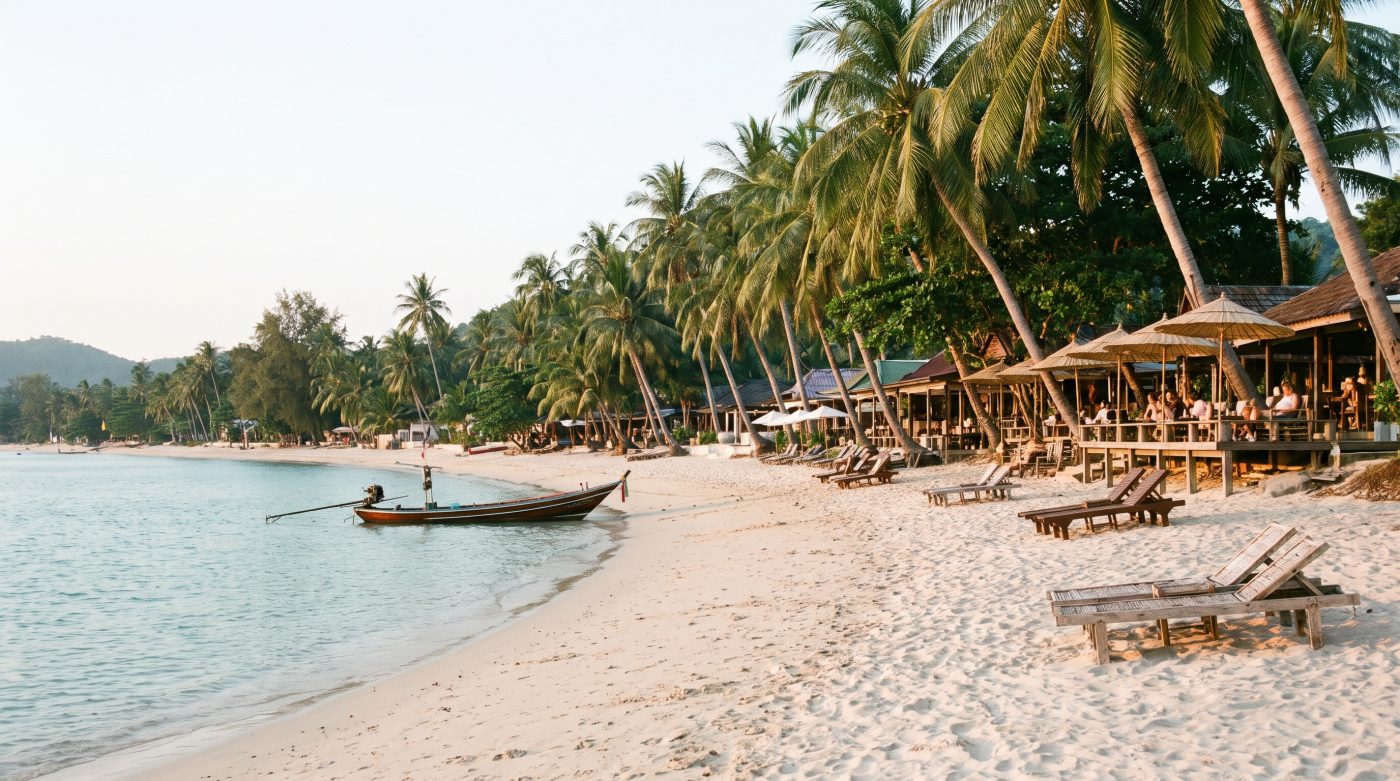
The Bangkok Airways problem
Samui Airport is privately owned and operated by Bangkok Airways, which has run it since April 1989. Bangkok Airways is the only carrier flying there from mainland Thailand — Thai Airways ran two daily Bangkok flights from 2008 to 2018 and stopped. Aside from Bangkok Airways, the only scheduled airlines at Samui are Berjaya Air to Kuala Lumpur and Scoot to Singapore. One runway, 2,100 metres.
You can see what that monopoly does in the fares. A typical one-way Bangkok to Samui runs roughly 4,080–5,900 THB, against roughly 1,450–2,560 THB to Phuket — two and a half to three times the price for a flight that is about fifteen minutes shorter. Thai sources put a direct return at 3,000–6,000 THB.
If you book through an aggregator you may see Thai Airways or other carriers listed on the route. Those are codeshares or connections, not independent operators. Bangkok Airways is the one airline actually flying the sector.
The two ways around it, and what each really costs you:
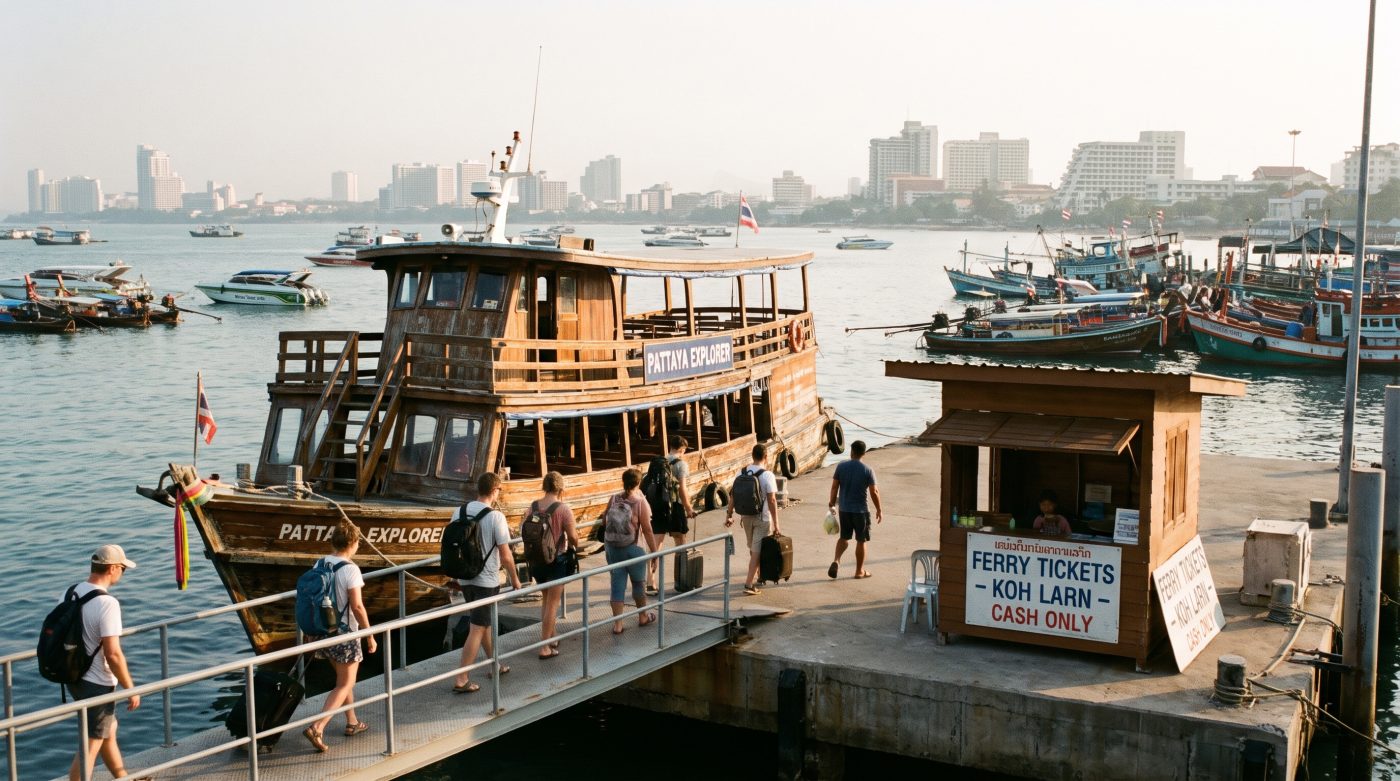
- Bus and ferry via Donsak: 600–750 THB for a standard combined ticket, 800–1,000 THB for VIP, including the transfer to the pier. The ferry crossing alone is 80 THB on Raja, 100 on Seatran, 200 on the faster Lomprayah. The catch is time: 8–10 hours on the bus, about an hour to Donsak, then 1–1.5 hours on the water. Door to door, realistically 11–13 hours.
- Fly to Surat Thani, then ferry: roughly 1,000–2,200 THB return against 3,000–6,000 direct, flying AirAsia, Nok Air, Thai Lion or Thai Airways into Surat Thani, then 45–60 minutes to Donsak Pier (200–300 THB in a shared minivan) and about 90 minutes on the ferry for 150–200 THB. Total 3.5–4 hours to the pier, against 3–3.5 hours door to resort flying direct. The last ferry leaves around 7pm — there is no night crossing, so a late Bangkok flight strands you in Surat Thani. The October–November monsoon can also delay or cancel the crossing.
Hua Hin, for comparison, is a 3-hour-1-minute train from Krung Thep Aphiwat Central Terminal for about 330 THB. There is no version of the Samui journey that competes with that, and that is the whole case for Hua Hin.
Both of these places have a transfer problem at the far end — Samui's fixed airport taxi fares run 300–900 THB depending on your beach, and app drivers generally cannot collect you at the terminal. Fixing the price before you travel is the simplest way to skip the negotiation with your bags on the kerb.
Check private transfer prices →November is the trap
Hua Hin and Koh Samui are both on the Gulf, so people assume their weather is similar. It is not, and the difference is concentrated in exactly the months Europeans and North Americans book.
| Month | Koh Samui | Hua Hin |
|---|---|---|
| February | 65 mm | 15 mm |
| May | 130 mm | 109 mm |
| July | 115 mm | 93 mm |
| September | 120 mm | 120 mm |
| October | 295 mm | 246 mm |
| November | 445 mm | 101 mm |
| December | 265 mm | 8 mm |
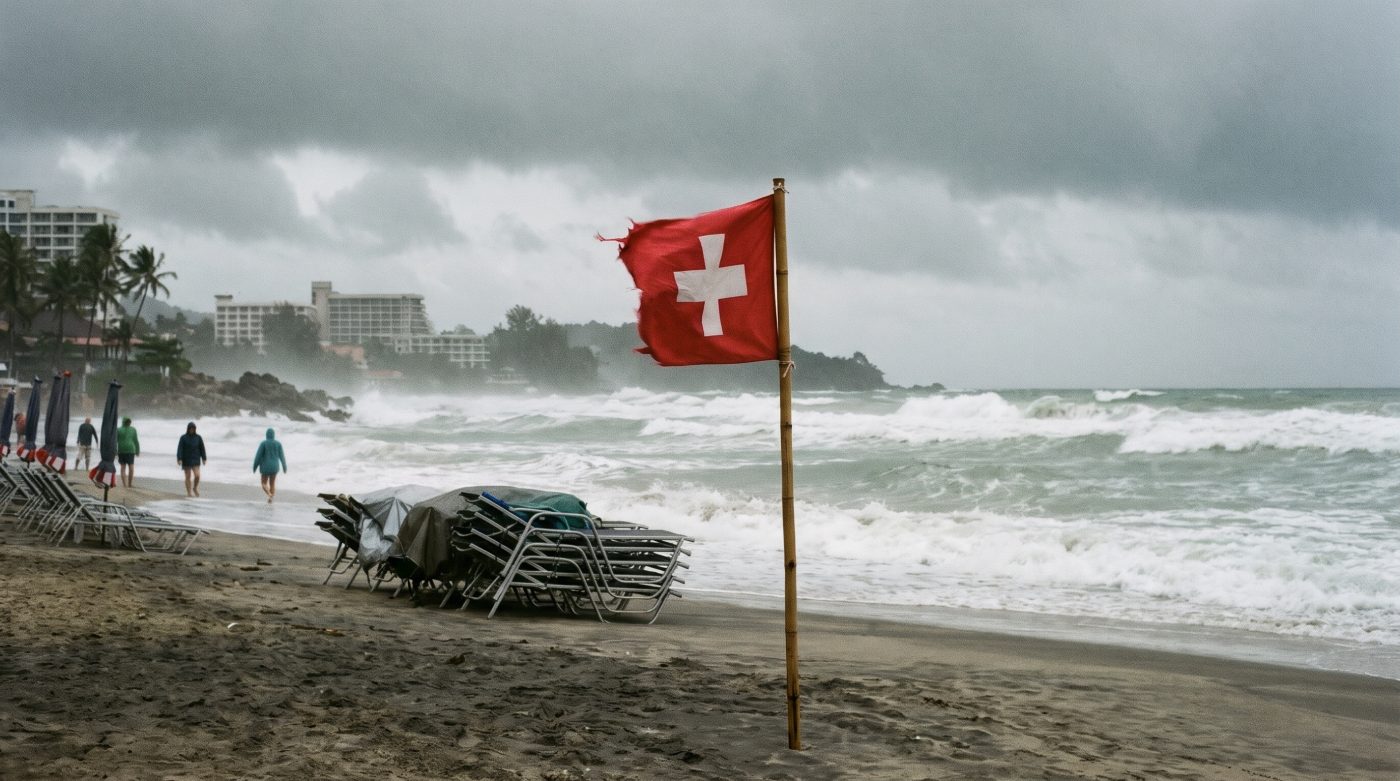
Samui takes around 1,995 mm of rain a year against Hua Hin's 955 mm. The retreating northeast monsoon hits the island hardest from October to December, and November is its single worst month at 445 mm over 16 days — four and a half times what Hua Hin gets that month. December is still wet on Samui at 265 mm, while Hua Hin's December is the driest month either place has, at 8 mm.
It compounds. Ang Thong National Marine Park, the best day trip on Samui, normally closes from around 1 November until mid-December, with reopening usually confirmed between the 10th and 20th of December, and some seasons closing from late October. So a November Samui trip loses the weather and the marine park together.
There is a genuine tension running the other way, though, and it is worth naming. From May to September, Samui sits in the Gulf's relative dry window at 100–135 mm a month — while that is exactly when Hua Hin and nearby Cha-Am see their jellyfish influx, peaking August to October. If you are travelling mid-year, Samui is arguably the safer swim. Our month-by-month guide to visiting Thailand has the full calendar.
October is bad for both. Samui gets 295 mm, Hua Hin 246 mm — its own wettest month. There is no clever answer for October.
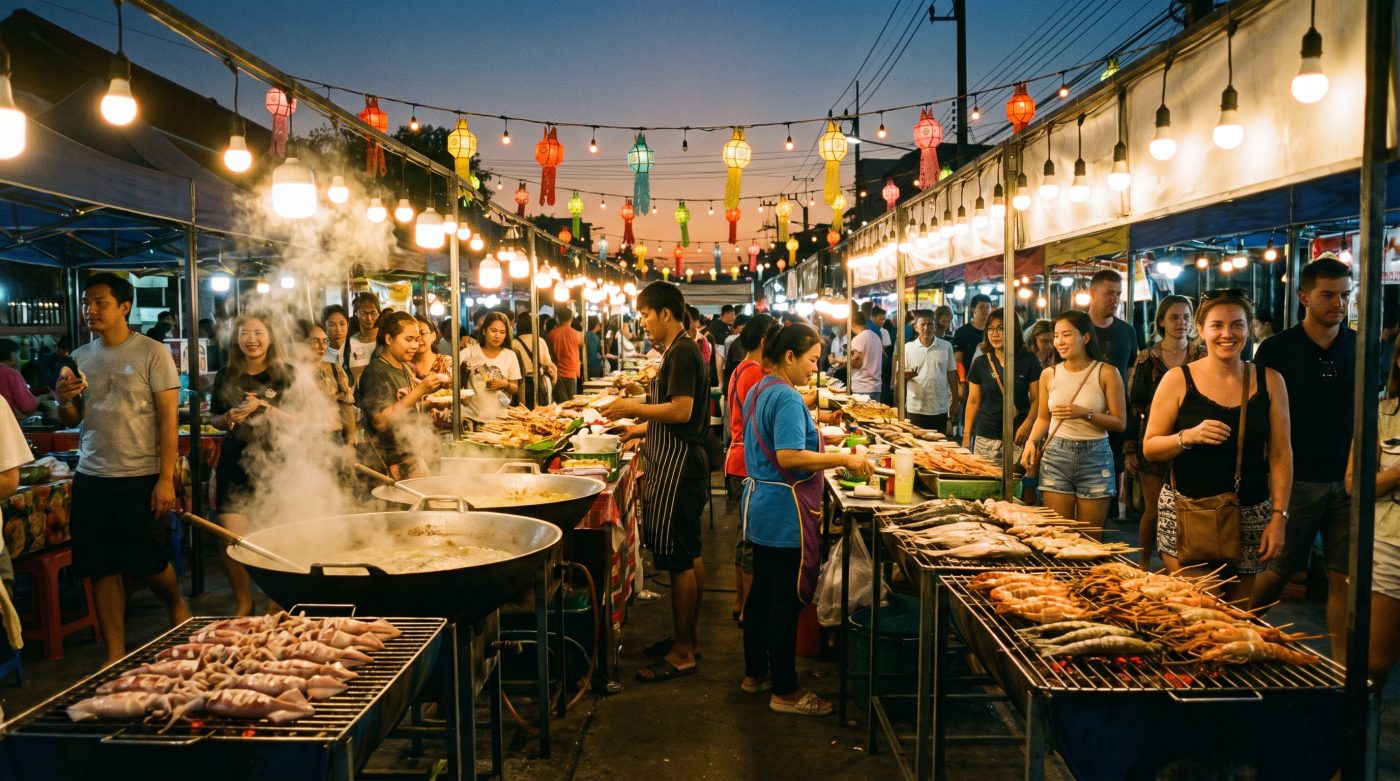
The beaches are not close
Samui is Thailand's second-largest island at 228.7 square kilometres, and the beaches have real variety:
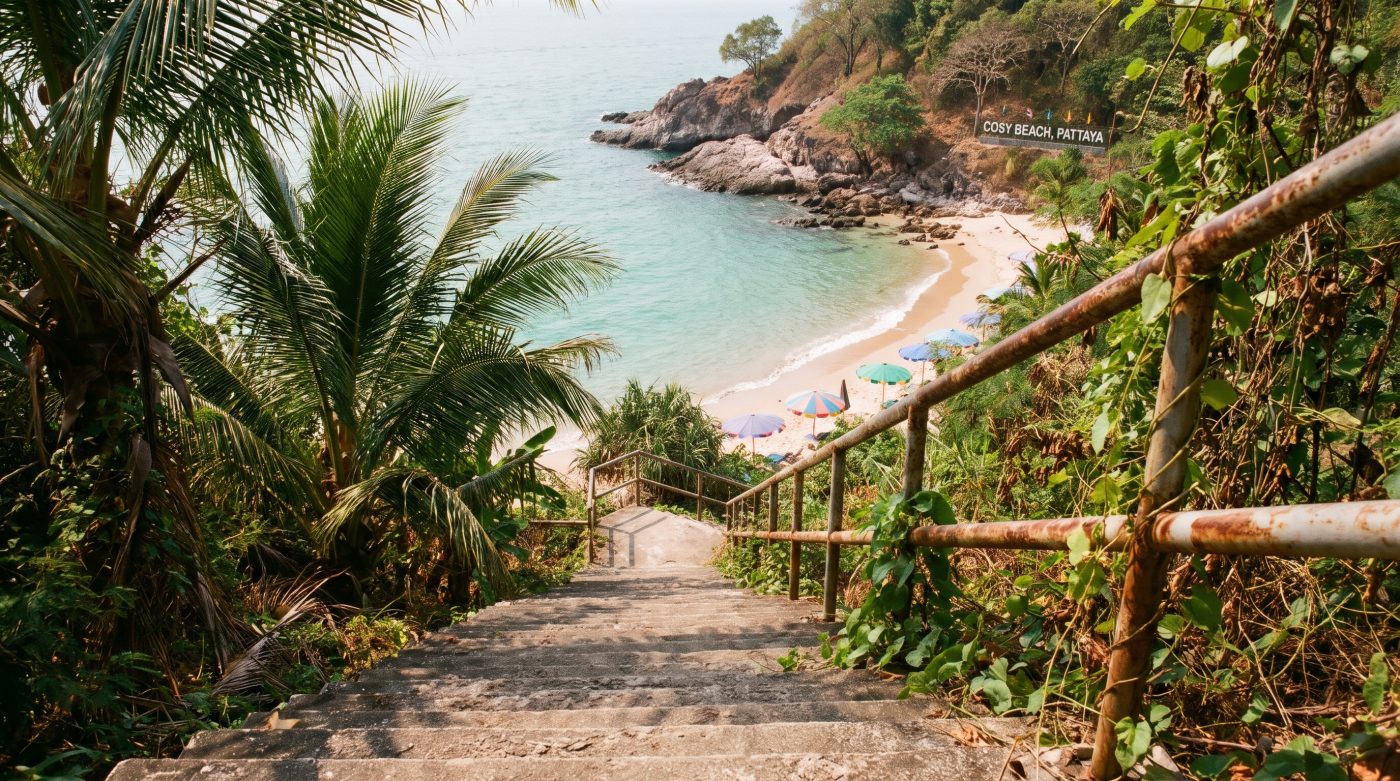
- Chaweng is the most heavily developed stretch and has the island's strongest nightlife. It is also crowded at peak season and the snorkelling off it is poor, because visibility is low.
- Lamai is noticeably more laid back, with development concentrated in the middle and quieter stretches north and south. It holds most of the island's budget accommodation.
- Bophut and Fisherman's Village split the difference — a night market and bar strip on one side, a quiet beach on the other.
- Taling Ngam in the southwest is among the least developed parts of the island and has one of its best snorkelling beaches, but it is isolated and everything else is a long drive.
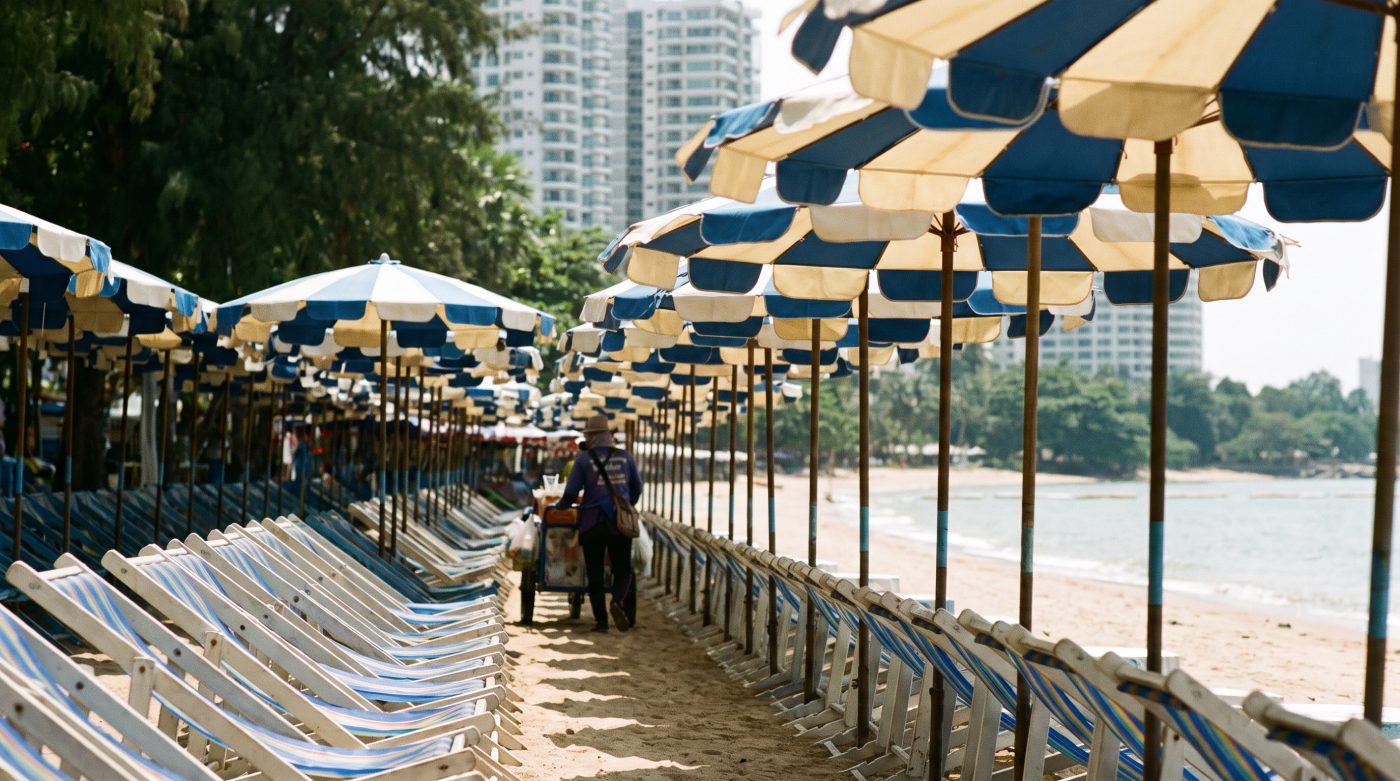
Hua Hin's beach is long, flat and shallow, calm enough for small children, and fronted by a continuous wall of hotels and condos. Lonely Planet, describing Hua Hin as Thailand's original beach resort and explicitly not a palm-fringed castaway island, notes that many visitors never set foot on the sand. That is the fairest summary anyone has written of it.
Getting in the water
Samui wins here too, though by less than Phuket does. Ang Thong sits about 30–35 kilometres west with no public ferry, so you go on a tour: roughly 1,200 THB for an adult on a big boat with 50–70 people and a 9-hour day, or 1,700–2,850 THB for a small-group speedboat with a 45–60 minute crossing. Park entry is 300 THB for a foreign adult and is sometimes bundled and sometimes not — ask before you pay twice.
Koh Tao, Thailand's dive-training capital, is about two hours away by catamaran, with a PADI Open Water course running roughly 9,000–11,000 THB. Our comparison of Koh Samui, Koh Phangan and Koh Tao covers which of the three actually suits your trip, and the Full Moon Party guide is worth reading if that is part of the plan.
Hua Hin has no equivalent. If the water is the reason for the trip, this comparison is already settled.
Ang Thong is the one unmissable thing on Samui, and its closure window plus the gap between a 1,200 THB big boat and a 2,850 THB speedboat makes it worth comparing operators rather than booking at the hotel desk.
Compare Ang Thong and Koh Tao day trips →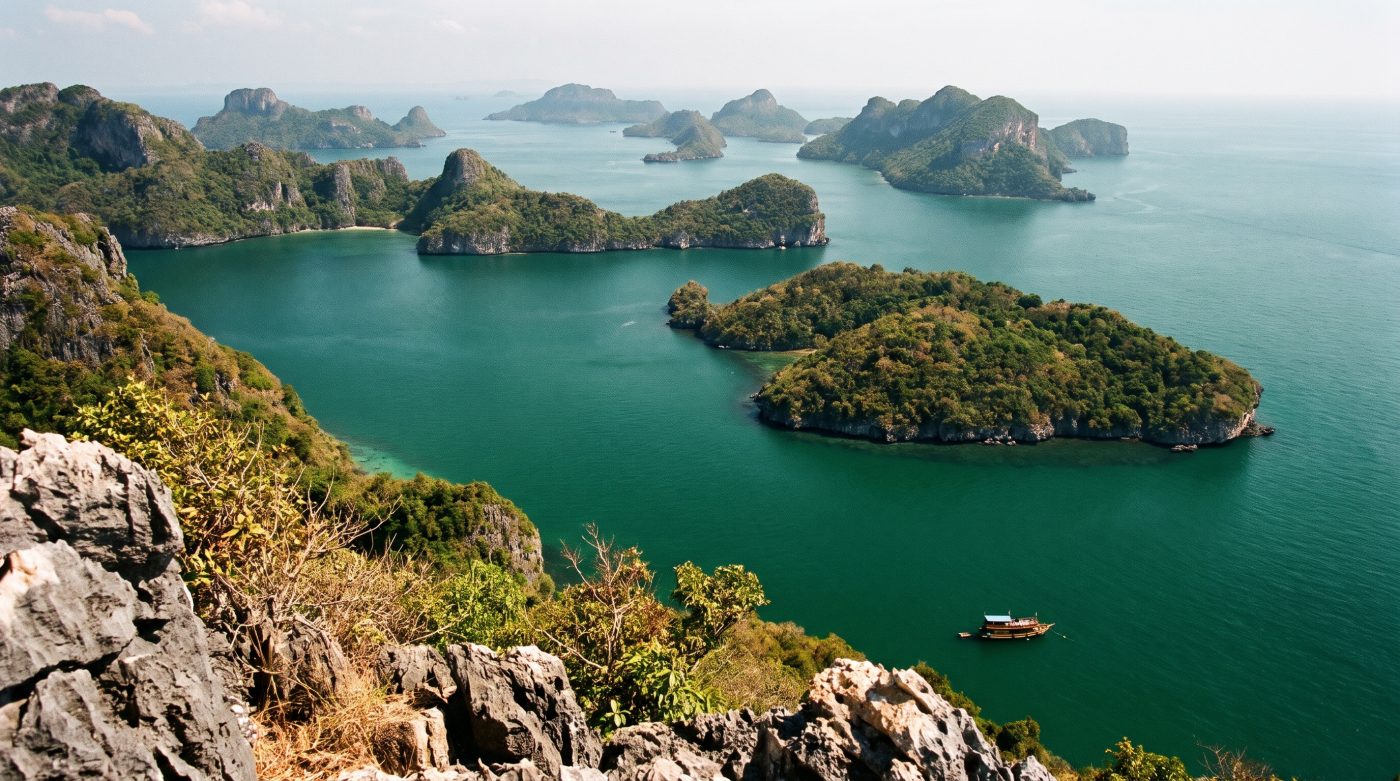
Getting around, and what it costs
Samui is expensive to move around and the taxis are meter-averse. Fixed airport fares run 300–700 THB to Chaweng or Bophut and 600–900 THB to Lamai. Street taxis rarely run the meter and drivers may tell you it is broken, so agree the price first. Metered taxis outside Bangkok start at 40 THB and Samui adds an island surcharge of about 50 THB on top. Ride-hailing helps but not cleanly — app drivers generally cannot pick up at the terminal, so you walk a few minutes with your bags, and Grab tends to run 20–50% above InDrive on short trips. The cheap option is the daytime songthaew at 30–90 THB a person, but after about 9pm you are chartering it, and Chaweng to Bophut becomes a negotiated 300 THB.
Hua Hin's green songthaew is 15 THB a leg, flat, day or night. The airport to Khao Takiab is two legs and 30 THB. That is not a small difference over a week.
On accommodation, we will be honest rather than invent a figure. Samui's revenue per available room was about 5,250 THB in 2023 at 75–85% occupancy, which implies a fairly high average rate, and air arrivals were up 21% in 2024 and another 9% in early 2025. There is no reliable published nightly rate for Hua Hin to compare it against, and the hotel aggregators contradict each other enough that a percentage would be guesswork. What is checkable is everything else: the train, the songthaew, the green fees. Our Thailand trip cost breakdown has realistic daily budgets for both.
Golf is not close either
Samui has three courses and only one full 18-hole worth travelling for, Santiburi, at roughly 4,000 THB in low season and 5,500 in high. Royal Samui is 900 THB for nine holes. Hua Hin has seven ranked courses from 1,200 to 3,600 THB — SeaPine and Palm Hills at 1,200, Royal Hua Hin at 1,600, Black Mountain at the top. If golf is a real part of the trip, Hua Hin wins outright.
So which one?
Go to Koh Samui if the beach itself is the point; you want snorkelling, diving or Ang Thong; you want island nightlife; or you are travelling between late January and April, which is its genuinely good window. Accept that you are paying a monopoly airfare or spending 11–13 hours on a bus and a boat to avoid it.
Go to Hua Hin if you are based in Bangkok and want a weekend without an airport; you are travelling in November or December, when Samui is at its worst and Hua Hin at its best; you are bringing small children; golf is part of the plan; or you want a walkable town with good food more than a specific stretch of sand.
If you are weighing the Andaman side instead, our Hua Hin vs Phuket comparison runs the same calculation with a different answer, and the broader question of whether Hua Hin is worth visiting at all is covered separately.
▶Watch on VacaHack
Quick answers
Is Koh Samui more expensive than Hua Hin?
Getting there, decisively. A one-way Bangkok flight to Samui runs roughly 4,080 to 5,900 THB because Bangkok Airways owns the airport and is the only carrier from mainland Thailand, against about 330 THB for the train to Hua Hin. On the ground, Samui airport taxis are 300 to 900 THB fixed and songthaews 30 to 90, against a flat 15 THB songthaew in Hua Hin. Hotel rates are harder to compare honestly, since there is no reliable published nightly figure for Hua Hin.
Why are flights to Koh Samui so expensive?
Samui Airport is privately owned and operated by Bangkok Airways, which has run it since April 1989, and Bangkok Airways is the only airline flying there from mainland Thailand. Thai Airways served the route from 2008 to 2018 and stopped. With no competing carrier, fares run two and a half to three times the Bangkok to Phuket price for a flight about fifteen minutes shorter.
What is the cheapest way to get from Bangkok to Koh Samui?
The combined bus and ferry via Donsak, at 600 to 750 THB standard or 800 to 1,000 THB VIP including the pier transfer. The cost is time: 8 to 10 hours on the bus, about an hour to the pier and 1 to 1.5 hours on the ferry, so 11 to 13 hours door to door. The middle option is flying to Surat Thani then taking the ferry, around 1,000 to 2,200 THB return and 3.5 to 4 hours to the pier, but the last ferry leaves about 7pm so a late flight strands you.
Is November a bad time to visit Koh Samui?
Yes, it is the island's single worst month. Samui gets about 445 mm of rain across 16 days in November, more than four times what Hua Hin gets. Ang Thong National Marine Park, the best day trip on the island, also normally closes from around 1 November to mid-December, with reopening usually confirmed between the 10th and 20th of December. A November Samui trip loses the weather and the marine park together.
Which has better beaches, Hua Hin or Koh Samui?
Koh Samui, clearly. It is Thailand's second-largest island at 228.7 square kilometres with real variety: Chaweng for development and nightlife, Lamai quieter and cheaper, Bophut as a village, Taling Ngam largely undeveloped with good snorkelling. Hua Hin's beach is long, flat and shallow but fronted by a continuous wall of hotels, and Lonely Planet notes many visitors never set foot on the sand.
Which is better for golf, Hua Hin or Koh Samui?
Hua Hin, by a wide margin. It has seven ranked courses with green fees from 1,200 to 3,600 THB. Samui has three courses and only one full 18-hole worth travelling for, Santiburi, at roughly 4,000 THB in low season and 5,500 in high.