Sukhothai vs Ayutthaya: Which Historical Park Should You Actually Visit?
If you only have time for one ancient capital, Ayutthaya wins on convenience and Sukhothai wins on atmosphere — the real decision comes down to how much travel time you're willing to trade for quieter ruins and a slower pace.
The short version
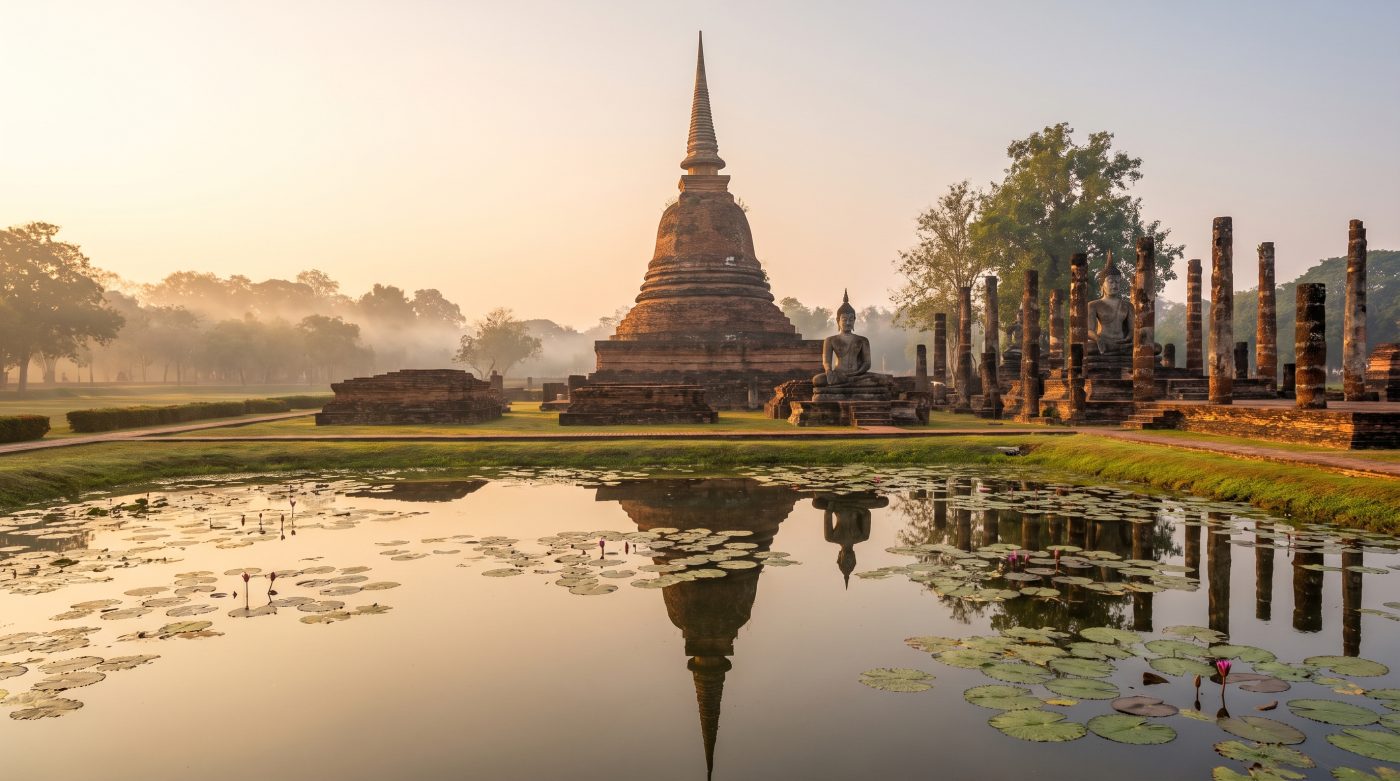
Both are former royal capitals of Siam and both are UNESCO World Heritage Sites, but they don't compete for the same trip. Ayutthaya sits about an hour from Bangkok and works as an easy day trip or half-day stop on a longer itinerary. Sukhothai is 300+ km further north, takes most of a travel day to reach from Bangkok, and rewards people who give it an overnight stay rather than rushing through. If you're short on time and just want to see impressive ruins, Ayutthaya gets you there faster. If you have a bit more time, or you're already heading toward Chiang Mai, Sukhothai is the one people tend to describe as the more memorable of the two.
Two capitals, roughly 400 years apart
Sukhothai was founded around 1238 and is generally regarded as the first independent Thai kingdom — the birthplace of early Thai art, script, and architecture, with the distinctive lotus-bud chedi style you won't see anywhere else in the country. Ayutthaya came later, founded in 1350, and grew into one of the wealthiest trading capitals in Asia before it was sacked by the Burmese army in 1767. That history shows up directly in what's left standing: Sukhothai's ruins feel more restrained and spread across open parkland, while Ayutthaya's temples are denser, more architecturally varied, and sit inside a modern working town rather than open countryside.
Getting there is the real dealbreaker
This is the difference that actually decides most people's answer, more than any "which ruins are prettier" debate. Ayutthaya is roughly an hour to 90 minutes from Bangkok by train, minivan, or private car, which is why it's a standard day trip.
Sukhothai is a different commitment. From Bangkok you're looking at one of three options: a direct bus from the Northern Bus Terminal (Mo Chit) taking 7–11 hours depending on the route and costing roughly 365–500 THB; a train to Phitsanulok (around 5.5–7 hours) followed by a local bus into Sukhothai (about an hour more); or a Bangkok Airways flight direct to Sukhothai Airport, which takes about 1 hour 20 minutes but only runs twice a day and costs noticeably more than the bus. None of these are hard, but none of them are quick either — this is the single biggest reason forum threads consistently frame Sukhothai as an "is it worth the extra trip" question rather than an automatic yes.
If you do fly Bangkok Airways into Sukhothai, keep in mind there are only two flights a day and the shared shuttle into town is timed around them — if your plans don't line up neatly with a flight slot, or you're heading somewhere other than the main shuttle stop, booking a private transfer ahead of time means someone is actually there waiting for you instead of sorting it out cold at a small regional airport.
Check private transfer options →Crowds and atmosphere: city ruins vs. countryside ruins
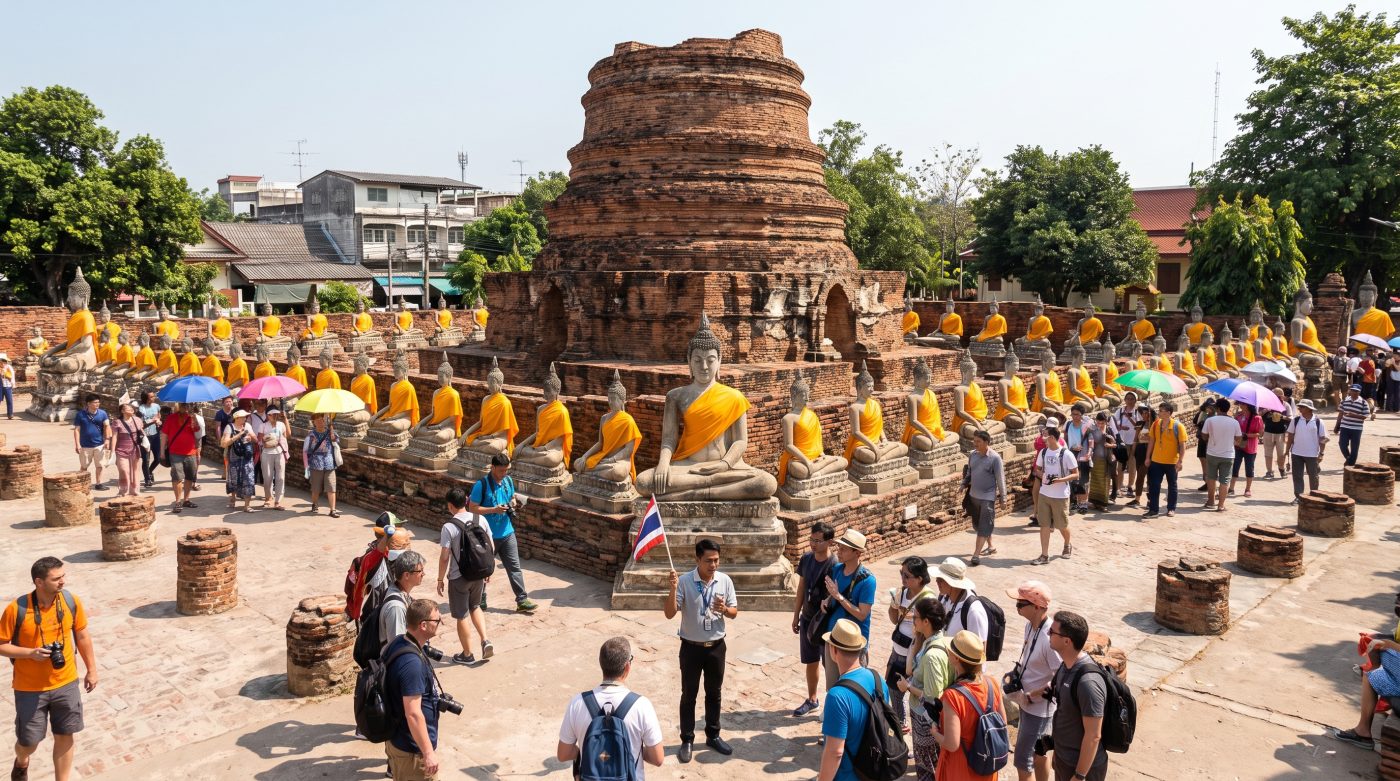
Ayutthaya's temples sit inside and around a busy, modern town, and it shows in the visitor experience. Forum threads and traveler reviews consistently describe it as crowded from late morning through early afternoon, especially with Bangkok day-trippers and tour groups, and busier still on Sundays. Several travelers who'd done both parks specifically noted feeling "marched through quickly" on Ayutthaya tour itineraries.
Sukhothai is the opposite experience almost by design: it's further away, so far fewer day-trippers make the trip, and the park itself is laid out as open parkland with shaded paths and reflecting ponds rather than a dense cluster of temples wedged into a town. Multiple travelers describe it as "a lot quieter," with reviewers who visited both parks back to back generally landing on Sukhothai as the more peaceful and more photogenic of the two — though that's exactly the trade-off you're making for the extra travel time.
What you'll actually see, and how it's laid out
Ayutthaya has dozens of temple ruins scattered across an island and the surrounding area, with entrance fees charged per temple (commonly 50–200 THB each depending on the site) rather than one combined ticket. Highlights most people prioritize include Wat Mahathat (the famous Buddha head entwined in tree roots), Wat Chaiwatthanaram, and Wat Yai Chai Mongkol.
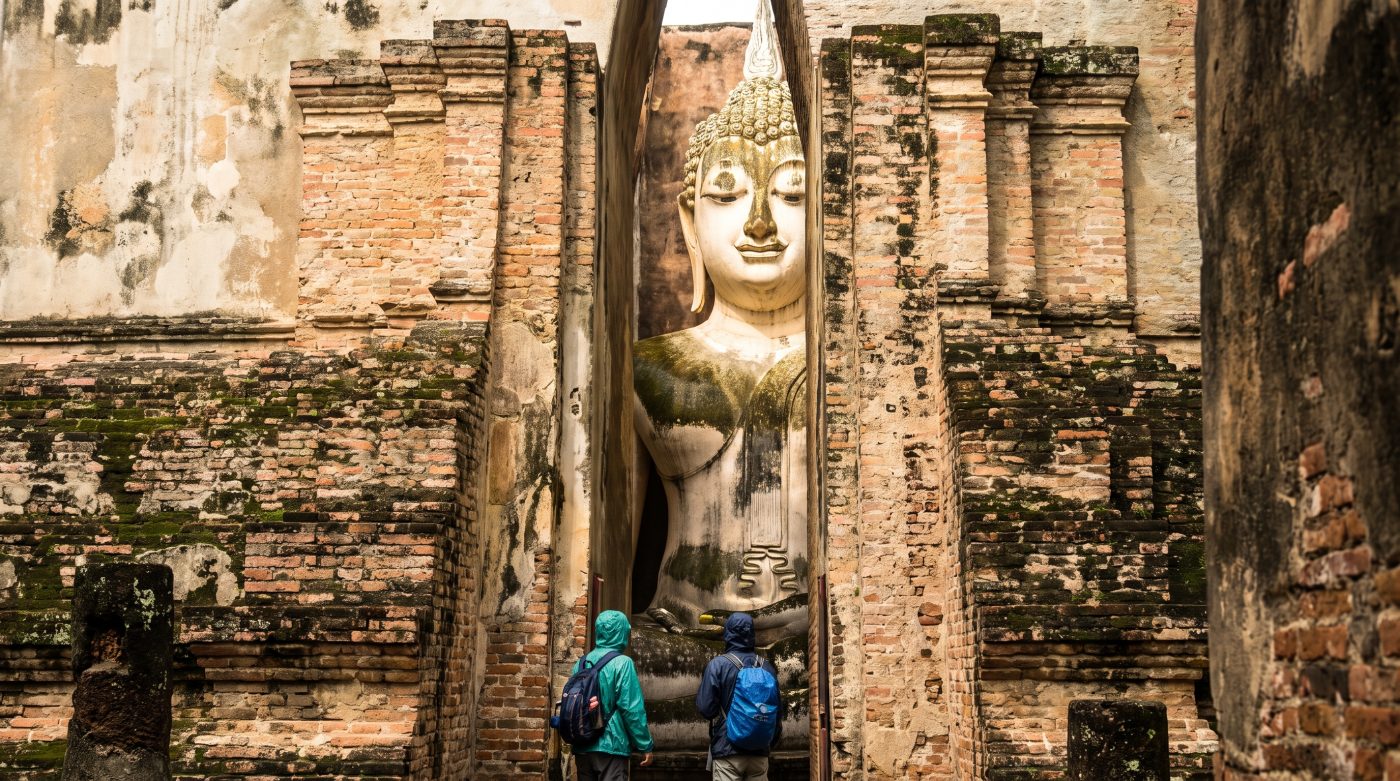
Sukhothai Historical Park is organized into five zones — Central, North, South, East, and West — spread across roughly 70 square kilometers, though almost everyone concentrates on the Central Zone, where Wat Mahathat's lotus-bud chedi and the surrounding ruins sit. The North Zone's Wat Si Chum is the park's single most photographed spot: a 15-meter seated Buddha visible through a narrow gap in the mondop's brick walls, an image that shows up constantly in "is Sukhothai worth visiting" searches and travel videos comparing the two parks.
What it actually costs
Sukhothai charges per zone rather than per temple: 100 THB per zone for foreigners (Central, North, and West are paid; South and East are currently free), plus a small extra charge if you bring a bicycle, motorbike, or car into the park. There's no single combined ticket covering all zones, so budget for whichever zones you actually plan to see — most people only need Central and North. Bike rental near the Central Zone entrance runs around 20–30 THB a day, and cycling between temples is genuinely the way most visitors get around, since the zones are too spread out to comfortably walk.
Ayutthaya's per-temple fees add up differently depending on how many sites you visit, but a reasonable day covering 4–5 major temples typically lands somewhere in the 200–400 THB range, plus whatever you spend on a bike rental (roughly 70 THB for 24 hours) or a tuk-tuk hired by the hour (roughly 200 THB/hour) to get between them.
How long you actually need
Ayutthaya is built for a single day: most people arrive by mid-morning, cover 4–6 temples, and are back in Bangkok by evening. It's genuinely difficult to justify an overnight stay unless you're pairing it with Bang Pa-In Palace or a slower, less rushed pace than the typical day-tripper gets.
Sukhothai rewards the opposite approach. Given how far it is to reach, most experienced visitors recommend at least a day and a half to two days once you're there — one full day for the Central and North Zones, with a second half-day for Wat Saphan Hin in the West Zone or a side trip to Si Satchanalai Historical Park, a lesser-known sister site about an hour further out that several forum threads specifically call out as worth the extra stop if you've already committed to the trip north.
If you are building a wider historical-sites itinerary rather than picking just one, two others are worth a look: Kanchanaburi and the Death Railway is the other big day-trip-or-overnight option out of Bangkok, and Isaan in the northeast has Khmer temple ruins that see a fraction of the visitors either of these two capitals do. If Sukhothai is pulling you north anyway, it slots naturally onto the Chiang Mai to Golden Triangle loop.
So which one should you actually pick?
If you're short on time, based in Bangkok, or trying to fit ruins into a broader itinerary without adding a travel day, Ayutthaya is the practical answer — and it's a genuinely good one, just a busier one. Pair it with our full Ayutthaya day-trip guide for the logistics.
If you're already routing through northern Thailand — say, between Bangkok and Chiang Mai — or you specifically want quieter ruins and don't mind the extra travel day, Sukhothai is the one that tends to leave people more impressed after the fact, precisely because fewer people make the trip. It's a harder sell on paper (more hours, more planning) but a stronger "glad I did it" outcome in practice, based on how consistently reviewers who've done both name it as the better experience.
And if your schedule allows it, doing both on the same loop — Bangkok to Ayutthaya to Sukhothai to Chiang Mai, or the reverse — means you're not actually choosing at all. Just budget the travel time honestly rather than assuming Sukhothai is a quick add-on the way Ayutthaya is.
For a sense of what either day (or both) adds to your overall trip cost, see our Thailand trip cost breakdown, and check our best time to visit Thailand guide if you're still deciding when to go — both parks get noticeably hotter and more exposed at midday with far less shade than a typical Bangkok temple visit.
▶Watch on VacaHack
Quick answers
Is Sukhothai or Ayutthaya better to visit?
It depends on your time budget. Ayutthaya is about an hour from Bangkok and works as an easy day trip; Sukhothai is 300+ km further and takes most of a travel day to reach, but travelers who've visited both parks consistently describe Sukhothai as quieter and more atmospheric. If you're short on time, Ayutthaya is the practical pick. If you have an extra day or are already heading north toward Chiang Mai, Sukhothai tends to be the more memorable one.
Can you visit both Sukhothai and Ayutthaya on the same trip?
Yes, and it works well on a Bangkok-to-Chiang Mai routing where you stop at Ayutthaya on the way out and Sukhothai further along, or the reverse. Just budget the travel time honestly — Sukhothai is not a quick add-on the way Ayutthaya is.
How long does it take to get from Bangkok to Sukhothai?
By direct bus from the Northern Bus Terminal (Mo Chit), 7–11 hours depending on the route. By train to Phitsanulok plus a connecting local bus, roughly 6.5–8 hours total. By Bangkok Airways flight direct to Sukhothai Airport, about 1 hour 20 minutes, though there are only two flights a day and fares run higher than the bus.
Is Sukhothai worth the extra travel time from Bangkok?
Most travelers who've made the trip say yes, specifically because the extra distance keeps crowds down. Sukhothai's ruins are laid out as open parkland rather than wedged into a modern town, and reviewers who compared it directly to Ayutthaya generally rated it the more peaceful and photogenic of the two. The honest trade-off is that it costs you the better part of a travel day each way.
How much is the entrance fee for Sukhothai Historical Park?
100 THB per zone for foreigners (Central, North, and West are paid; South and East are currently free), plus a small extra fee if you bring a bicycle, motorbike, or car into the park. There's no single combined ticket, so most visitors only pay for the Central and North Zones, which cover the park's main highlights.
Which is better for a one-day trip from Bangkok, Sukhothai or Ayutthaya?
Ayutthaya, without much debate. It's close enough to visit and return to Bangkok the same day. Sukhothai's travel time alone (7+ hours each way by bus, or a rushed flight connection) makes a true one-day round trip from Bangkok impractical — it's built for an overnight stay, not a day trip.