Must-Try Thai Dishes by Region: What to Actually Order
Ask most visitors what "Thai food" means and they will say pad Thai, green curry, or tom yum — all genuinely good, and almost all from one region: central Thailand. Drive a few hours in any direction and the food changes completely, with a different staple starch, a different spice level, and a different flavor base entirely. Here is what to actually order in Bangkok, Chiang Mai, Isaan, and the south — and how to ask for it the way it is actually eaten, not the version built for someone trying Thai food for the first time.
Thai Food Isn't One Cuisine — It's Four
Central Thai cooking (Bangkok and the surrounding plains) is the version most visitors already know: coconut milk, a balance of sweet-sour-salty-spicy, and historical ties to royal court cuisine. Northern Thai food (Chiang Mai, Chiang Rai) leans on sticky rice, fresh herbs, and Burmese- and Shan-influenced curries, usually without coconut milk. Northeastern food, from the Isaan region bordering Laos, is built around sticky rice and a fermented fish sauce called bplah rah, with clear broths and some of the most chili-forward cooking in the country. Southern Thai food, shaped by Malay and Muslim trading influence, uses dried spice pastes and turmeric in curries that regularly out-spice anything in the other three regions.
One detail comes up again and again in traveler forums, not food blogs: several posters on Fodor's Travel Talk Forums warn that tourist-facing restaurants — especially anywhere near a beachfront or a hotel strip — routinely pull the chili out of a dish by default, whether or not anyone asked for it toned down. If a dish tastes suspiciously mild compared to what a menu description promises, that is usually why.
Central Thailand: What You Already Know — But Maybe Not How to Order It
Pad Thai, tom yum goong, and gaeng keow wan (green curry) are genuinely central Thai dishes, not inventions for tourists — but pad Thai's specific rise to "national dish" status is its own story. Food historians generally trace it to a nation-building push under Prime Minister Plaek Phibunsongkhram's government in the 1930s and 40s, when wartime rice shortages pushed the state to promote noodle dishes as an act of practical nationalism rather than an ancient family recipe. Accounts differ on the finer details, but the broad shape of the story is well documented.
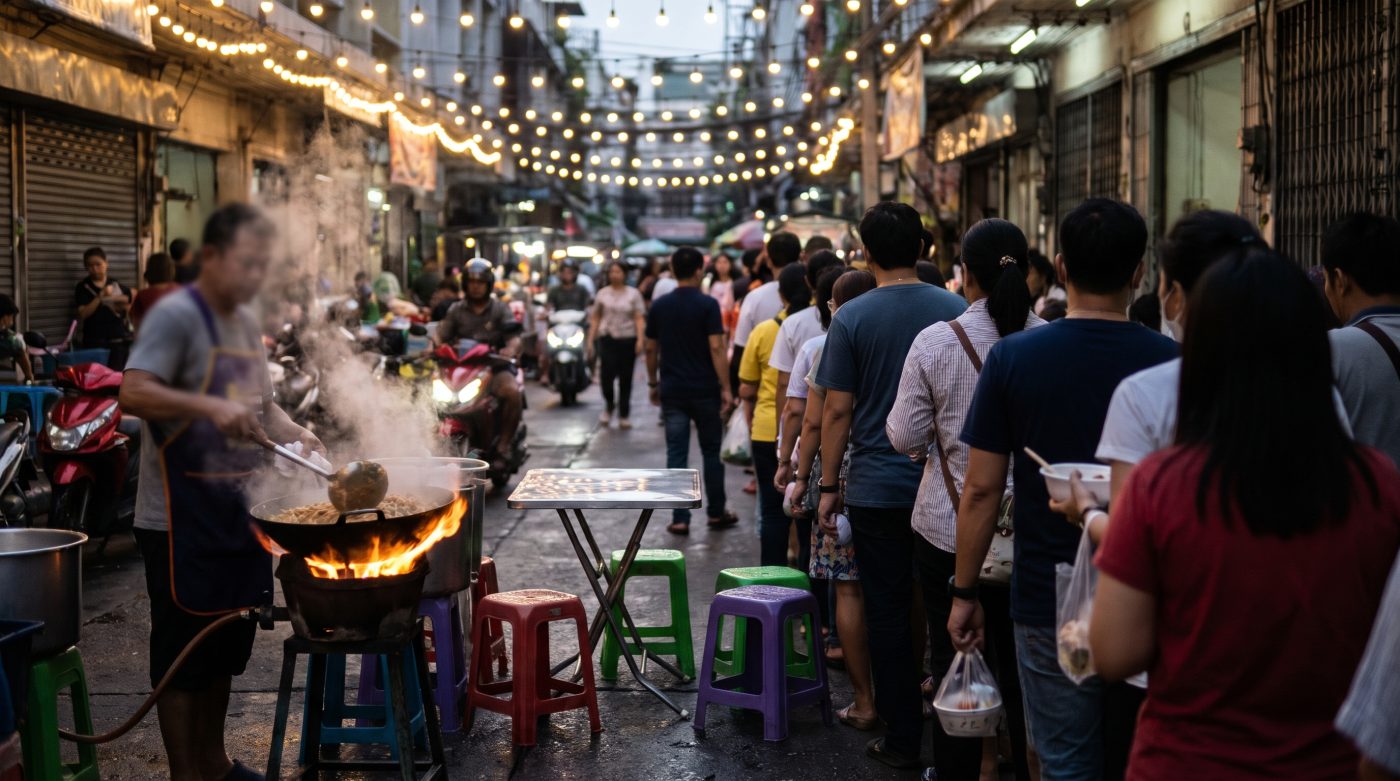
For something less tourist-menu and more how locals actually eat, two tips worth knowing: boat noodles (guay tiew reua) are worth seeking out at a shop that specializes in them rather than ordering as a side dish at a general restaurant, since the broth depth comes from years of practice, not a quick recipe. And a raan khao gaeng — a cafeteria-style curry-rice shop with trays of pre-made dishes on display — is a genuinely good way to try several unfamiliar central and regional dishes in small portions by just pointing at what looks good, rather than committing to a full plate of something you can't identify from a menu description. If you're traveling during mango season, roughly March through May, mango sticky rice made with ripe nam dok mai mangoes is worth prioritizing over the version sold the rest of the year.
Northern Thailand: Khao Soi and the Dishes Most Visitors Never Get To
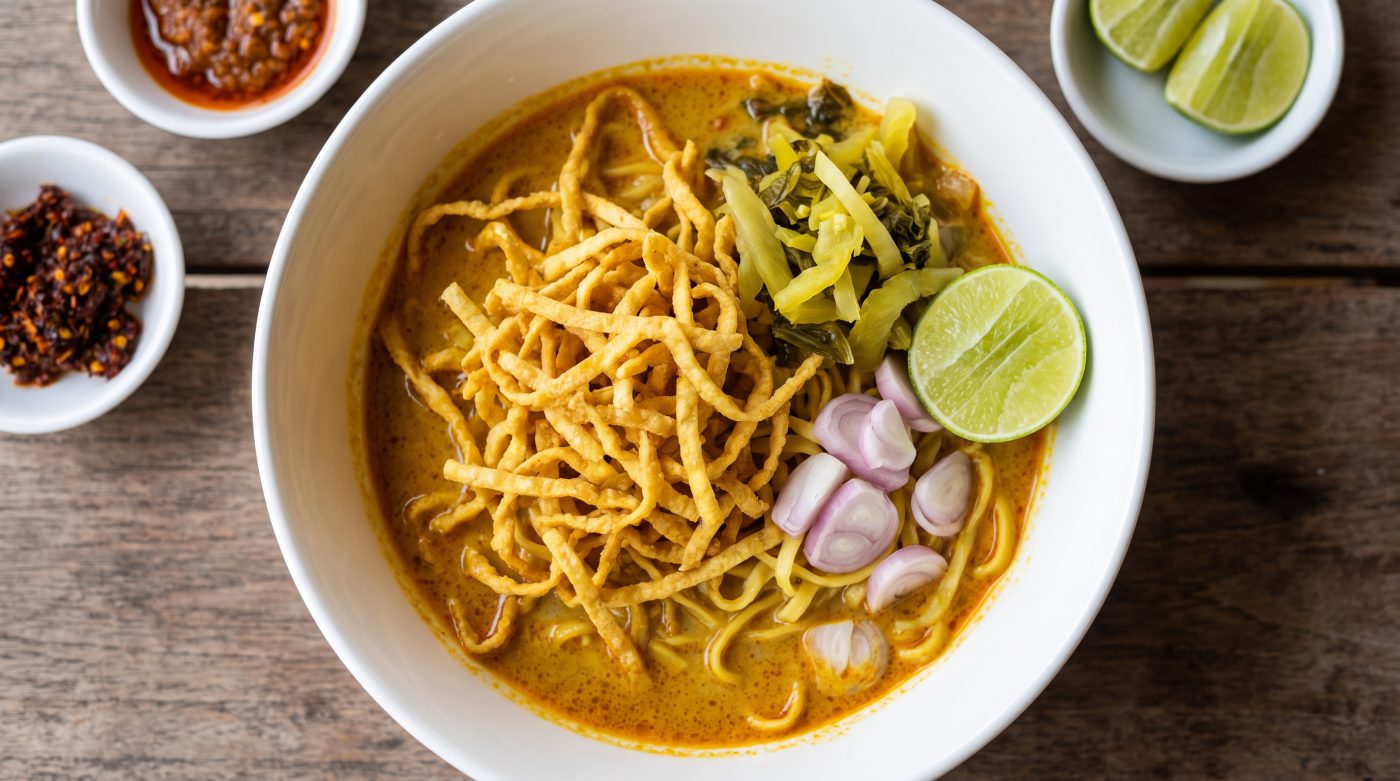
Khao soi is the dish most people already know about Chiang Mai: a coconut curry broth over soft egg noodles, topped with a tangle of crispy fried noodles, and served with pickled mustard greens, shallots, chili oil, and a lime wedge so you can adjust it yourself. It's a fair introduction, but it's one dish out of a much larger northern repertoire. A proper northern spread (sometimes served as a set called hor duup muang) usually includes a chili dip — nam prik ong or the spicier nam prik num — eaten with raw and blanched vegetables, alongside northern herb sausage and crackling.
Kaeng hang le, a Burmese-influenced pork belly curry with tamarind and peanuts, is worth ordering if you see it, as is lab muang kua — the northern cousin of Isaan laab, but made without lime juice and seasoned instead with makhwaen, a numbing, citrusy pepper that gives it a completely different character from the south or northeast version of the same dish name. If you're road-tripping through the north, our Chiang Mai to Chiang Rai road trip guide covers where these show up along the way.
Northeastern Thailand (Isaan): Overlooked, and the Spiciest Region by Most Accounts
Isaan food gets less attention from first-time visitors than it deserves, partly because its defining ingredient — bplah rah, a strongly fermented fish sauce — isn't an easy sell on a menu description. It's what gives laab (minced meat salad, pronounced "lahp" regardless of how it's spelled on a menu), tom saep (a clear, sour, slow-burn soup), and som tam their distinct funk, and it's the single biggest reason Isaan food tastes nothing like central Thai cooking despite using some of the same herbs.
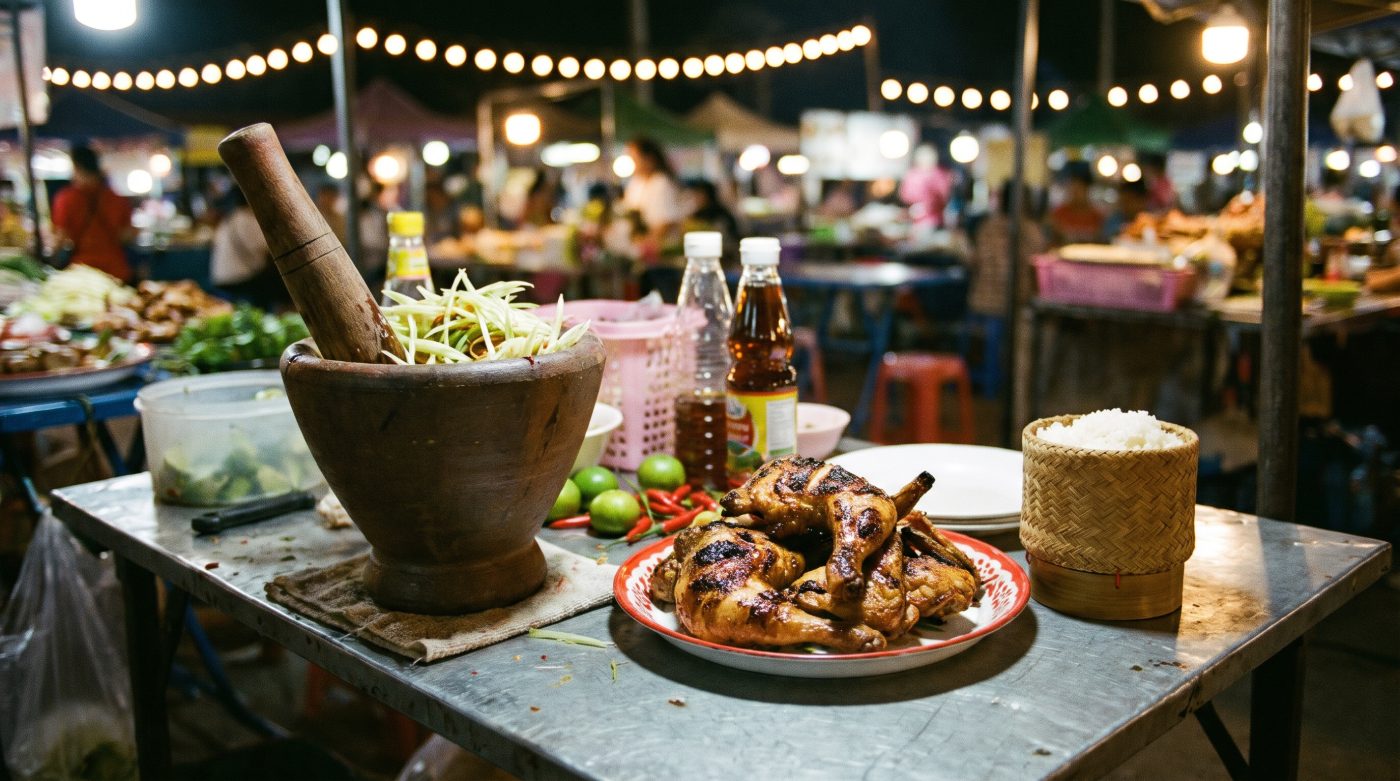
The core Isaan meal almost everyone should try is laab, gai yang (grilled, marinated chicken, chopped with a cleaver and served with a tangy dipping sauce), and sticky rice, eaten by hand in small pinched balls. Som tam itself has more variation than the green-papaya version sold to tourists — corn, carrot, and cucumber versions all exist, sometimes with fermented crab or salted egg added, which is worth asking about if you want (or want to avoid) the stronger funk. Sai krok Isaan, a tangy fermented pork sausage, is another specifically northeastern item worth flagging down from a street cart.
On just how spicy Isaan food actually is, travelers don't fully agree: one long-time Fodor's forum poster described it flatly as "very spicy, even by Thai standards," while others rate the south hotter still. Either way, it runs hot by most visitors' baseline. Isaan restaurants are easy to find well outside the region itself, including in Bangkok and Chiang Mai — if you're spending time in the northeast specifically, our Isaan travel guide covers the region beyond the food.
Southern Thailand: Where "Spicy" Gets Redefined
If Isaan has a rival for hottest regional cuisine, it's the south. One Fodor's forum reply put it bluntly: food from Surat Thani and further south is Thailand's hottest, and much of it "is not on the menu in the tourist restaurants." Khua kling, a dry curry built on a southern spice paste, is the dish southern cooks most often point to as the region's signature, and it's served hot enough that it's genuinely not for everyone.
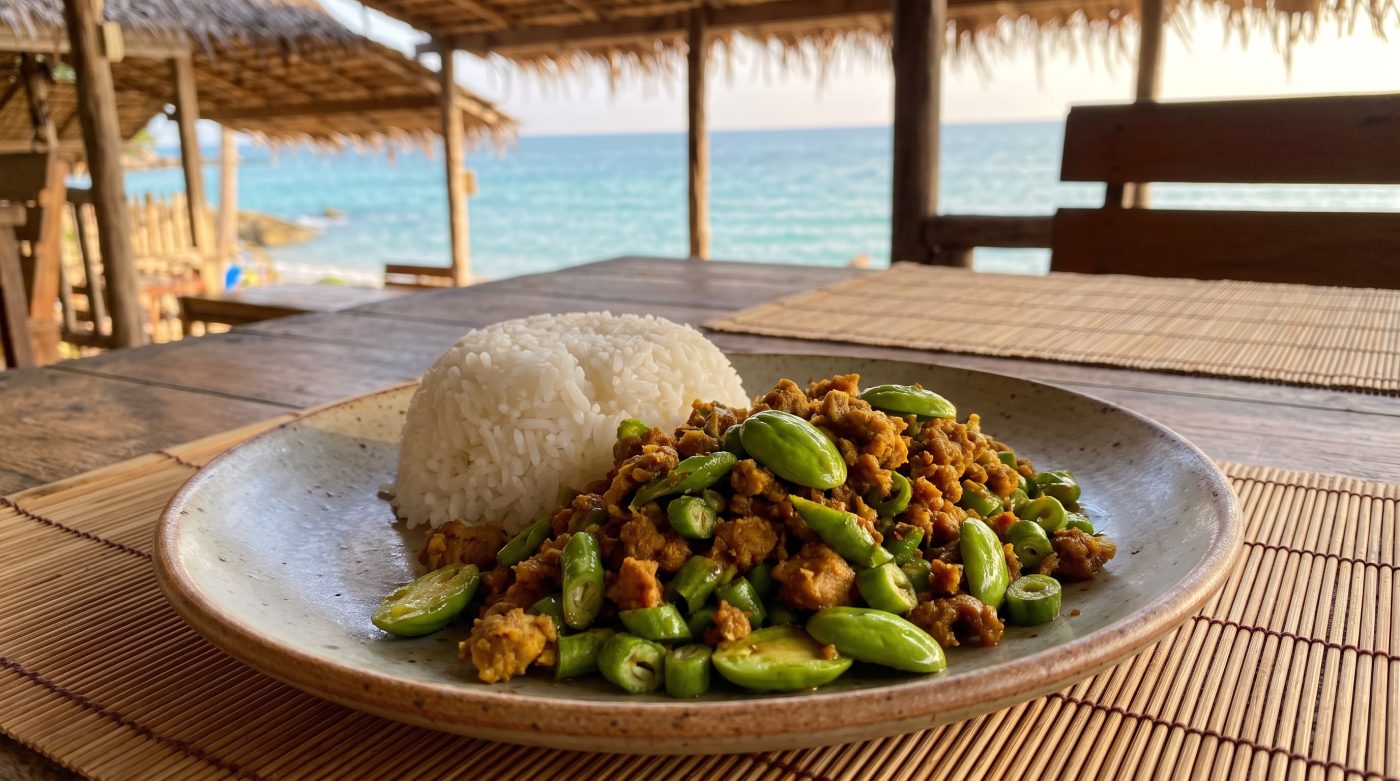
Sataw pad kapi goong — stink beans stir-fried with prawns and shrimp paste — is a real litmus test; it's often described, even by people who grew up eating it, as an acquired taste because of the bean's distinctive smell. Gaeng leuang (a thick, sour yellow curry, sometimes made with young coconut shoots that take some of the edge off the heat) and goong pad makham (tamarind prawns — sweet, salty, sour, and not a curry at all) are both good options if the chili-forward dishes sound like too much on a first try. Moo hong, pork belly braised slowly in garlic, black pepper, and palm sugar, is one of the only southern dishes that isn't fiery, and makes a good bridge if you want to taste the region without the full heat.
How to Actually Order (So You Get the Real Version)
Three Thai phrases cover most situations: phet mak (very spicy), phet nit noi (a little spicy), and mai phet (not spicy). They're useful everywhere in the country, though it's worth knowing that staff at a restaurant built around tourist traffic may default to a toned-down version regardless of what you ask for — a pattern multiple travelers flagged independently rather than something we're assuming. Busier, more local-looking spots — markets, raan khao gaeng cafeteria shops, and places that specialize in one dish — tend to serve food closer to how Thais actually eat it than a general "Thai restaurant" menu built around photos for visitors.
If something comes out lukewarm instead of hot, that's often just how it's served in Thailand rather than a sign it's been sitting out, and sending it back isn't the norm. For the separate question of eating safely rather than just well, our street food safety guide covers vendor selection, and our tap water and food safety guide covers the ice and water side of eating out.
▶Watch on VacaHack
Quick answers
What is the most popular Thai dish?
Pad Thai is the most internationally famous, but it's a central Thai dish, not necessarily what Thais eat most often at home. Som tam, laab, and khao soi are at least as central to everyday Thai eating, they're just less exported.
Is Thai food very spicy?
It depends heavily on region. Central Thai dishes are usually mild to medium. Isaan and southern Thai food run considerably hotter, and some southern curries like khua kling are among the spiciest food in the country. Tourist-facing restaurants often tone the heat down by default, so a mild dish at a beachfront restaurant isn't necessarily representative.
What's the difference between larb and laab?
Nothing, they're the same dish; laab is the closer transliteration of how it's actually pronounced ("lahp"). It's a minced meat salad from Isaan and northern Thailand, served warm, not over lettuce.
What should I eat in Chiang Mai that I can't get in Bangkok?
Khao soi is the obvious one, but also look for kaeng hang le (a Burmese-influenced pork curry), northern herb sausage, and lab muang kua, the northern version of laab made without lime and with a numbing pepper called makhwaen instead.
Is southern Thai food spicier than Isaan food?
Travelers genuinely disagree on this. Isaan food is often called very spicy even by Thai standards, but several sources put dishes from the deep south, like khua kling and sataw pad kapi goong, at the top of the heat scale nationally. Both regions run hotter than central Thai food.
How do I order Thai food less spicy as a tourist?
Say "mai phet" for not spicy or "phet nit noi" for a little spicy. That said, many restaurants aimed at tourists already serve a milder default version regardless of what you ask for, so a dish that tastes surprisingly mild at a touristy spot usually isn't a sign you did anything wrong.