Is Thai Street Food Safe to Eat? What to Actually Look For
Thai street food is safe to eat far more often than not — the risk almost never comes from the fact that it is served off a cart rather than a plate in a dining room. It comes down to a handful of specific, checkable signals: how long the food has been sitting, how the vendor handles raw ingredients and cash, and what the ice and water at that particular stall are like. Learn to read those, and you can eat well across Thailand without treating every grill and wok with suspicion.
The short answer: it's mostly about the stall, not the category
"Is Thai street food safe?" is not really one question — some stalls would pass a health inspection anywhere in the world, and some would not survive one anywhere. Travelers who eat street food constantly and rarely get sick are not lucky; they are unconsciously filtering by the same few signals every time. The ones who get hit hard often did everything the guidebooks say and still ended up sick from somewhere else entirely.
A widely-discussed Reddit thread about a traveler hospitalized after just four days in Thailand is a useful reality check: she had avoided street food, seafood, salads, and dairy entirely, stuck to highly rated sit-down restaurants, and drank only bottled water — and still ended up with a confirmed bacterial infection. Other commenters pointed at the ice or a coffee as the likelier source. The lesson is not that nothing is safe. It is that "street food bad, restaurant good" is not actually the right filter.
Watch the vendor for a few minutes before you order
This is the single most useful habit, and it costs nothing. Before you order, look for three things:
- Is your food cooked to order, over real heat? A wok at a visible, aggressive flame or a grill with active coals kills far more than a pot of something that has been sitting lukewarm since lunch.
- Does the vendor separate cash from food? Someone touching dirty baht notes and then your noodles with the same hand, with no rinse or tongs in between, is a real transmission route — not a minor quibble.
- Is the workstation reasonably under control? Raw meat kept cold and separate, pans wiped between orders rather than reused unrinsed, ingredients that look bright and recently cut rather than greyish and sitting in standing liquid.
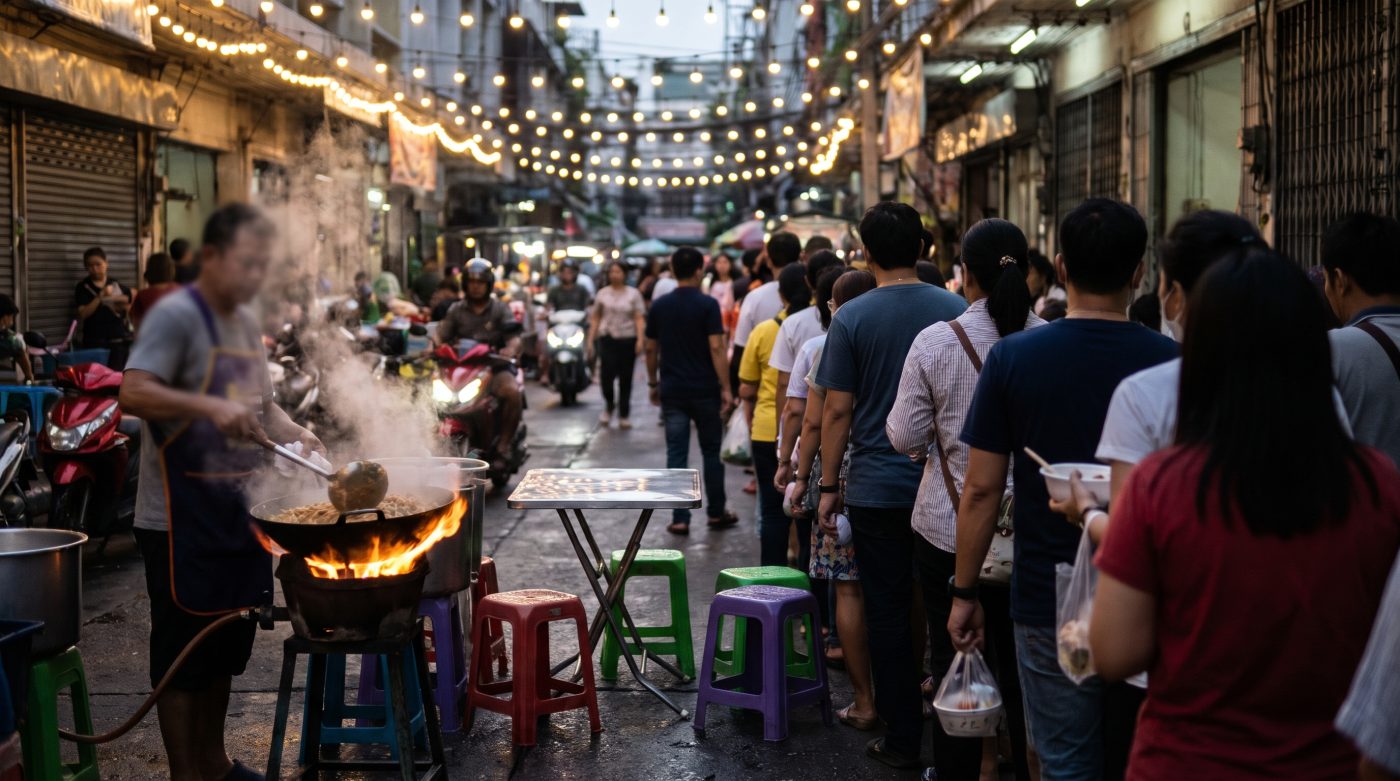
A long line of Thai customers, not just tourists, at lunch or dinner is still one of the best shortcuts for all three at once: a stall that is constantly turning over ingredients to keep up with local regulars does not have time to let anything sit.
Dishes that are lower-risk, and ones that are not
Not every dish carries the same risk, even from the same stall:
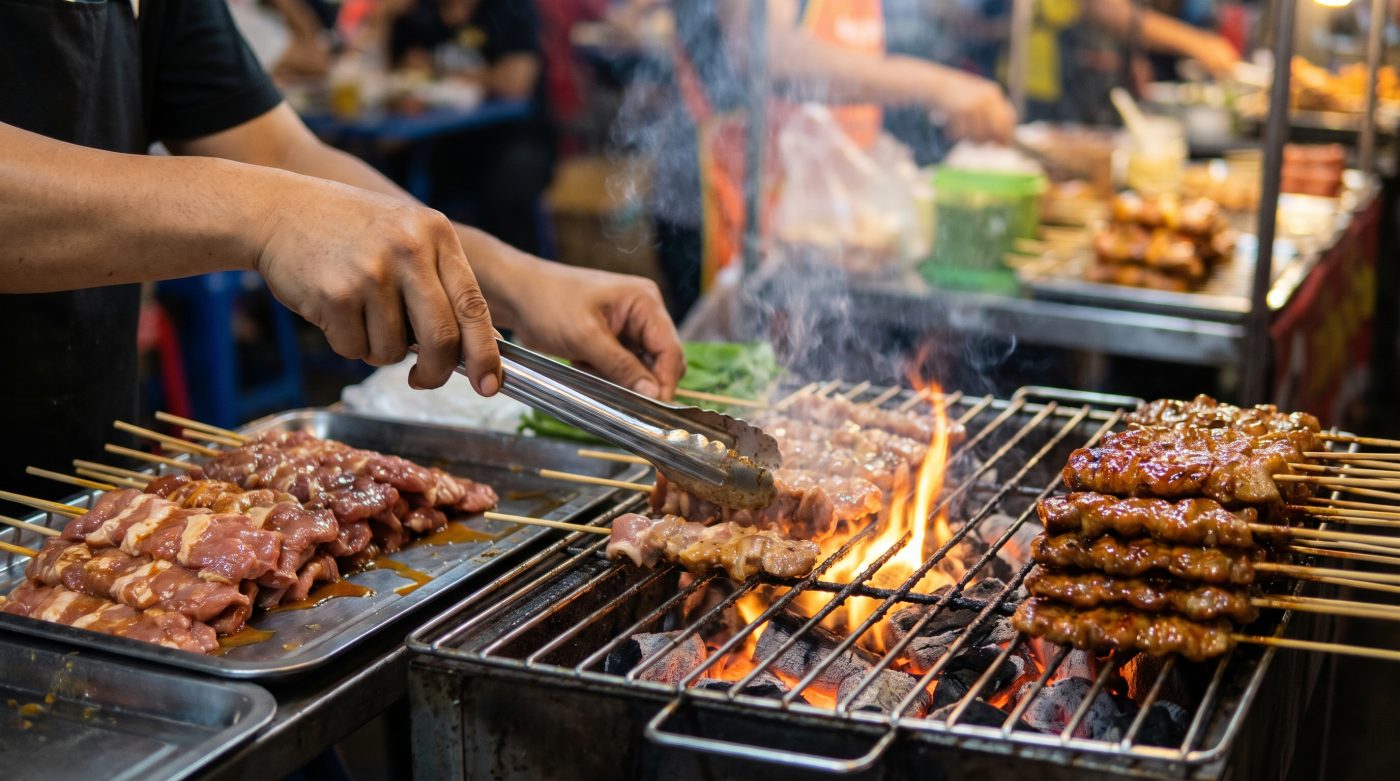
- Lower-risk: anything cooked to order and served hot — grilled meat skewers (moo ping) straight off the coals, fresh stir-fries, soup ladled from a near-boiling pot, whole fruit you peel yourself.
- Higher-risk: stir-fries and fried rice made in large batches and reheated rather than cooked fresh per order (cross-contamination from a shared wok that is not cleaned between different raw proteins is a real factor); cold salads like som tam that use raw, unpeelable vegetables washed in tap water; pre-made dishes left out at room temperature, especially anything with coconut milk or seafood that has been sitting more than 30 minutes or so; shellfish where the shell has not stayed shut during cooking.
None of this means avoid som tam or fried rice — it means apply the same "cooked fresh, in front of you" test to them specifically, since they are also the dishes most often made in batches ahead of time at lower-effort stalls.
Ice, water, and produce — the short version
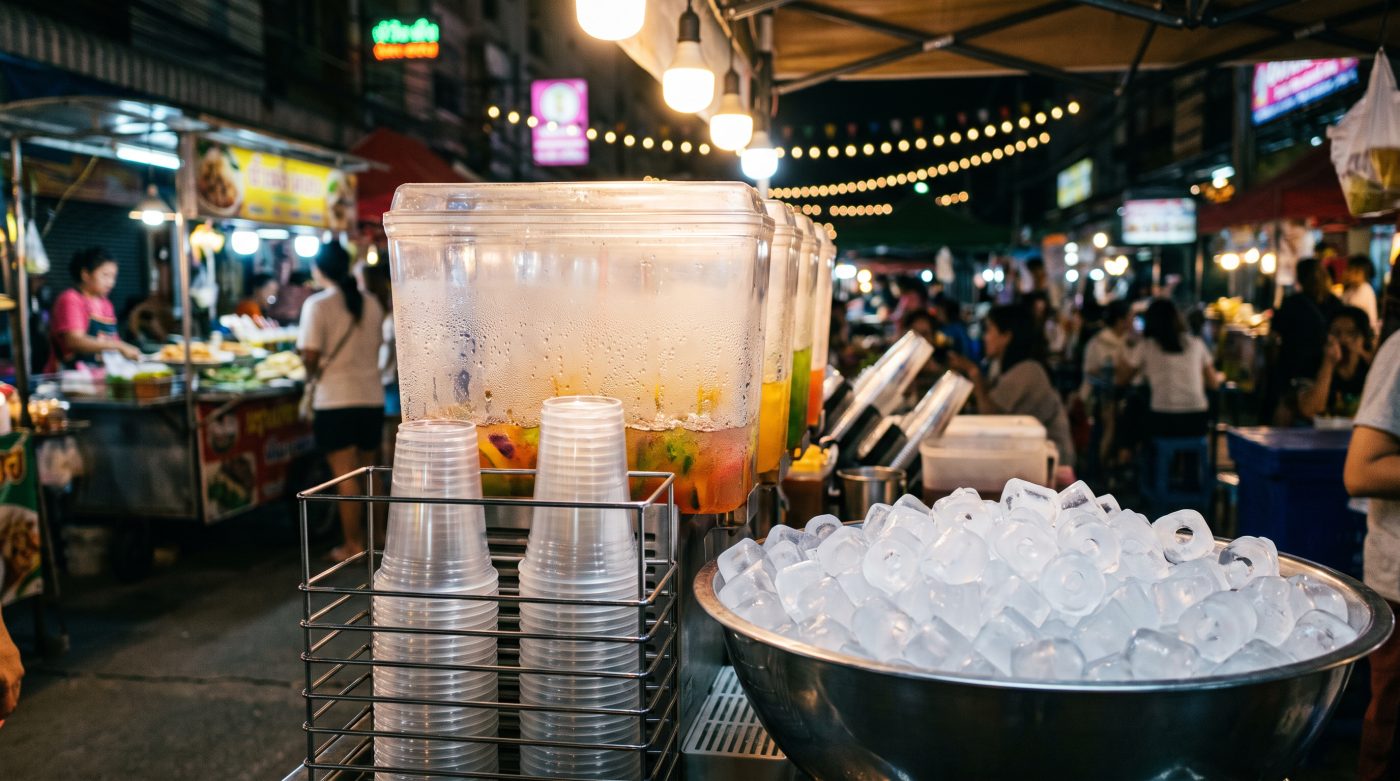
These deserve more detail than fits here, and we have covered them properly in our guide to tap water and food safety in Thailand. The short version: large, uniform ice cubes with a hole through the middle come from a filtered ice factory and are generally fine; crushed or irregular ice is more likely to have been handled less carefully. Drinks and smoothies made with filtered water from a proper cooler are a different story from food rinsed in tap water, and raw produce you cannot peel yourself (lettuce, tomatoes, the long beans in som tam) carries more of that risk than fruit with a skin you remove.
Thailand's actual hygiene sign: Clean Food Good Taste
This is not a myth or a tourist-blog invention: "Clean Food Good Taste" (Ahaan Sa-aht Rod Chaad) is a real, long-running hygiene certification run by Thailand's public health authorities and local city governments, including Bangkok, that inspects vendors against basic standards — clean water source, covered food storage, proper waste disposal, vendor hygiene — and lets stalls that pass display a sign or certificate. It is worth glancing for, though it is not a guarantee by itself: plenty of excellent, safe stalls do not have the sign simply because they never registered for it, and enforcement and renewal vary a lot by location. Treat it as one more data point, not a substitute for watching the stall yourself.
If you are still nervous: Michelin stars and other middle ground
It is worth knowing that "street food" and "low quality" are not the same thing in Thailand at all — Bangkok's Michelin Guide has awarded stars to actual street stalls, most famously Jay Fai, the crab omelette vendor who has held a star for years cooking over open flame on a Bangkok sidewalk. If you want a gentler entry point while your stomach adjusts, food courts inside malls (often air-conditioned, with standardized vendor stalls and a central payment card system) and the stalls inside well-known covered night markets tend to have more consistent turnover and oversight than an isolated roadside cart, without losing much of the actual food quality.
If you do get sick anyway
Even careful eaters get an off day in Thailand sometimes — a different gut biome, a genuinely unlucky ingredient, or something as mundane as dehydration in the heat masquerading as food poisoning. Oral rehydration salts (sold at every pharmacy) do more for you than plain water alone, and most mild cases pass within a day or two of rest and fluids. If symptoms are severe, include a high fever, or last more than a day or two, our guide to getting sick in Thailand covers hospitals, pharmacies, and clinics by region.
▶Watch on VacaHack
Quick answers
Is street food in Thailand safe to eat?
Yes, most of the time. Thai street vendors turn over fresh ingredients quickly and many have fed the same local regulars for years. The real risk factors are food that has been sitting out, cross-contaminated prep surfaces, and unfiltered ice or water, not "street food" as a category.
How can I tell if a street food stall is safe before I order?
Watch it for a few minutes first: is there a line of Thai customers (not just tourists), is your dish cooked fresh in front of you over real heat, and does the vendor avoid handling cash and food with the same hand without a rinse in between? A stall that passes those checks is a meaningfully lower-risk bet.
Is the ice at Thai street food stalls safe?
Large, cylindrical ice with a hole through the middle comes from a filtered ice factory and is generally fine. Crushed or irregularly shaped ice is more likely to have been made or handled less hygienically. Our guide to tap water and food safety in Thailand covers this in more detail.
Does avoiding street food actually prevent getting sick in Thailand?
Not reliably. Plenty of travelers who stick to sit-down restaurants and avoid street food entirely still get sick, often from ice, unpeeled produce, or a kitchen's own water rather than a street stall. Vendor hygiene signals matter more than whether the food came from a cart or a dining room.
What is the "Clean Food Good Taste" sign in Thailand?
It is a real hygiene certification program run by Thailand's public health authorities and local city governments, including Bangkok, that inspects food vendors against basic standards and lets stalls that pass display a sign. It is a useful extra data point, but not every safe stall has registered for it, so it is not a substitute for checking the stall yourself.
What should I do if I get food poisoning in Thailand?
Rehydrate aggressively with oral rehydration salts rather than just water, and rest. See a pharmacist or clinic if symptoms are severe, include a high fever, or last more than a day or two. Our guide to getting sick in Thailand covers hospitals, pharmacies, and clinics by region.