Is Tap Water Safe to Drink in Thailand? A Realistic Guide
No — tap water in Thailand isn't recommended for drinking, even though treatment plants in Bangkok and other major cities generally meet international safety standards on paper. The real risk isn't the treatment plant, it's everything between the plant and your glass: aging pipes, rooftop storage tanks, and inconsistent maintenance that can reintroduce bacteria, sediment, and heavy metals after the water's already been treated. Bottled and filtered water are cheap and everywhere, so almost nobody — locals included — drinks straight from the tap.
Why tap water isn't recommended, even though it technically meets standards
This is the part that confuses a lot of first-time visitors, and it comes up constantly on travel forums: Bangkok's Metropolitan Waterworks Authority does treat water to standards that are, on paper, comparable to WHO guidelines. The problem is distribution, not treatment. Thailand's pipe network is old in a lot of areas, leaks are common, and water sits in rooftop tanks — sometimes topped up by tanker trucks of unknown origin — before it ever reaches a tap. Any one of those points can reintroduce contamination the treatment plant already removed.
On a Tripadvisor Thailand forum thread about this exact question, one long-term resident said they'd never gotten sick from tap water, intentionally or by accident, while others in the same thread described real concerns about groundwater wells near landfills going untested, and warned that "one gulp of the wrong water from a tap could contain toxins, bacteria, or amoeba." That split is fairly representative of what you'll find if you go looking: plenty of individual people report no issues, but nobody with local experience actually recommends drinking it as a matter of course. Ko Samui and other islands that rely more on well water came up specifically as places to be extra cautious, more so than central Bangkok.
The honest takeaway: the risk from any single sip is probably low, but it's genuinely inconsistent — it depends on the building, the neighborhood, and how the water's been stored, none of which you can verify as a visitor. Bottled or filtered water removes the guesswork for about 15 baht (roughly $0.40) per 1.5-liter bottle, so there's not much upside to rolling the dice.
What's actually fine — brushing your teeth, showering, cooking
This is one of the most-searched follow-up questions, and the answer is more relaxed than people expect. Brushing your teeth with tap water and rinsing is fine for the overwhelming majority of travelers — the volume you'd actually swallow is tiny, and plenty of long-term expats do this without issue. Showering and bathing are fine too; skin contact isn't the concern here, ingestion is. If you're someone with a sensitive stomach or you're traveling with a young child, using bottled water for brushing teeth is a reasonable extra precaution, but it's not the standard advice.
Cooking is where it gets more specific: boiling water kills the bacterial and parasitic risks, which is why tea, coffee, and thoroughly boiled food made with tap water are considered safe. What boiling doesn't fix is dissolved heavy metals, which is the one category of risk that survives cooking. In practice this mostly matters for people on very long stays cooking daily with tap water, not a two-week trip — but it's the accurate answer rather than a blanket "boiling makes it fine."
Is the ice safe?
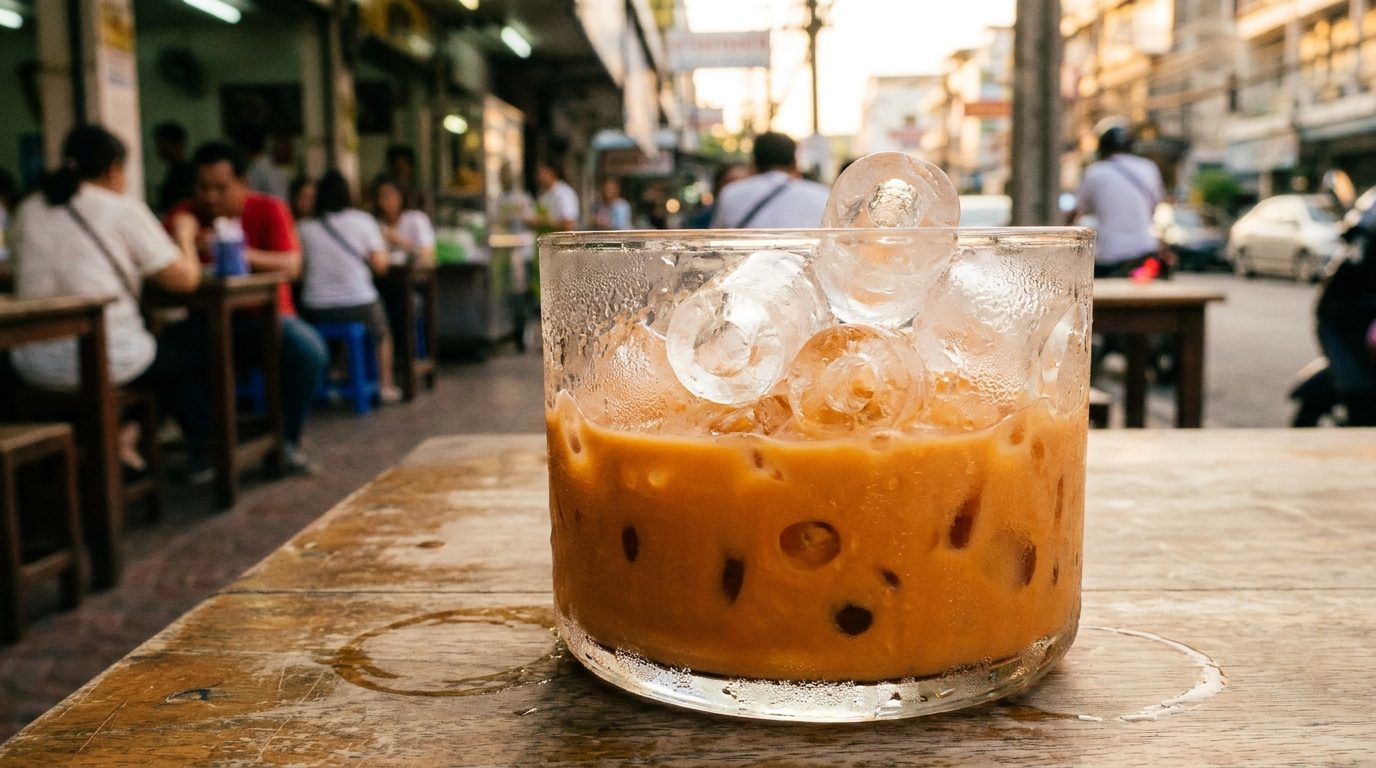
Yes, in the vast majority of cases — and this is one of the more reassuring findings in the research for this post. Almost all ice served in Thai restaurants, bars, and even street stalls is factory-produced from filtered water under licensed, inspected conditions, not made in someone's home freezer. The giveaway is the shape: cylindrical ice with a hole through the center is machine-made at an ice factory, and that's the kind you'll see constantly at restaurants and in bottled/canned drinks. Solid block ice, which gets shaved or chipped for some drinks and desserts, is also factory-made but can pick up contamination later if it's handled poorly — dragged along the ground, wrapped in a dirty sack for transport, or left uncovered.
The practical rule locals actually use: if a stall or restaurant is busy with Thai customers, the ice (and everything else) is almost certainly fine, because turnover keeps ingredients fresh and vendors with a steady local customer base have a reputation to protect. If you want to ask directly, "ao nam keng?" means "do you want ice?" and "mai ao nam keng" is how you decline it. Genuinely sketchy ice is rare enough in tourist areas and cities that most travel writers who've spent years in Thailand describe drinking iced beverages from street vendors regularly without issue — but if a place looks neglected or the ice looks cloudy or dirty, that's the moment to skip it, same as you would with any food safety judgment call.
Street food and water safety — the real rules
Thailand's street food is one of the best reasons to visit, and the food-safety advice for it isn't complicated: it comes down to volume and freshness, not whether it's street food specifically. A stall with a constant line of local customers is cooking and turning over food fast, which is exactly the food-safety condition you want — hot food cooked to order, not sitting under a heat lamp for hours. The classic backpacker-medicine rule still holds up here: "boil it, cook it, peel it, or leave it." Peel your own fruit rather than buying pre-cut fruit that's been sitting out, be a little more cautious with raw vegetables and anything uncooked, and treat freshly cooked, still-hot food as the safest category by far.
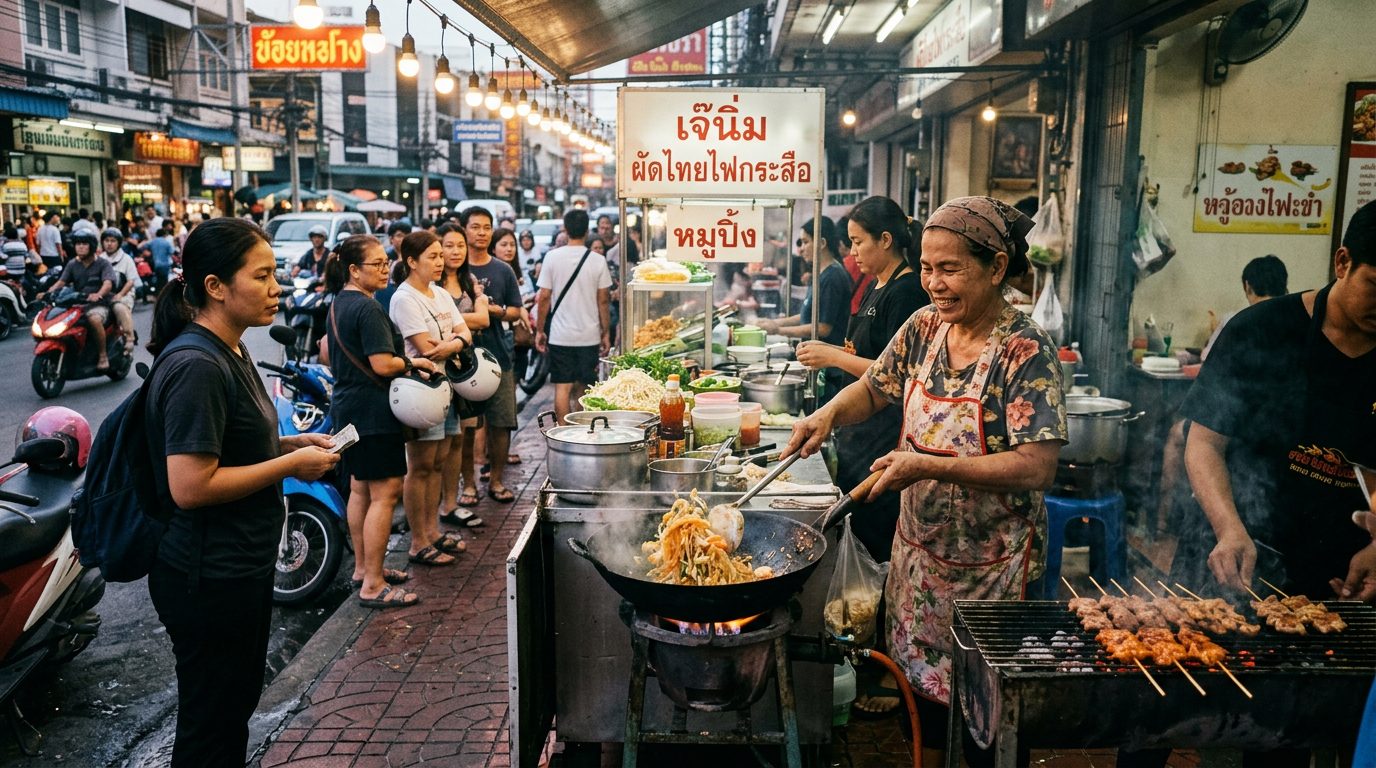
Hand hygiene matters more than most travelers expect, since a lot of traveler's diarrhea comes from hand-to-mouth contact rather than the food itself — carrying alcohol-based hand sanitizer (70%+ concentration) and using it before you eat street food is a small habit that measurably helps. None of this means you need to avoid street food, which would mean skipping most of what makes Thai food genuinely great — it means applying the same "does this look fresh and busy" judgment you'd use anywhere.
How common is traveler's diarrhea, really
Worth knowing so you can calibrate how worried to actually be: a prospective study of adult foreign travelers in Thailand found that around 14% developed traveler's diarrhea within their first week, rising to about 23.5% by the second week, with symptoms typically starting around nine days after arrival. Of those affected, roughly 1.5% needed hospitalization and about 11.3% had to change their travel plans because of it. So it's common enough to plan around — pack the basics (oral rehydration salts, a reliable anti-diarrheal, hand sanitizer) — but the overwhelming majority of cases resolve on their own within a few days without needing medical care.
The cheap, sustainable way to stay hydrated
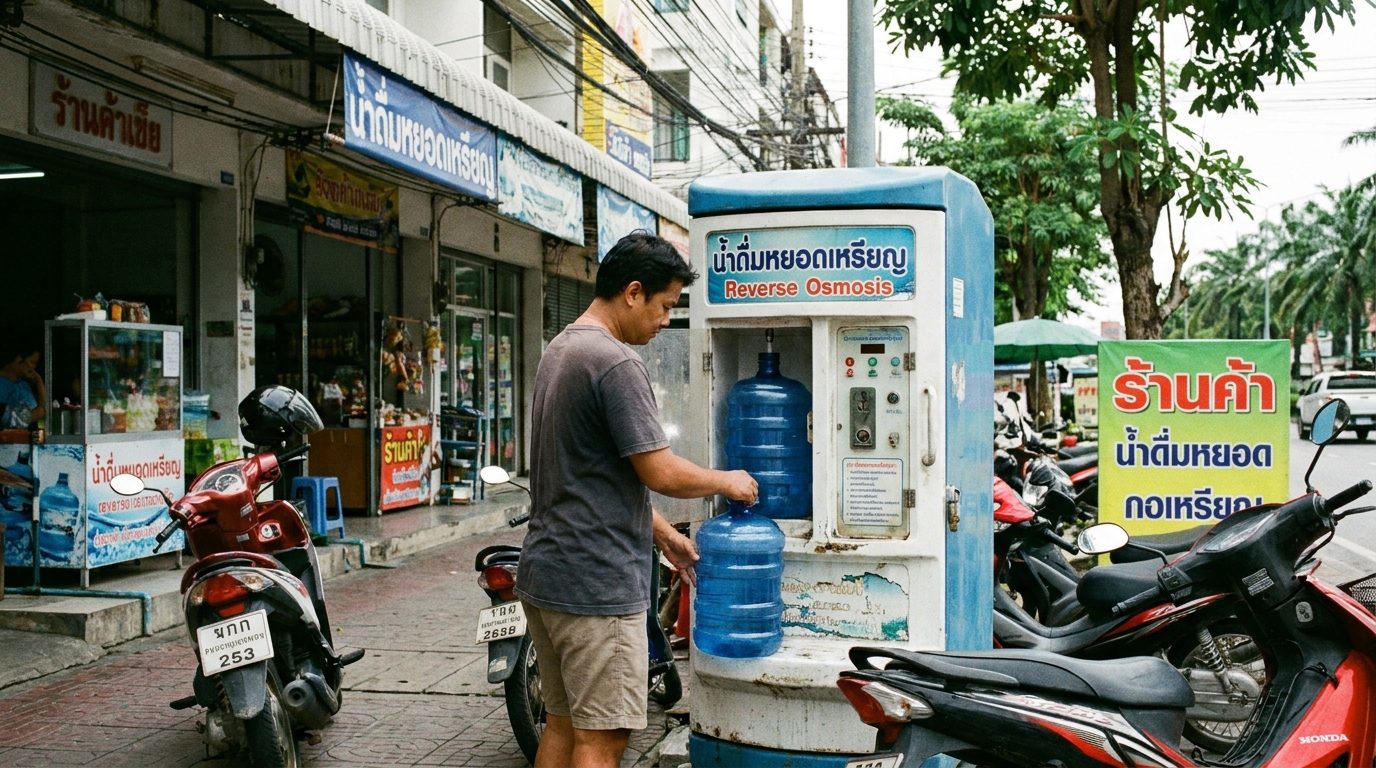
Buying bottled water for an entire trip works, but it adds up in plastic waste, which is a real and visible problem in Thailand's beach towns and islands specifically. The alternative that most long-term visitors land on is refilling from the reverse-osmosis water vending machines that are genuinely everywhere — small towns and big cities alike — for about 1 baht per liter. You bring your own bottle, insert a coin, and fill up; apps like Refill and Water Map help locate stations, and the Trash Hero network (strongest in southern Thailand and Chiang Mai) has participating shops obligated to top up a reusable bottle for free. A refillable bottle with a built-in filter is a reasonable upgrade if you want one extra layer of certainty, especially for longer stays or more rural areas, though it's not a requirement for a typical trip sticking to cities, beach towns, and tourist infrastructure. If you're mapping out daily costs for a trip, water is one of the smaller line items — our Thailand trip cost breakdown has real numbers for where the bigger money actually goes.
If you do get sick anyway
Even doing everything right, stomach issues happen to a meaningful share of visitors, as the numbers above show. Mild cases usually just mean a day of rest, rehydration, and bland food. If symptoms are severe, don't improve after a few days, or come with a high fever or blood, it's worth getting seen — we've covered what that actually looks like, cost-wise and logistically, in our guide to hospitals, pharmacies, and getting sick in Thailand, including what a private hospital visit typically costs before insurance factors in.
▶Watch on VacaHack
Quick answers
Is tap water in Thailand safe to drink?
No, it's not recommended. Treatment plants in major cities generally meet international standards, but aging pipes and rooftop storage tanks between the plant and the tap can reintroduce contamination. Bottled water and 1-baht refill stations are cheap and everywhere, so there's little reason to risk it.
Can I brush my teeth with tap water in Thailand?
Yes, for most travelers this is fine — the amount you'd swallow while brushing and rinsing is negligible, and many long-term expats do this without issue. If you have a sensitive stomach or are traveling with a young child, using bottled water is a reasonable extra precaution.
Is the ice in Thai drinks safe?
Almost always, yes. The vast majority of ice in Thailand is factory-made from filtered water under licensed conditions. Cylindrical ice with a hole through the center is the clearest sign it came from a commercial ice factory rather than a home freezer.
How much does bottled water cost in Thailand?
A 1.5-liter bottle typically runs around 15 baht (roughly $0.40) at convenience stores. Reverse-osmosis refill stations, found in nearly every town, are even cheaper at about 1 baht per liter if you bring your own bottle.
What are the water refill stations in Thailand and are they safe to use?
They're coin-operated reverse-osmosis filtration machines found on sidewalks in most Thai towns and cities. You insert about 1 baht per liter and fill your own bottle. They're generally safe when well-maintained — apps like Refill and Water Map help locate reliable ones, and it's fine to skip a machine if the water smells or looks off.
How common is traveler's diarrhea in Thailand and when should I see a doctor?
A study of foreign travelers found about 14% get sick within the first week and 23.5% by the second week, with most cases mild and resolving on their own within a few days. See a doctor if symptoms are severe, don't improve after a few days, or come with a high fever or blood.