SIM Card or eSIM for Thailand? How to Pick Before You Land
If your phone is eSIM-capable and under about two years old, get an eSIM before you fly: you can activate it on the plane's wifi or at the gate and land already connected. If you've got an older phone, want unlimited data without fine print, or you're staying more than a month, a physical SIM from a Thai carrier is usually cheaper and more reliable than it gets credit for.
eSIM or physical SIM: the real tradeoffs
This isn't close to a universal "eSIM wins" situation, whatever the eSIM-reseller blogs want you to believe. Here's what actually differs:
- Setup speed. An eSIM installs from a QR code before you've even landed. A physical SIM means finding a counter, handing over your passport, and waiting while a staff member sets it up — usually 5 to 15 minutes.
- Price for heavy data. A 15 to 30 day unlimited (fair-use) physical SIM from AIS, TrueMove H, or dtac is almost always cheaper per gigabyte than the equivalent eSIM from a reseller like Airalo or Holafly, because those resellers are reselling the same local networks with a markup on top.
- Reliability of the reseller itself. One of the most common complaints in Thailand travel forums isn't about network coverage at all — it's eSIM apps misbehaving. Travelers have reported an eSIM locking their phone's location setting to the wrong country, or an eSIM profile that simply wouldn't install correctly, with no quick fix beyond buying a physical SIM once they landed anyway.
- Dual connectivity. If your phone supports two active lines, a common setup is: eSIM for Thai data, physical home SIM (or your home eSIM) left active for calls and SMS two-factor codes you still need from your bank or email back home.
- Length of stay. Tourist SIMs are generally capped around 90 days of validity even with top-ups. If you're going to be in Thailand for months, ask at a carrier shop directly about a longer-term local-resident plan rather than stacking tourist top-ups.
If you're trying to decide in one sentence: eSIM for convenience and short trips, physical SIM for the best price-per-gigabyte and for stays long enough that you'll want to walk into a real shop if something goes wrong.
AIS vs. TrueMove H vs. dtac: does the carrier actually matter?
All three of Thailand's major carriers cover Bangkok, Chiang Mai, Phuket, and every other city well — you won't notice a difference there. Where people's experiences actually diverge is rural areas, mountains, and smaller islands, and even then the picture isn't as clean as a lot of comparison sites make it sound.
- AIS is the carrier most consistently recommended across travel forums and current comparison guides for the widest overall reach, including national parks and more remote islands — travelers who specifically asked about coverage on islands like Koh Samui were pointed toward AIS more often than the other two. That said, don't expect 5G on a remote island; 4G is still the realistic baseline once you're off the mainland tourist trail.
- TrueMove H is generally reported as the fastest in dense urban areas (some comparisons cite 100–200 Mbps in Bangkok on 5G) but patchier once you're in the rural north or deep south.
- dtac (now part of the same group as True, but still sold and run as its own tourist plans) is solid in cities and is a common pick for people who mainly need a mobile hotspot, but multiple sources flag it as weaker in mountainous regions and on smaller islands.
Worth being honest about: a lot of this "which carrier is best for islands" advice is one traveler's personal experience repeated across blog posts, not independently tested data. If your trip is entirely city-to-city (which covers most first-time visitors), you can pick almost any of the three and not think about it again. If you know you're headed somewhere remote — a smaller island, a national park, deep countryside — it's worth asking locally or in a destination-specific forum thread closer to your actual dates, since network buildout changes fast.
Where to actually buy one
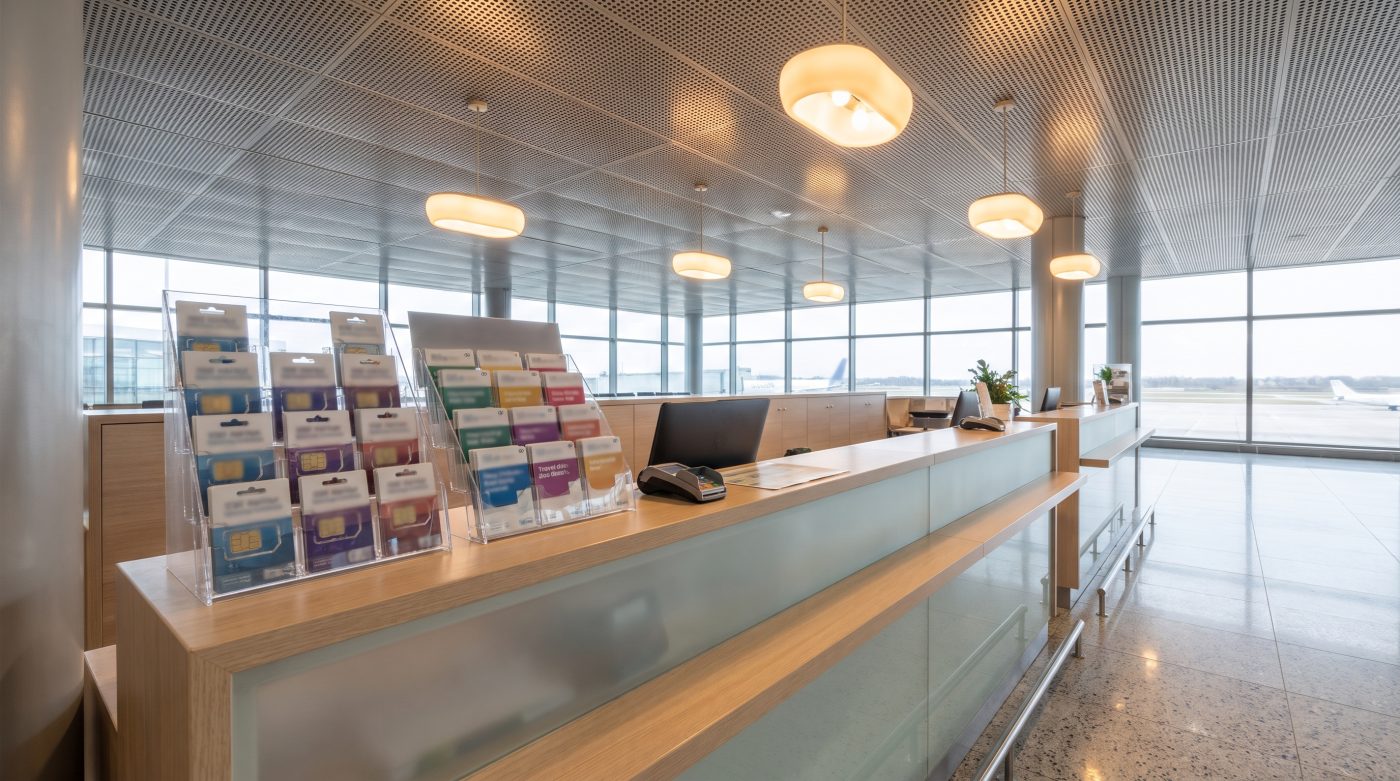
- Airport counters (Suvarnabhumi, Don Mueang, Phuket, Chiang Mai). Open 24/7 in the arrivals hall, easiest option right off the plane, and staff will set it up for you. The tradeoff is price — comparison sites commonly cite airport SIMs running noticeably more than the exact same plan bought at a 7-Eleven or carrier shop in the city.
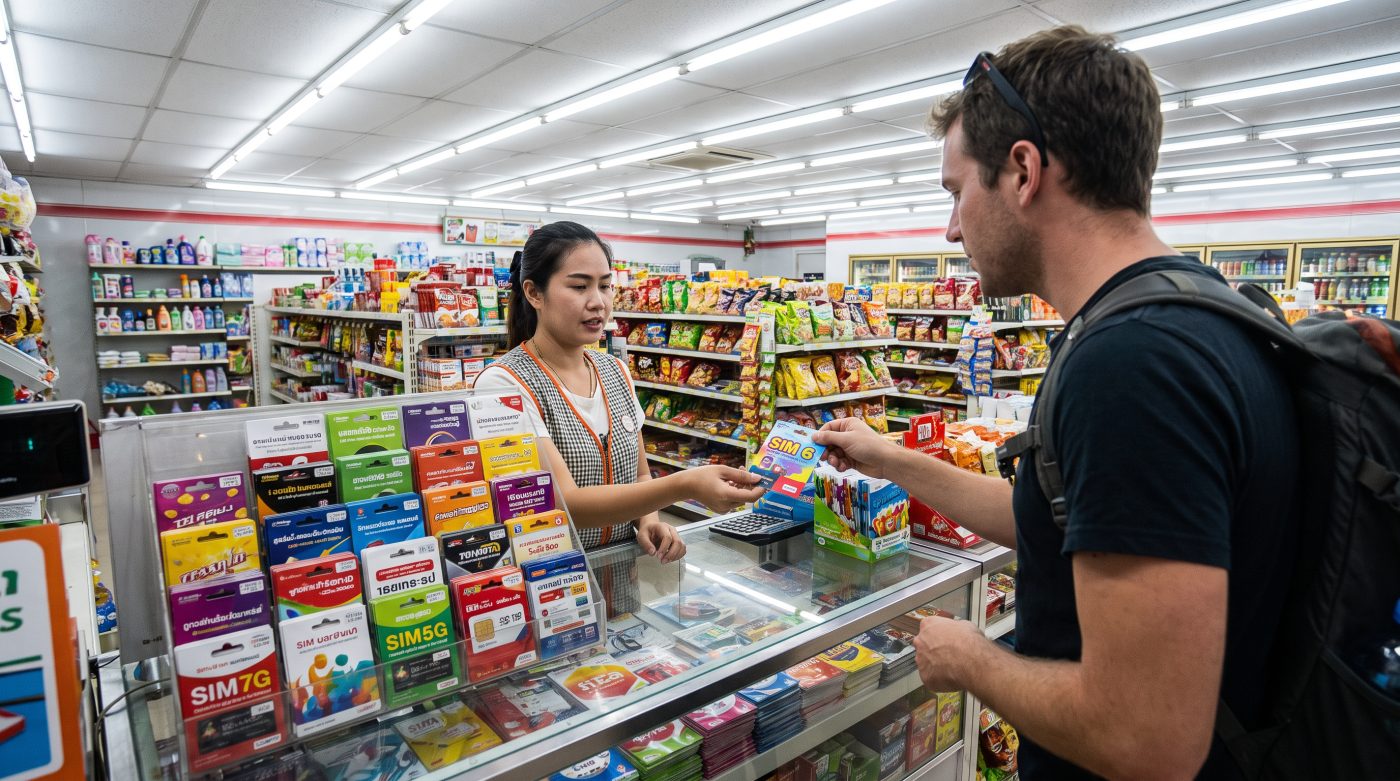
- 7-Eleven. Cheaper, but inconsistent — this is one of the most repeated complaints in Thailand travel forums. Suvarnabhumi's own 7-Eleven locations reportedly don't sell SIM cards at all, and even in the city, not every branch stocks them; some travelers describe checking multiple stores before finding one that does. Bring your passport — you'll be photographed with it as part of registration, which is standard but catches first-timers off guard.
- Official carrier shops (AIS, True, dtac storefronts in malls and on main streets). Slightly more effort to find, but staff can usually convert a physical SIM to an eSIM profile on the spot if your phone supports it, help with longer-term plans, and sort out registration issues a convenience-store clerk can't.
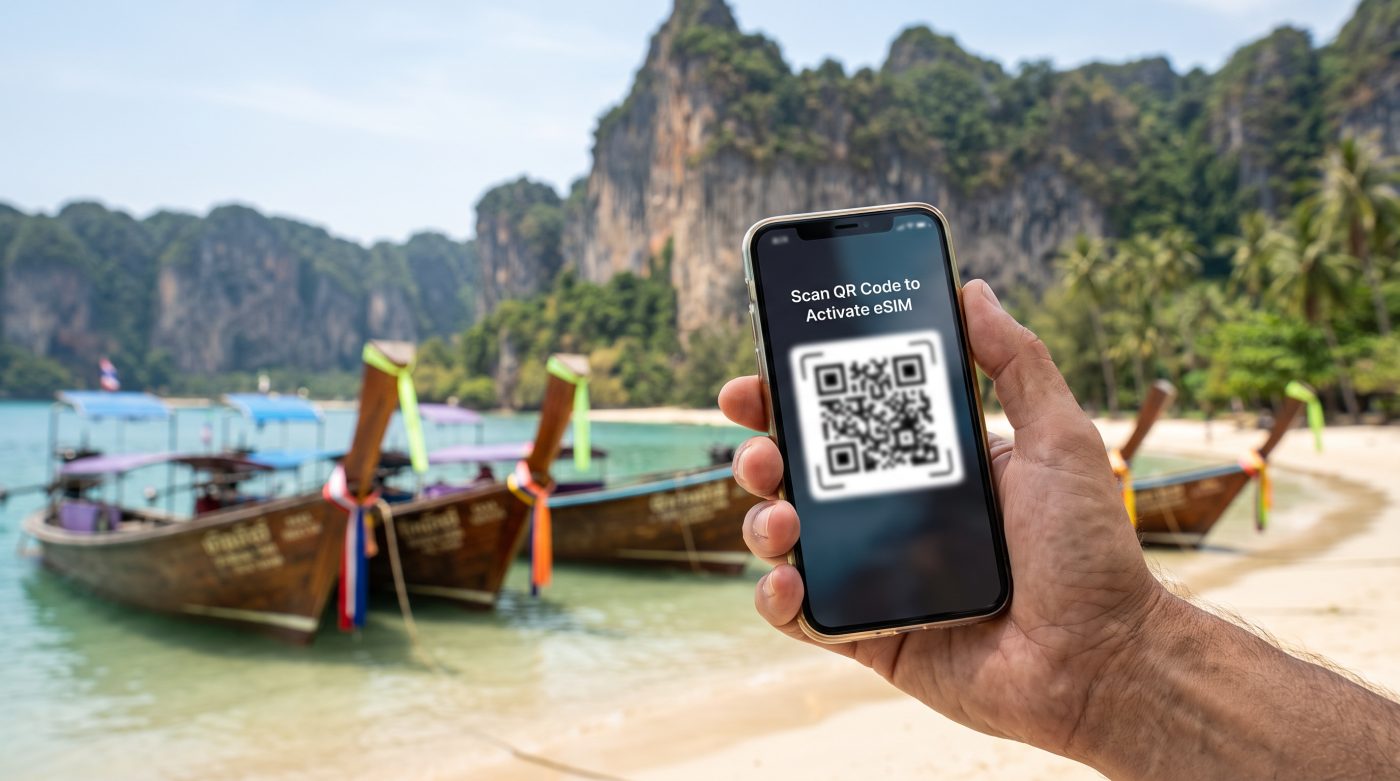
- eSIM apps and resellers (Airalo, Holafly, Jetpac, and similar). Buy and activate from home before you fly, or on airport wifi the moment you land. No store visit at all, but you're paying a reseller markup on top of whichever local network they run on, and app-side bugs (profiles that won't install, location settings getting stuck) are the most common complaint.
What tourist SIMs and eSIMs actually cost in 2026
Prices below are gathered from current 2026 carrier and reseller guides, cross-checked against several sources — figures vary somewhat by source and change often enough that you should treat these as a planning range, not a quote:
- AIS tourist SIM: roughly 300 baht for an 8-day plan with around 15GB of data, up to roughly 900 baht for a 30-day plan with substantially more data.
- TrueMove H tourist SIM (unlimited, fair-use): roughly 450 baht for 8 days, up to roughly 1,200 baht for 30 days.
- dtac Happy Tourist SIM (unlimited, fair-use): similar range to TrueMove H — roughly 450 to 1,200 baht depending on length.
- eSIM resellers: typically $4–10 for a short trip (3–10 days, a handful of GB), scaling up to roughly $20–35 for longer stays or unlimited fair-use plans. These run on top of one of the local networks (commonly AIS or TrueMove H, depending on the reseller) rather than being a separate network themselves.
Two practical numbers worth knowing before you land: topping up a tourist SIM resets or extends its validity (often by about a month per top-up), and tourist SIMs are generally capped around 90 total days of validity even with repeated top-ups — plan accordingly if you're island-hopping for an extended trip rather than a standard two-week vacation.
Mistakes that cost people money or time
- Buying a 30-day unlimited plan for a 10-day trip. Match the plan length to your actual trip, not a round number — the daily cost of a shorter plan is usually lower per day anyway.
- Not checking whether your phone is actually eSIM-capable and carrier-unlocked before buying an eSIM from home. A locked phone, or a phone without eSIM hardware, won't take it — and some travelers have reported finding this out only after they'd already paid.
- Assuming an eSIM gives you a working Thai phone number for calls. Most data-only eSIMs don't include a real local number — if you need one (for a hotel, a Grab driver, or a delivery), a physical SIM is the simpler path.
- Forgetting the passport. Thai SIM registration is tied to ID by law — no passport, no SIM, at any counter.
- Paying the airport-counter premium out of pure convenience when you're staying in Bangkok that first night anyway. A 15-to-20-minute walk to a city 7-Eleven or carrier shop the next morning, using hotel wifi in the meantime, is often cheaper for the exact same plan.
If you're planning a longer stay and want to see how a data plan fits into your overall monthly budget, our digital nomad cost-of-living guide breaks down where connectivity ranks against rent, food, and transport. And if you're still mapping out what the whole trip will cost before you land, start with our Thailand trip-cost breakdown.
Landing at Suvarnabhumi or Don Mueang and not sure what to do first? Our Bangkok airport-to-city transport guide covers the other arrivals-hall decisions you'll be making in the same ten minutes as buying a SIM.
▶Watch on VacaHack
Quick answers
Should I get a SIM card or an eSIM for Thailand?
Get an eSIM if your phone is eSIM-capable and under about two years old and you want to land already connected. Get a physical SIM if you want the cheapest price per gigabyte, need a real local phone number, or you are staying long enough that walking into a carrier shop in person would be useful.
Can I buy a SIM card at the airport in Bangkok?
Yes. Suvarnabhumi and Don Mueang both have telecom counters open 24/7 right in the arrivals hall, and staff will set the SIM up for you. It is the easiest option, but comparison guides commonly note airport SIMs cost more than the same plan bought at a 7-Eleven or carrier shop in the city.
Does 7-Eleven sell SIM cards in Thailand?
Many branches do, but not all, and airport 7-Elevens generally do not. Some travelers report checking two or three stores before finding one with tourist SIMs in stock. You will need your passport, and staff typically photograph it as part of registration.
Which Thai SIM card has the best coverage on islands like Koh Samui?
AIS is the carrier most often recommended in travel forums for the widest overall reach, including smaller islands and national parks, though expect 4G rather than 5G once you are off the main tourist areas. TrueMove H and dtac are reported as strong in cities but more inconsistent in rural or island areas.
How much does a tourist SIM or eSIM cost in Thailand in 2026?
Physical tourist SIMs from AIS, TrueMove H, or dtac generally run from around 300 baht for a short 8-day plan up to around 1,200 baht for 30 days with unlimited fair-use data. eSIMs from resellers like Airalo or Holafly typically cost $4 to $10 for a short trip and $20 to $35 for longer or unlimited plans.
Do I need a Thai SIM if I have an eSIM from home or hotel wifi?
You will want local data at some point — for Grab rides, maps, and 2FA codes that do not always arrive reliably on international roaming. Many travelers keep their home SIM or eSIM active for calls and texts while using a Thai SIM or eSIM just for data.