Kanchanaburi and the Death Railway: What It Actually Is, and How to Visit It Well
The Bridge over the River Kwai and the Death Railway in Kanchanaburi are real, and the history behind them is heavier than most day-trip itineraries let on: an estimated 12,000–16,000 Allied prisoners of war and tens of thousands more conscripted Southeast Asian laborers died building this railway for the Japanese army during World War II. Whether the trip from Bangkok is "worth it" depends on what you're actually going for — a quick photo at a famous bridge, or a genuine understanding of what happened there — but done at the right pace, it's one of the most substantial history stops in the country.
The bridge, the movie, and the actual history
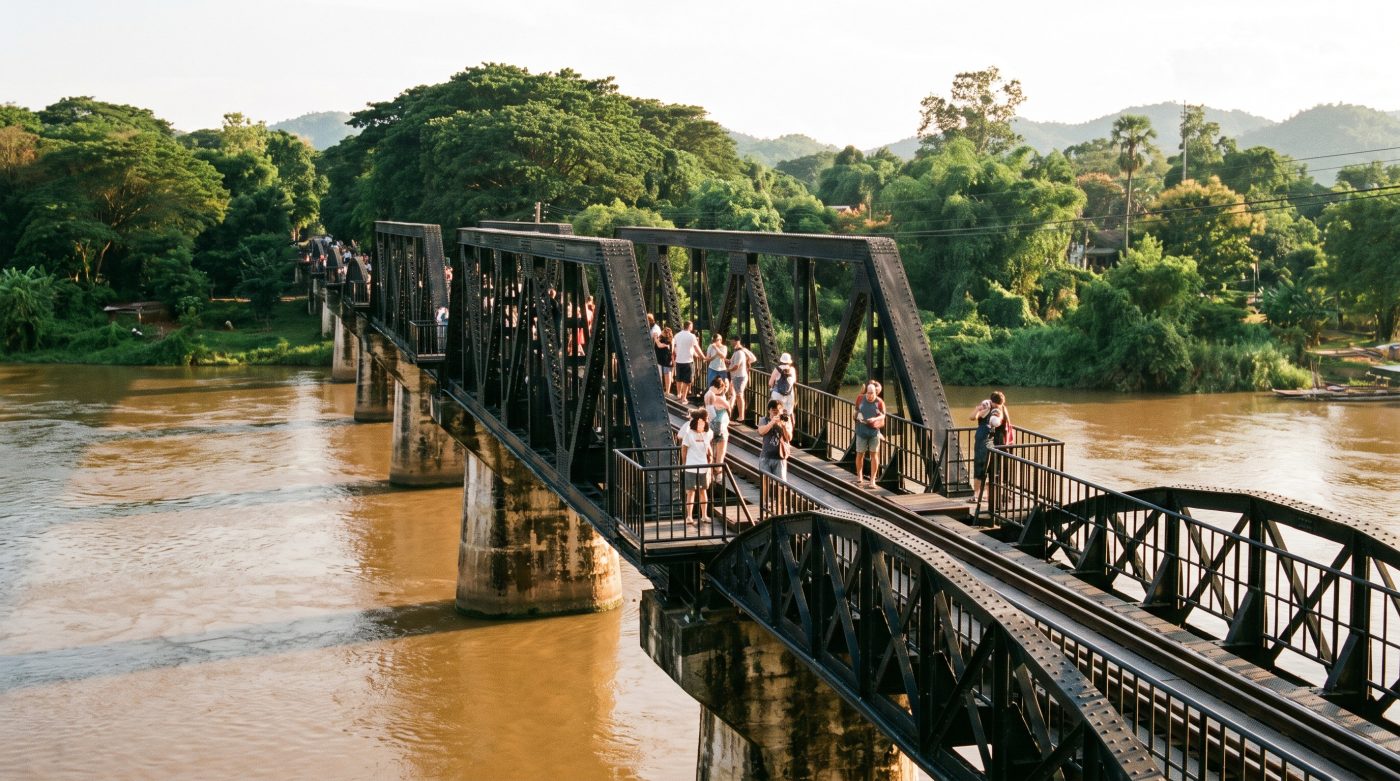
If the name only rings a bell because of the 1957 film The Bridge on the River Kwai, it's worth knowing upfront: that movie is a fictionalized war drama, it wasn't filmed here, and it takes real liberties with what actually happened. The bridge you can walk across today is real, though not fully original — Allied bombing raids destroyed the railway's original curved steel spans late in the war, and the angular replacement sections you can still pick out today were installed as part of Japan's postwar reparations.
The railway itself — officially the Thailand–Burma Railway, and grimly nicknamed the Death Railway by the men who survived it — was built by the Japanese military between 1942 and 1943 to supply its campaign in Burma, cutting out a much longer sea route. It stretched roughly 415 kilometers through jungle and mountain terrain that British and Australian engineers had earlier surveyed and dismissed as impractical to build through at all, let alone in about a year.
Labor came from two very different sources: around 60,000 Allied prisoners of war (mostly British, Australian, Dutch, and American), and a much larger number — commonly cited between 180,000 and 250,000 — of conscripted civilian laborers, known as romusha, brought in from Malaya, Thailand, Burma, and the Dutch East Indies. Exact death toll figures vary by source, and this is genuinely one of those areas worth reading multiple accounts on rather than taking any single number as final: historians and memorial organizations (the Australian War Memorial and the Anzac Portal among the more careful sources) generally put Allied POW deaths at roughly 12,000–16,000, well documented through military records. The romusha death toll is far less precisely known, since almost no comparable records were kept for conscripted Asian laborers at the time — estimates commonly cited run as high as 90,000 or more. If the exact figures matter to you, the interpretive displays at the sites below cite their own sourcing, and it's worth reading them rather than relying on any single blog's number, including this one.
What's actually at the site today
- The bridge itself — free to walk, with side platforms to step onto when a train crosses. Gets crowded with tour groups and souvenir stalls by mid-morning; noticeably quieter (and more contemplative) right after it opens.
- The Death Railway Museum & Research Centre — the more thorough, better-curated museum in town (there's an older, smaller JEATH War Museum too; names and operators around town have shifted over the years, so it's worth confirming which one you're buying a ticket for). Entry runs roughly 150 THB.
- Kanchanaburi War Cemetery (Don Rak) — the resting place for thousands of the Allied POWs who died building the railway. A short walk from the train station.
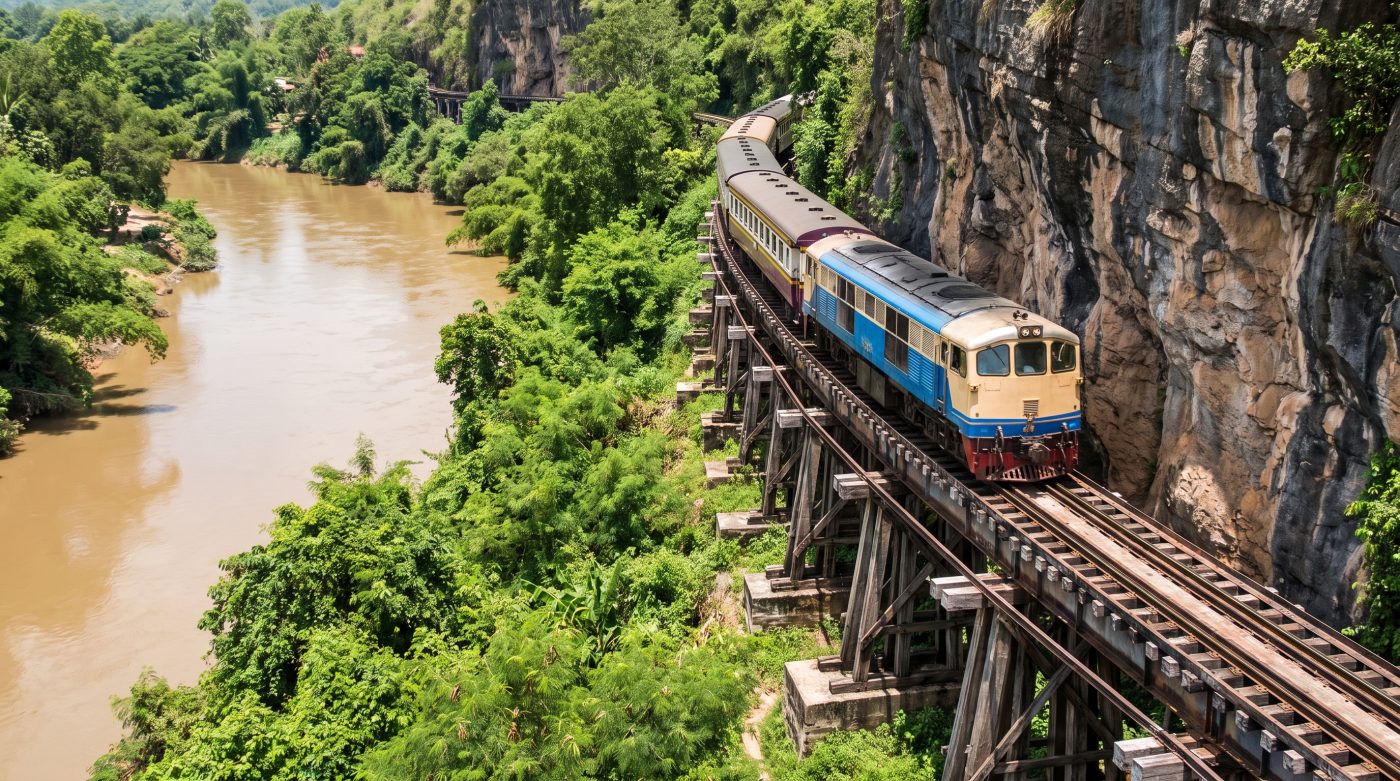
- The Death Railway train ride — the still-operating stretch of line from Kanchanaburi to Nam Tok, including the Wang Pho viaduct (see below).
- Hellfire Pass Memorial — a separate site about an hour outside town, covered in its own section further down.
Getting from Bangkok to Kanchanaburi
Three realistic options, and the right one depends on how tightly you're packing the day:
- Train — departs Bangkok's Thonburi station (not the main Hua Lamphong station) at 07:45 and 13:55, arriving roughly 2.5 hours later. Foreigners pay a fixed fare around 100 THB each way; no advance reservations, buy at the station. It's the scenic, characterful option, but there's only one departure that makes sense for a same-day round trip, and forum posters report delays running up to an hour on this line — worth padding your schedule if anything downstream has a hard closing time.
- Bus — from the Southern Bus Terminal (Sai Tai), around 99 THB, roughly 2 hours, frequent departures. Faster than the train, but the terminal is outside Kanchanaburi's town center, so you'll still need a local songthaew (60–80 THB) to reach the bridge or museums.
- Private car or transfer — costs more than train or bus, but removes the fixed-schedule risk entirely. This matters more here than on most Bangkok day trips: several long-time posters on Tripadvisor's Kanchanaburi forum specifically warn that trying to fit the bridge, the Death Railway, Hellfire Pass, and Erawan Falls into one day using trains and hired songthaews is "too rushed," since Hellfire Pass and Erawan both close at 4pm and sit roughly 1.5 hours apart by local transport — a single delayed train can knock the whole day sideways.
If you're trying to cover more than one of these sites in a single day, a private driver for the day is the practical fix for the fixed-departure problem above — you set the pace instead of the train timetable.
Check private transfer options →Can you do the Death Railway and Erawan Falls in one day?
Technically yes, but most people who've actually tried it say it's tighter than it looks on a map. Erawan National Park charges 300 THB entry, and reaching the popular seventh waterfall tier alone takes about an hour each way on foot — on top of the travel time to and from Kanchanaburi. Forum consensus from people who've done both in a day: it's doable if you're willing to skip the upper falls tiers and keep moving, but it's genuinely rushed, and more than one experienced poster recommends splitting the two across separate days, or picking one and doing it properly, rather than treating both as a checklist.
Hellfire Pass — is the extra trip worth it?
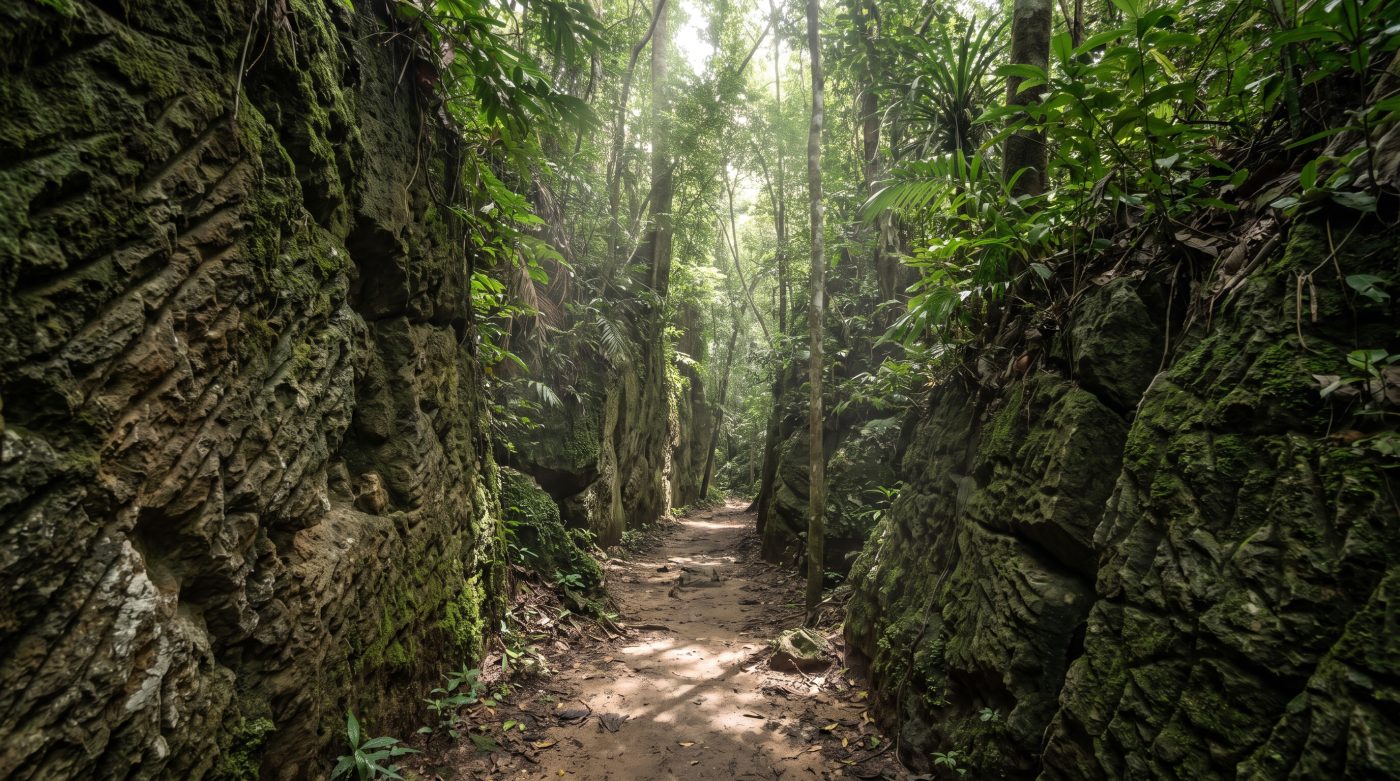
Hellfire Pass Memorial sits about 100 kilometers (roughly an hour by car) outside Kanchanaburi town, run by the Australian government's Office of Australian War Graves. Entry is free, including the museum and audio guide, and it's open 9am to 4pm daily. The site is a modern interpretive museum plus a walking trail through an actual rock cutting the POWs and romusha carved by hand — it gets nowhere near the crowds the bridge does, and most travelers who visit both describe Hellfire Pass as the more moving of the two. The catch is logistics: without a private car, reaching it means hiring a songthaew round-trip (quoted around 800 THB in some guides) or timing a fairly limited train-and-local-bus connection, which is part of why it gets skipped on rushed one-day itineraries built around the bridge alone.
Visiting respectfully
This is a mass-casualty WWII site, not a themed backdrop, and it's worth treating it that way even where the surroundings don't always help — the approach to the bridge itself is lined with souvenir stalls and vendors, which catches some first-time visitors off guard given what the site actually represents. A few practical notes: keep noise down and skip posed or joking photos at the War Cemetery and inside the Hellfire Pass cutting specifically; take the time to actually read the museum placards rather than moving through for the photo; and if you can manage an early-morning visit to the bridge before the tour buses arrive, it's a genuinely different, quieter experience than the midday version most people see.
A simple way to plan the day
- Half day: bridge, museum, and the Death Railway train ride to the Wang Pho viaduct and back — realistic on the early train, back in Bangkok by evening.
- Full day: add Hellfire Pass or the lower tiers of Erawan Falls, but only with a private car booked in advance — the fixed train/bus schedule doesn't leave enough slack.
- Overnight: the option most forum veterans actually recommend if you want to see the bridge, the Death Railway, Hellfire Pass, and Erawan Falls without rushing any of them, or add a hot spring stop on the way back.
For a sense of what a day trip like this costs relative to the rest of a Thailand itinerary, our Thailand trip cost breakdown has the wider ranges. If you're weighing this against other Bangkok-based day trips, we've also covered the Ayutthaya day trip in full, and if you're still figuring out how many days to spend in the capital itself, see our realistic 3-day Bangkok itinerary.
▶Watch on VacaHack
Quick answers
Is Kanchanaburi worth visiting?
Yes, if you go for the actual history rather than just a bridge photo. The Bridge over the River Kwai, the Death Railway Museum, the War Cemetery, and Hellfire Pass together tell a substantial and heavy WWII story that most one-hour bus-tour stops skip past.
Can you do the Death Railway and Erawan Falls in one day?
Technically, but it's tight. Both close by 4pm and sit roughly 1.5 hours apart by local transport, so a single delay can wreck the schedule. Many experienced visitors recommend splitting them across two days or picking one to do properly.
How do you get from Bangkok to Kanchanaburi?
By train from Bangkok Thonburi station (around 100 THB, about 2.5 hours, two daily departures), by bus from the Southern Bus Terminal (around 99 THB, about 2 hours), or by private car or transfer, which costs more but avoids fixed departure times.
Is the Bridge on the River Kwai the real bridge from the movie?
The site and its history are real, but the 1957 film was fictionalized and wasn't shot here. The bridge standing today mixes the original 1943 structure with angular replacement spans installed after WWII bombing destroyed the original curved sections.
How much does the Death Railway train cost?
Foreigners pay a fixed fare of roughly 100 THB one-way between Bangkok and Kanchanaburi, and fares on the extension to Nam Tok are similarly low. Always double-check the current posted fare at the station since these can change.
Is Hellfire Pass worth the extra trip from Kanchanaburi?
If you have a private vehicle, yes. Entry is free, it's open 9am-4pm, and it's noticeably quieter and more contemplative than the bridge in town. Without a car, the connection is limited enough that it usually gets cut from single-day itineraries.