Thai Temple Dress Code: What to Wear (and What Gets You Turned Away)
Cover your shoulders and knees, skip anything sheer or skin-tight, and be ready to take your shoes off before you step into any hall that houses a Buddha image — that covers roughly 90% of what trips people up at Thai temples. The rest is less about your outfit and more about what you do once you're inside.
The real rule, and which temples actually enforce it
The baseline rule at every Thai Buddhist temple (wat) is the same: shoulders and knees covered, nothing see-through, nothing skin-tight. That applies to men as well as women, which catches a lot of guys off guard — a tank top or a pair of running shorts will get a second look just as fast as a short skirt.
Where it gets inconsistent is enforcement. Bangkok's Grand Palace and Wat Phra Kaew (the Temple of the Emerald Buddha) are the strictest site in the country by a wide margin: staff check you before you even reach the ticket window, and the rule is applied to everyone, no exceptions, no matter how far you've traveled to see it. Multiple travelers on forum threads going back years describe being turned away in capri pants or knee-length shorts at the Grand Palace specifically, while having no problem at all in the exact same outfit at other wats the same day. One Fodor's Travel Talk forum thread on this put it bluntly: whether you get stopped elsewhere “depends on who is doing the checking” — some staff wave through borderline outfits, others don't. Neighborhood temples outside the main tourist circuit are checked the least consistently of all, but the expectation doesn't go away just because nobody's standing at the door — dressing properly is still the respectful default everywhere.
If you're building temple visits into a Bangkok itinerary that includes the Grand Palace, plan your outfit around that one stop specifically, since it's the site where getting it wrong actually costs you time at the gate.
What to actually pack so you're not caught out
You don't need special temple clothes — you need clothes that already do the job, which is a packing-list problem more than a shopping problem:
- Lightweight long pants, wide-leg trousers, or a maxi skirt that covers the knee while sitting, not just standing
- A top with sleeves to the elbow or longer, or a scarf/shawl you can drape over bare shoulders in thirty seconds
- Nothing sheer — the honest test some guides use is whether you can see through the fabric held up to bright light; if you can, it won't pass at the stricter sites
- Slip-on sandals or shoes, since you'll be taking them on and off constantly
Capri-length pants and leggings worn alone are the most genuinely disputed category — some travelers report sailing through in them everywhere except the Grand Palace, others report getting turned away even at smaller wats. Pack one layer you can throw over them (a sarong doubles as this) and you've covered the disagreement either way. If you're still finalizing what's going in your bag generally, the Thailand packing list covers the rest of the trip beyond temple-specific items.
Forgot to dress the part? Here's what happens at the gate
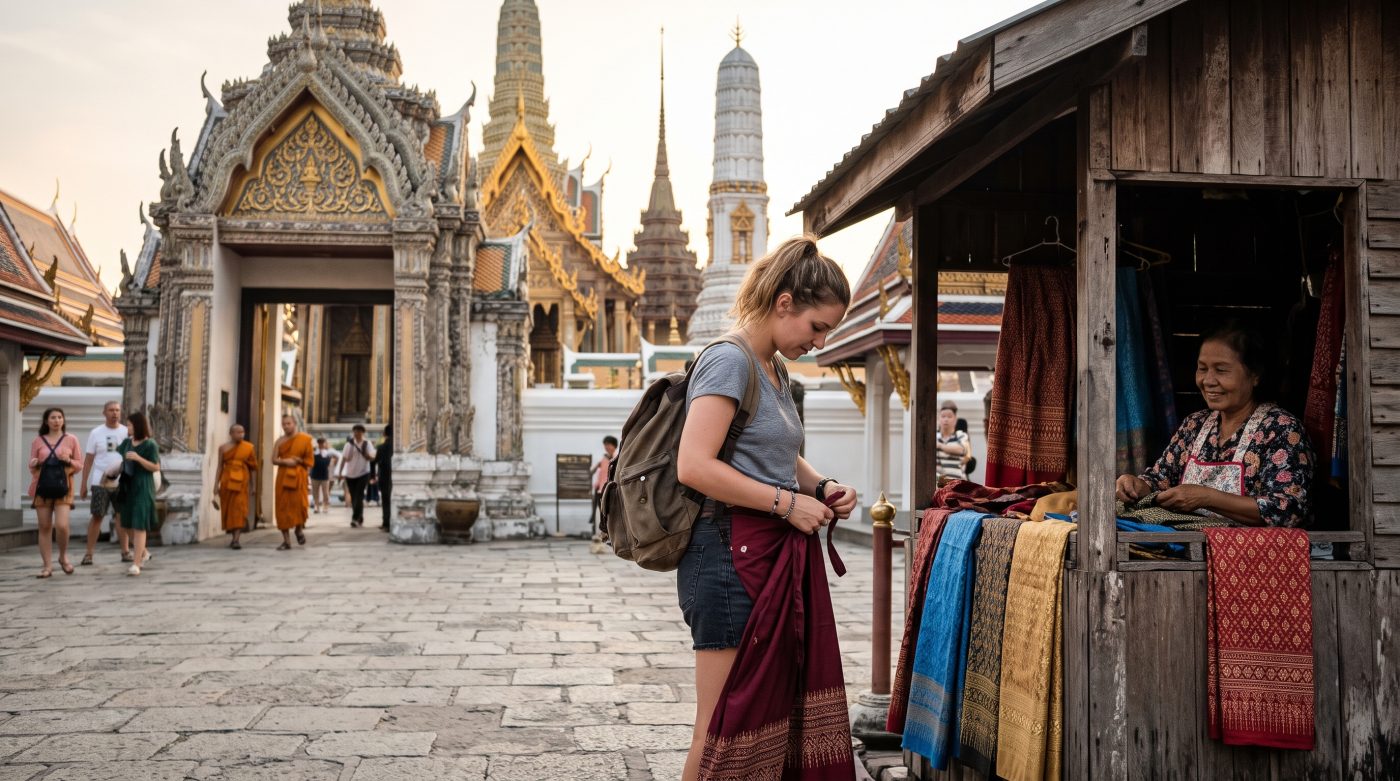
Show up underdressed at a well-visited temple and you almost never get flatly refused entry — you get offered a cover-up instead. The Grand Palace lends out sarongs and oversized shirts right near the entrance; some write-ups describe this as a free loan, others describe a refundable deposit of a few hundred baht, so don't assume either way and just bring small bills in case. Stalls set up just outside the gates also sell cheap scarves and wraps, usually around 100 baht, that you keep rather than return — genuinely useful if yours is more comfortable than a borrowed sarong, or if you'd rather not deal with a deposit at all.
The catch is time, not money: queuing for a loaned sarong at a popular site during peak hours eats into your visit, especially if you're also trying to see Wat Pho or Wat Arun the same morning. It's a real backup, not a reason to skip packing properly in the first place.
Shoes off before you go inside — but not everywhere
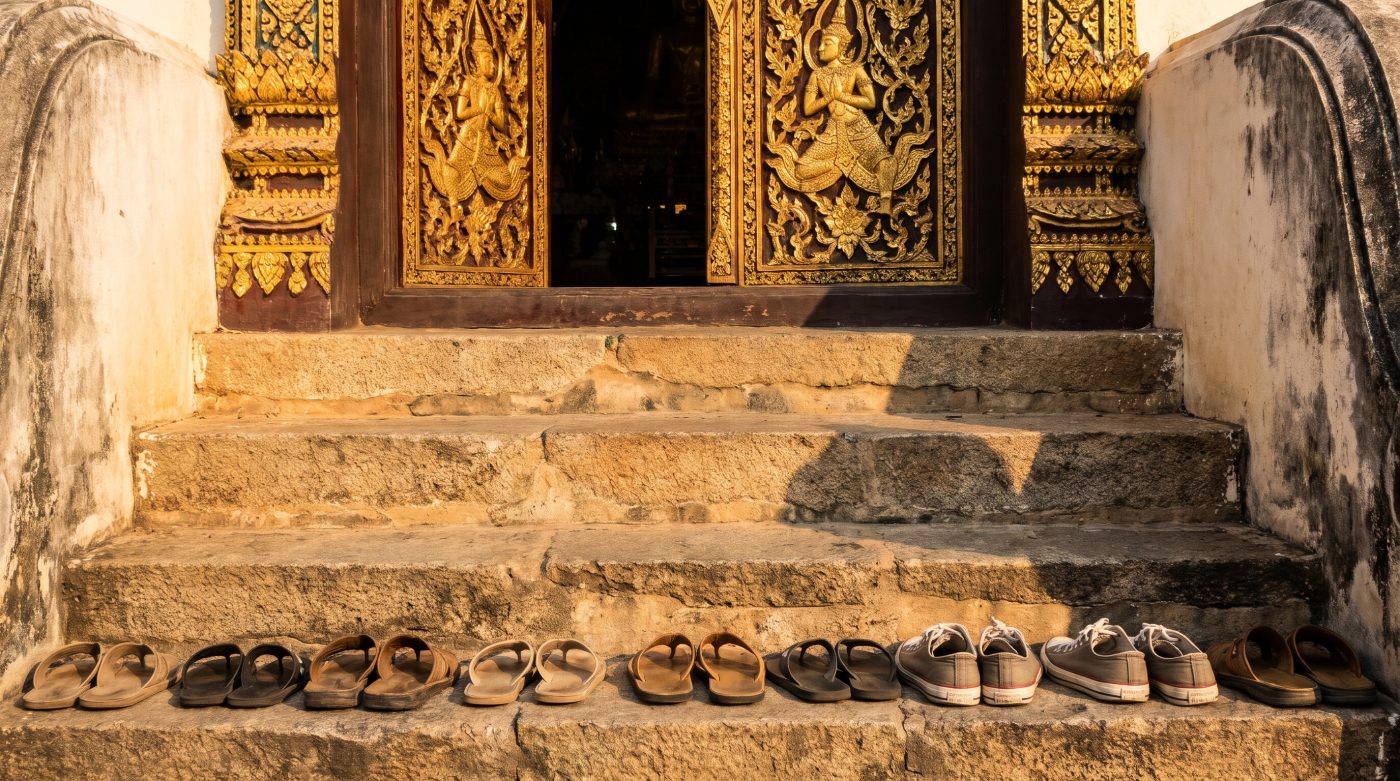
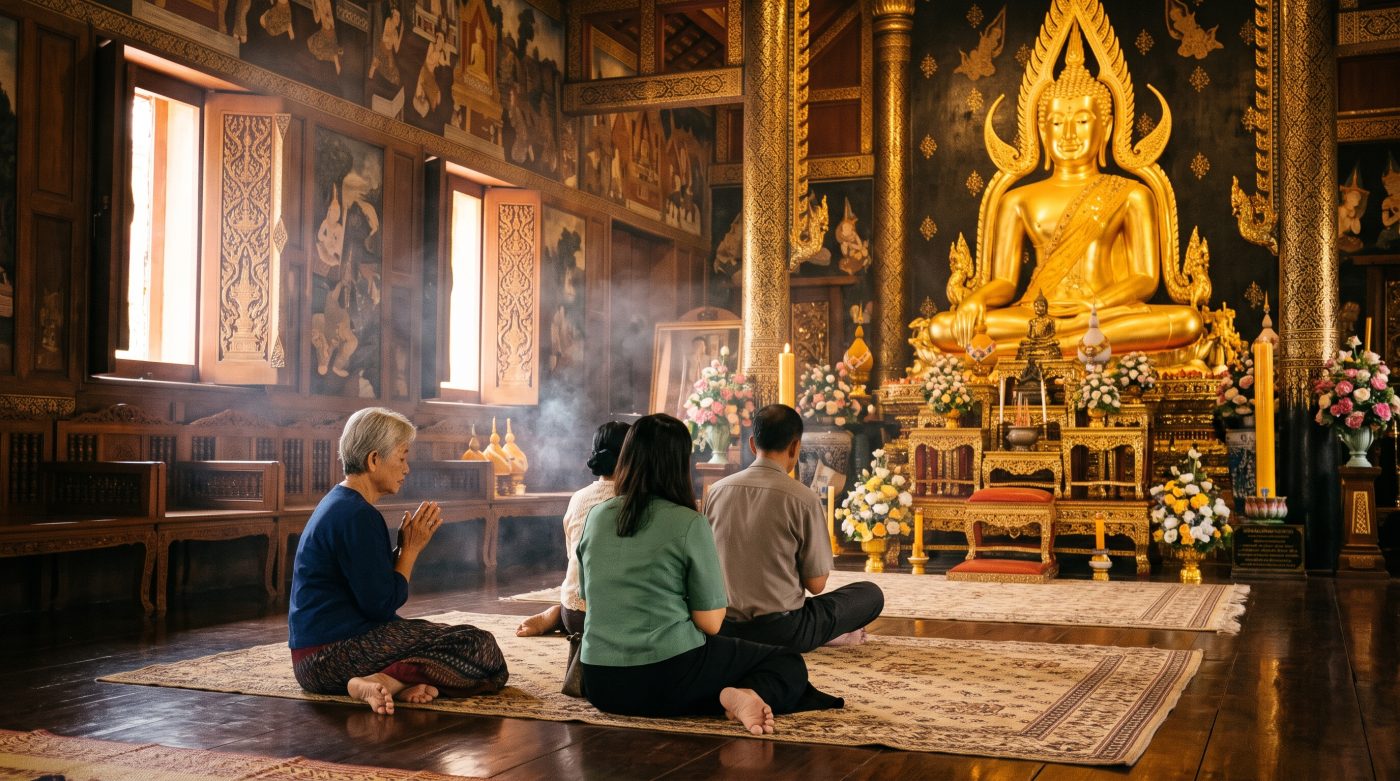
Shoes come off before you enter any building that houses a Buddha image — the ubosot (ordination hall) and viharn (assembly hall) specifically. Open courtyards, grounds, and the area around outdoor chedis are generally fine with shoes on; watch what the people ahead of you are doing if a spot seems ambiguous. One small, specific habit that trips up a lot of first-timers: temple entrances typically have a raised wooden sill across the doorway. Step over it, not on it — stepping on the sill itself is considered disrespectful, separate from the shoes question entirely.
Slip-on footwear is worth the slight sacrifice in support for how often you'll be putting shoes on and off in a single day of temple-hopping. The same habit carries over at the historical parks in Ayutthaya, where several sites still have active shrines inside otherwise-ruined structures.
The behavior rules that matter more than your outfit
Clothing is the rule tourists worry about most, but it's not the one that actually causes offense most often. A few habits matter more once you're inside:
- Don't point your feet at a Buddha image or at a monk. Thai culture treats the head as the highest point of the body and the feet as the lowest, literally and symbolically — so when you sit on the floor facing a Buddha statue, tuck your feet behind or beside you rather than stretching them out toward the image.
- Women shouldn't touch a monk, or hand him anything directly. This isn't tourist-blog etiquette theater — it comes from the monastic code (Vinaya) that governs ordained monks, and it's genuinely, widely observed across the country rather than loosely followed. If a woman needs to give a monk something, the normal practice is to hand it to a layperson first, or place it where the monk can pick it up himself, often on a cloth he lays out for exactly that purpose. Don't take offense if a monk steps back from you — he's following his own rule, not making a judgment about you.
- Don't touch anyone's head, monk or otherwise — the same high/low logic applies to people generally, not just inside temples.
- Stay quiet and keep a respectful distance from anyone actively praying or meditating, even in a busy, tourist-heavy temple.
Photos: what's fine, and what crosses a line
Photography is usually welcome in temple courtyards and grounds, and most people photograph the exteriors, chedis, and murals without any issue. Inside halls it gets site-specific: some post signage banning photos of the main Buddha image, others restrict flash, and it's worth a quick glance for a sign before you raise your phone rather than assuming the last temple's rules carry over. The clearest line not to cross is posing in imitation of a Buddha statue — sitting, lying down, or climbing on or beside an image to mimic its pose for a photo is treated as genuinely disrespectful in Thailand, not just cheesy, and it's the single fastest way to turn a temple visit into an actual incident rather than an awkward one.
▶Watch on VacaHack
Quick answers
Do I have to cover my shoulders and knees at every Thai temple?
Yes, as the baseline expectation everywhere, though how strictly it's checked varies by temple. The Grand Palace and Wat Phra Kaew in Bangkok enforce it without exception for every visitor; smaller neighborhood temples are checked far less consistently, but the rule still applies as a matter of respect.
Can men wear shorts at Thai temples?
At most ordinary temples, knee-length shorts are generally tolerated for men, though long pants are the safer choice. At the Grand Palace and Wat Phra Kaew specifically, shorts of any length are refused for men and women alike — that site applies the dress code equally regardless of gender.
What happens if I show up at a temple in shorts or a tank top?
At major, well-visited temples you'll typically be offered a sarong or oversized shirt to cover up rather than being turned away outright. Some sites lend these for a small refundable deposit, others describe it as free; either way it costs you time in line, so it's easier to just dress appropriately before you arrive.
Can women touch monks in Thailand?
No — this is a genuine rule rooted in the monastic code that governs ordained monks, not just tourist etiquette. Women shouldn't hand a monk anything directly; the normal practice is to hand it to a man nearby first, or place it where the monk can pick it up himself, sometimes on a cloth he lays out for that purpose.
Do I need to take my shoes off at every Thai temple?
You need to remove your shoes before entering any hall that houses a Buddha image, specifically the ubosot (ordination hall) and viharn (assembly hall). Open courtyards and temple grounds are generally fine with shoes on — watch what other visitors ahead of you are doing if it's unclear.
Is there somewhere to rent proper clothing at the Grand Palace?
Yes, there's a sarong and shirt loan or rental service right near the entrance for anyone who shows up underdressed, and vendors just outside the gates sell cheap scarves and wraps you keep for around 100 baht. Both work, but both also add time to your visit, so packing the right clothes ahead of time is the faster option.