Thailand DTV Visa Explained: Who Qualifies, Costs, and How Long You Can Stay
The Destination Thailand Visa (DTV) is a five-year, multiple-entry visa that lets remote workers, freelancers, and a handful of "soft power" participants stay in Thailand for up to 180 days at a time — and yes, if you work remotely for a company or clients outside Thailand, you almost certainly qualify.

What the DTV Actually Is (and the Three Ways to Qualify)
Thailand launched the DTV in mid-2024 as a long-stay alternative to the old tourist-visa shuffle, and it's built around three separate qualifying categories — you only need to fit one:
- Workcation — the category most people mean when they say "digital nomad visa." You're a remote employee of a foreign company, an independent contractor, or a freelancer whose clients are outside Thailand. You'll need an employment certificate or a portfolio of recent client contracts and invoices to prove it.
- Thai Soft Power — for people coming to Thailand for an extended cultural or medical program: Muay Thai training, Thai cooking courses, sports training, or medical treatment. You need a letter of acceptance from a qualifying provider. Worth flagging: language schools were removed from this category in a 2026 tightening round, so a Thai-language course alone no longer qualifies.
- Dependent — for the legal spouse or child (under 20) of a DTV holder, riding on the primary applicant's visa with a marriage or birth certificate.
Most people reading this fall into Workcation, so that's the lens for the rest of this guide — but the money and stay rules below apply across all three categories.
The 500,000 THB Requirement (and Why So Many Applications Get Rejected Here)
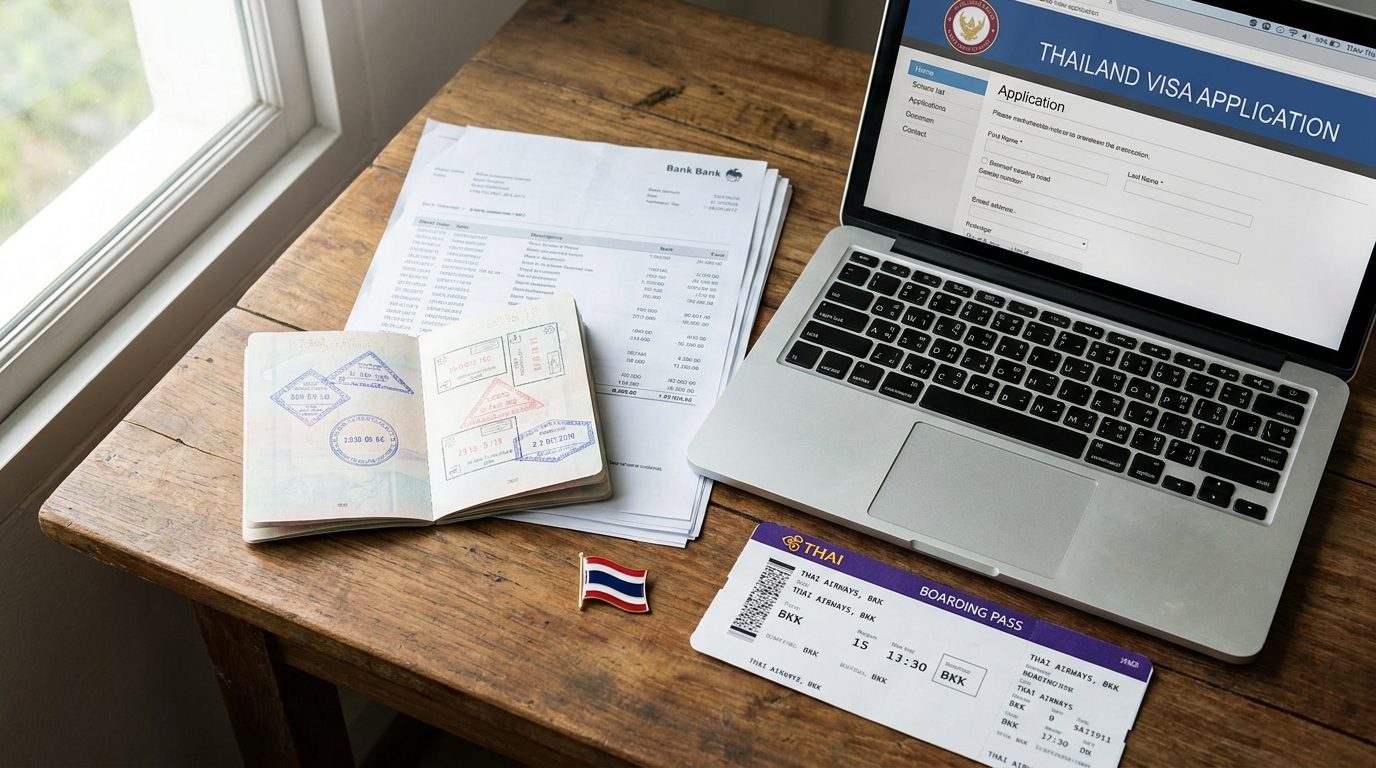
Every DTV category shares the same financial bar: roughly 500,000 THB (about $14,000–$15,000 depending on the exchange rate) sitting in your own bank account, shown via statements dated within about 14 days of your application.
Here's the part that trips people up, and by most current accounts is the single biggest cause of DTV rejections: several embassies — Vientiane, Ho Chi Minh City, and Phnom Penh among them — want that money to have been sitting there for at least three months before you apply, not just present on application day. A fresh transfer in from another account, even your own, gets flagged as unseasoned funds. If you're planning to apply, move the money early and let it sit — don't top up the account the week before you submit.
A few other financial-proof notes worth knowing before you gather documents: statements need to show your own name on the account (not a joint account you don't fully control), and cryptocurrency or brokerage/investment account balances generally aren't accepted as proof — it needs to be a conventional bank balance.
How Long You Can Actually Stay
The DTV itself is valid for five years with multiple entries, but that's not the same as five continuous years in the country. Each time you enter on a DTV, immigration grants you a stay of up to 180 days. From there you have two options:
- Apply for a single in-country extension of another 180 days (roughly 1,900 THB), giving you up to 360 continuous days before you need to leave and re-enter, or
- Simply exit Thailand and come back in, which resets you to a fresh 180-day stay — useful if you were already planning a regional trip anyway.
The visa application fee itself is around 10,000 THB, though the exact amount varies by embassy — for example it's roughly $400 USD if you apply through the Washington, D.C. embassy. As of 2026, nearly every embassy now processes DTV applications exclusively through the online e-visa system rather than in-person paperwork, and typical processing time runs 3–7 business days once your documents are in, though this varies by location and season.
Do You Need Health Insurance for the DTV?
Unlike Thailand's O-A retirement visa, which has a formal, TGIA-approved minimum coverage requirement (40,000 THB outpatient / 400,000 THB inpatient from a specific insurer list), the DTV does not carry an official, published insurance mandate in the same way. That said, treat "not officially required" as different from "not worth having." A few practical realities push most DTV holders toward getting coverage anyway: Thai private hospitals are excellent but not cheap for cash-pay foreigners, some soft-power program providers ask for proof of coverage as part of their acceptance letter, and immigration officers occasionally ask for it even where it isn't formally codified. If you're planning to spend up to a year in Thailand on this visa, going without any coverage is a real financial risk, not just a paperwork one.
SafetyWing's Nomad Insurance is built specifically for long-stay remote workers and is widely accepted in practice by clinics and hospitals across Thailand, with an 8-week electronic-theft coverage bonus for new sign-ups.
Check SafetyWing Nomad Insurance →What You Can't Do on a DTV (and the Work-Permit Trap)
The DTV is explicitly not a work-authorization visa for the Thai domestic economy. DTV holders cannot apply for a Thai work permit, cannot work for a company registered in Thailand, and cannot take on freelance work for Thai clients. The entire premise of the Workcation category is that your income comes from outside Thailand — the visa lets you live and work remotely from Thailand, not work in the Thai labor market. Crossing that line is a real risk, not a technicality; it's the difference between "remote worker on a long-stay visa" and "working illegally," and immigration enforcement around this has reportedly tightened as DTV demand has grown.
90-Day Reports and Other Paperwork Once You're In
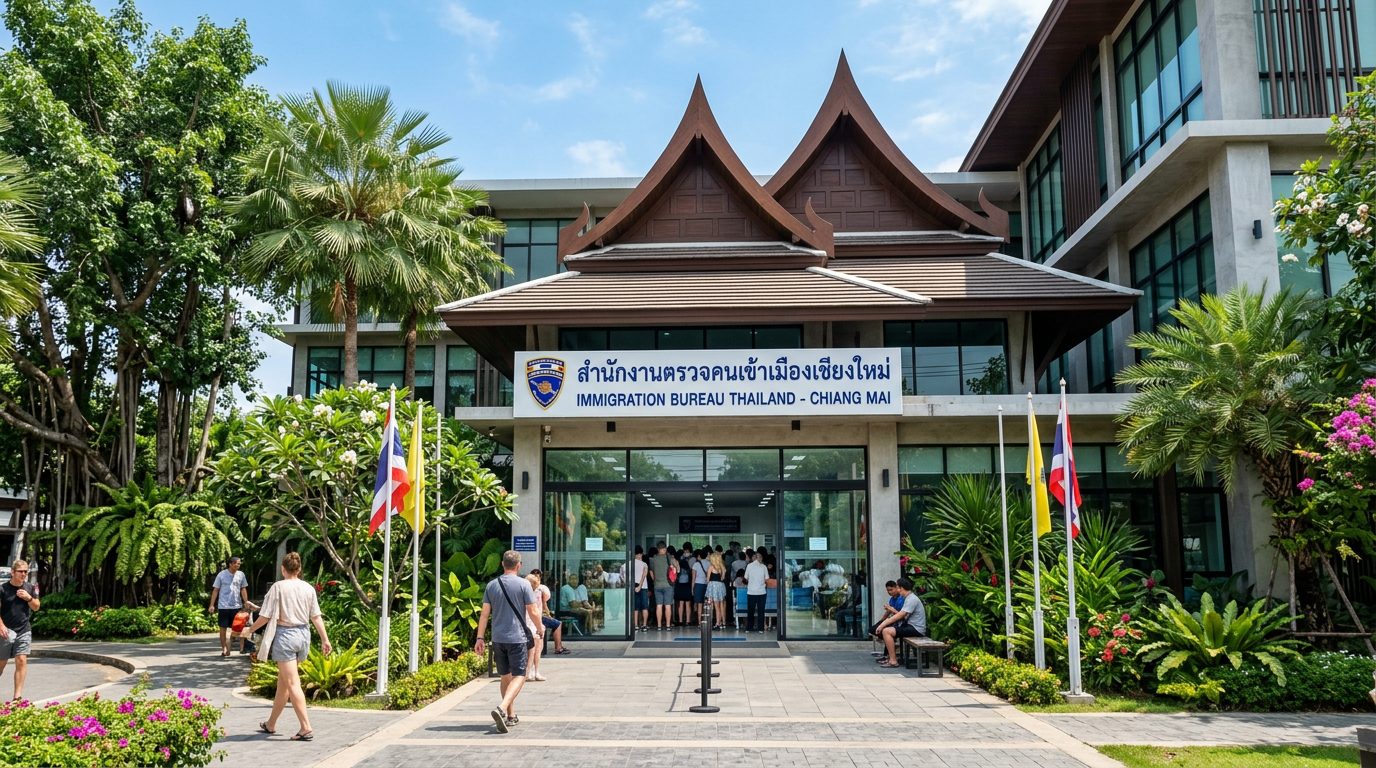
If you stay in Thailand more than 90 consecutive days on a DTV, you're required to file a 90-day report with immigration — the DTV is still treated as a non-immigrant/tourist-adjacent category for this purpose, not exempted the way some other long-stay visas are. You can file it in person at an immigration office, online through Thailand's immigration portal, by mail, or through an agent. Miss the deadline and the fine starts at roughly 2,000 THB, climbing further (potentially 4,000 THB plus a daily penalty) if you're caught before filing rather than filing late voluntarily. Set a recurring calendar reminder — this is one of the easiest DTV requirements to lose track of once you're settled in.
DTV vs Non-B vs LTR vs Tourist Visa — Which One Do You Actually Need
If you've been researching Thailand visas for more than five minutes, you've probably seen all four of these thrown around interchangeably, and they're not:
- Tourist visa exemption / e-visa — short stays (typically 30–60 days), no work of any kind permitted, cheapest and fastest option if you're just visiting.
- DTV — the right fit if you work remotely for non-Thai employers/clients and want to stay 180+ days at a time without needing a Thai employer to sponsor you.
- Non-B (Non-Immigrant B) — for people actually employed by a Thai company or opening a Thai business; requires local sponsorship and is a different track entirely.
- LTR (Long-Term Resident) visa — a separate 10-year track aimed at high-net-worth individuals, wealthy pensioners, and highly skilled professionals with specific income thresholds well above the DTV's; more paperwork and higher bars to qualify, but a longer runway once you're in.
For most remote workers and freelancers researching long-stay options, the DTV sits in a genuinely useful middle ground: far longer stays than a tourist visa, no employer sponsorship required like a Non-B, and a much lower bar to entry than the LTR.
Common Reasons DTV Applications Get Rejected
Beyond the seasoned-funds issue covered above, the recurring rejection patterns worth avoiding are straightforward once you know them: vague or thin freelance documentation (a single old invoice won't cut it — bring recent contracts, several months of invoices, and a clear employment or client letter), soft-power acceptance letters from providers that don't actually qualify under the current rules, and applying at an embassy with inconsistent or unusually strict document requirements without checking current expectations first. Because approval patterns and requirements shift by embassy and change over time, treat any specific "easiest embassy" claim you read online — including anything general about DTV approval odds — as anecdotal, and confirm current requirements directly on Thailand's official e-visa site before you apply.
▶Watch on VacaHack
Quick answers
What is the Thailand DTV visa?
The Destination Thailand Visa (DTV) is a 5-year multiple-entry visa that lets remote workers, freelancers, and certain cultural/medical program participants stay in Thailand for up to 180 days per entry, without needing a Thai employer to sponsor them.
How much money do I need in the bank for a DTV visa?
You need roughly 500,000 THB (about $14,000–$15,000) in your own bank account. Several embassies also require that amount to have been sitting there for at least 3 months before you apply, not just present on application day — this is the most common reason applications get rejected.
How long can I stay in Thailand on a DTV visa?
Each entry grants up to 180 days. You can extend once in-country for another 180 days (up to 360 continuous days total), or exit and re-enter Thailand to get a fresh 180-day stay, any time within the visa’s 5-year validity.
Do I need health insurance for the DTV visa?
Not officially — unlike Thailand’s O-A retirement visa, the DTV has no formal published insurance mandate. In practice, though, many soft-power program providers ask for proof of coverage, and going without insurance in a country with excellent but non-free private healthcare is a real financial risk for a stay that can run up to a year.
Can DTV visa holders work for Thai companies or clients?
No. DTV holders cannot apply for a Thai work permit, work for a company registered in Thailand, or take on freelance work for Thai clients. The visa is built around income earned from outside Thailand.
Do DTV visa holders have to file a 90-day report?
Yes, if you stay more than 90 consecutive days. The DTV is still treated as a tourist-adjacent category for this purpose. You can file in person, online, by mail, or through an agent; late filing carries a fine starting around 2,000 THB.